How to plan, style, and live with open shelving without turning your kitchen into a dust magnet.
Open shelf kitchen ideas look effortless in photos, and then real life shows up. Plates need washing before they go on display, mugs do not match, and the grease from cooking lands on everything within reach. The kitchens that make open shelving work have a plan behind them, not just a few boards on a wall.
These nine open shelf kitchen ideas cover the choices that matter most: where to put the shelves, what to put on them, and how to keep them useful once the novelty wears off.
Table of Contents
1. Floating Shelves in Place of Upper Cabinets: Open Shelf Kitchen Ideas to Start With
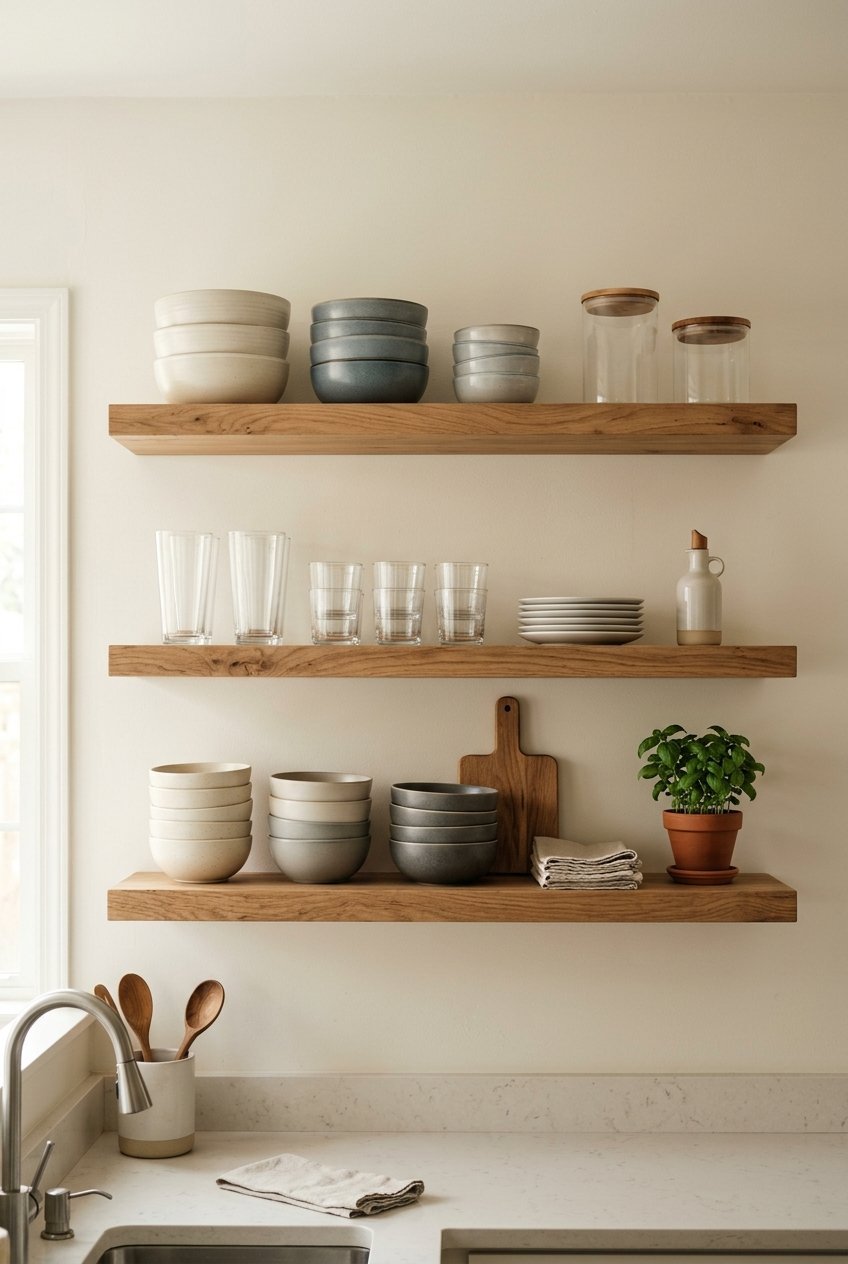
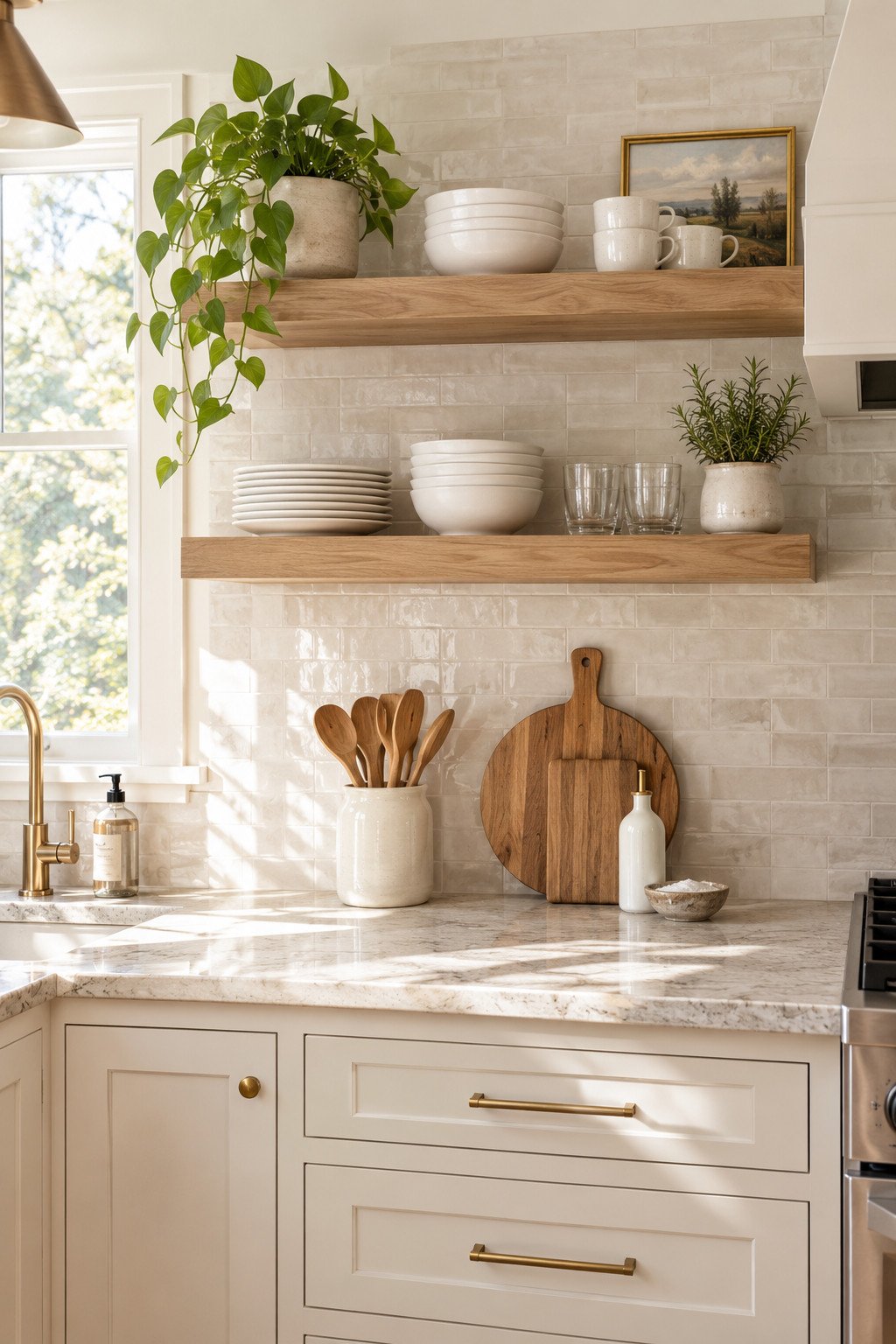
The most common way to use open shelving is to swap some or all of the upper cabinets for floating shelves. The wall feels lighter, the kitchen gets more daylight, and the room looks bigger because there is no heavy cabinet box at eye level.
Plan on two or three shelves per run rather than one. A single shelf can look lonely, while a set spaced about 14 to 16 inches apart gives you room for plates and glasses without feeling crowded.
2. Mixing Open Shelves With Closed Cabinets
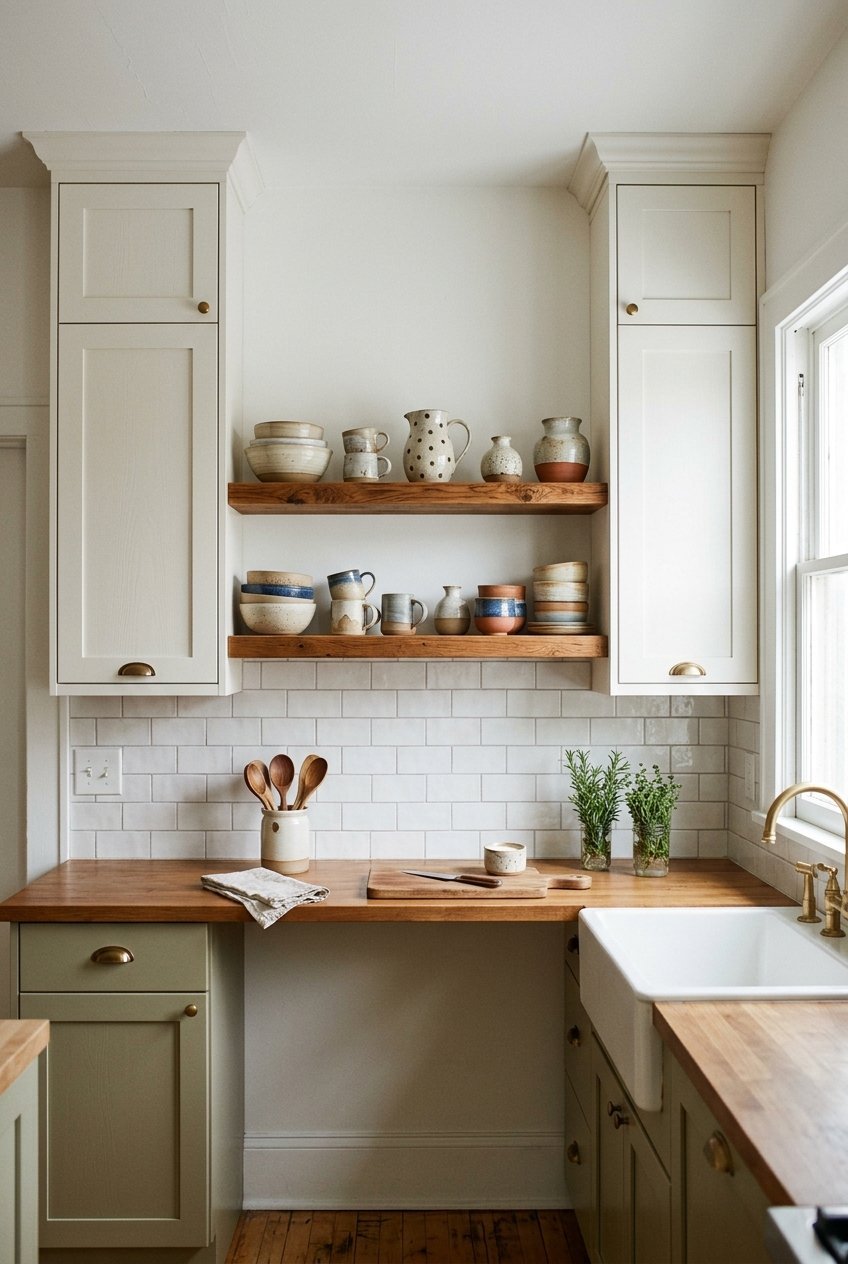
This is also the safest way to test the idea. If you love it, you can add more later. If you do not, you have not lost much storage.
If a full wall of open shelving feels like too much, keep most of the cabinets and open up just one section. A single shelf between two closed cabinets, or one shelf next to the window, gives you the open look while the busy storage stays hidden.
3. Styling With Everyday Dishes
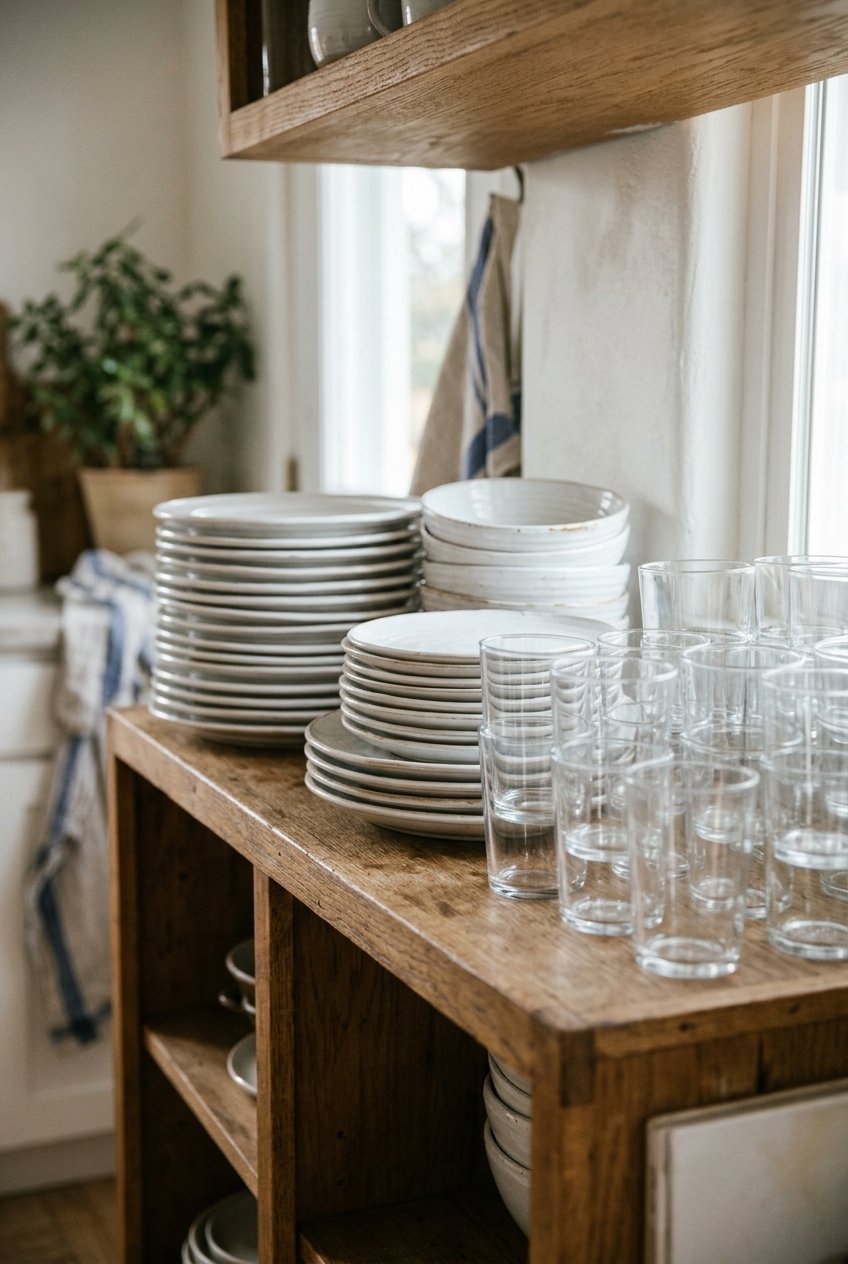
The easiest open shelf kitchen ideas to live with use things you actually reach for every day. A matching set of white plates, a stack of bowls, and a row of clear glasses look tidy and stay in rotation, so they do not collect dust.
Stick to two or three colors across the whole shelf. Mismatched mugs and promotional cups are the fastest way to make open shelves feel messy, so keep those behind a door.
4. Choosing Wood, Stone, or Metal
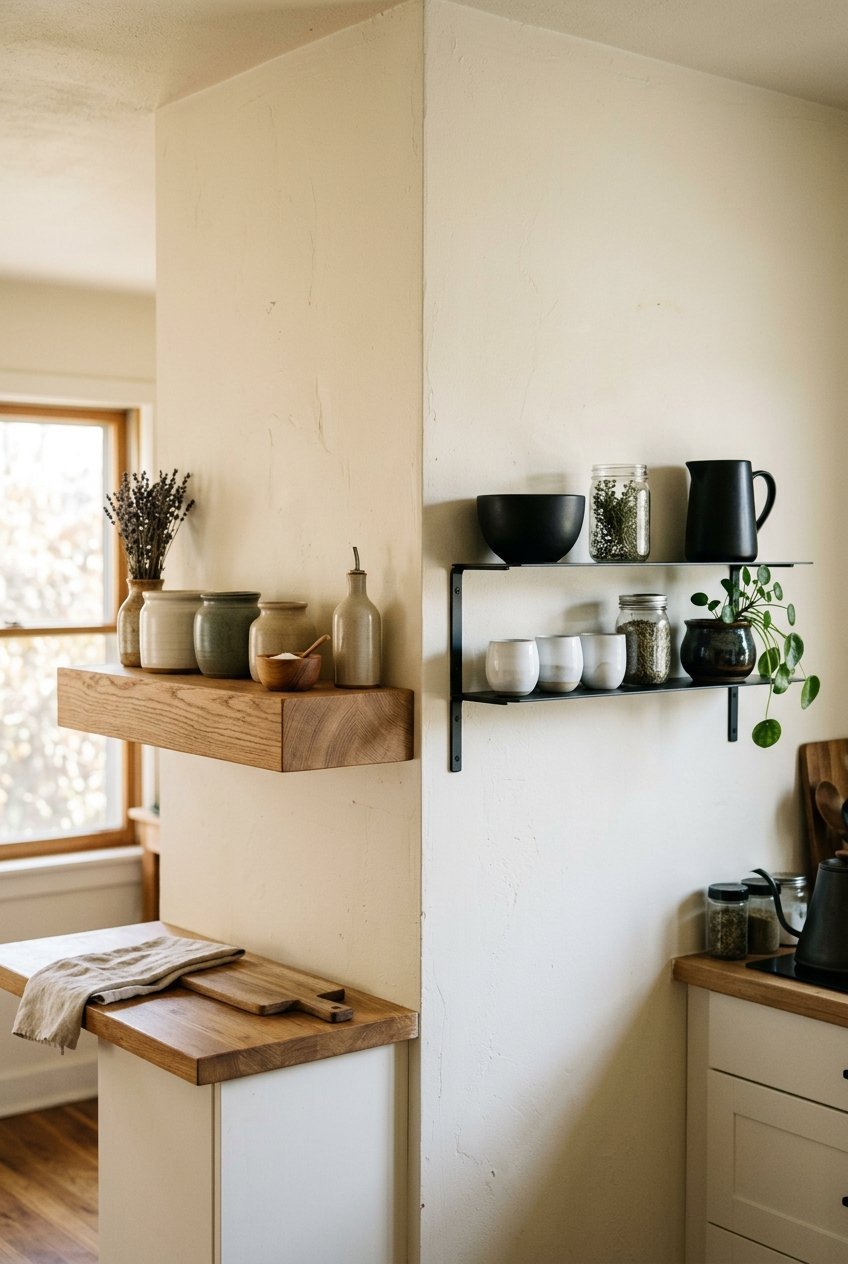
Wood is the warm, forgiving choice and works in almost any kitchen. Oak and walnut hide small marks well, and a matte sealant keeps them from staining. Stone shelves look sleek and handle moisture, but they are heavy and need strong support. Slim metal shelves feel modern and light, especially in black or brass.
Pick a material that echoes something already in the room, like the cabinet hardware, the island top, or the floor, so the shelves look like they belong.
5. Shelves Around the Range Hood
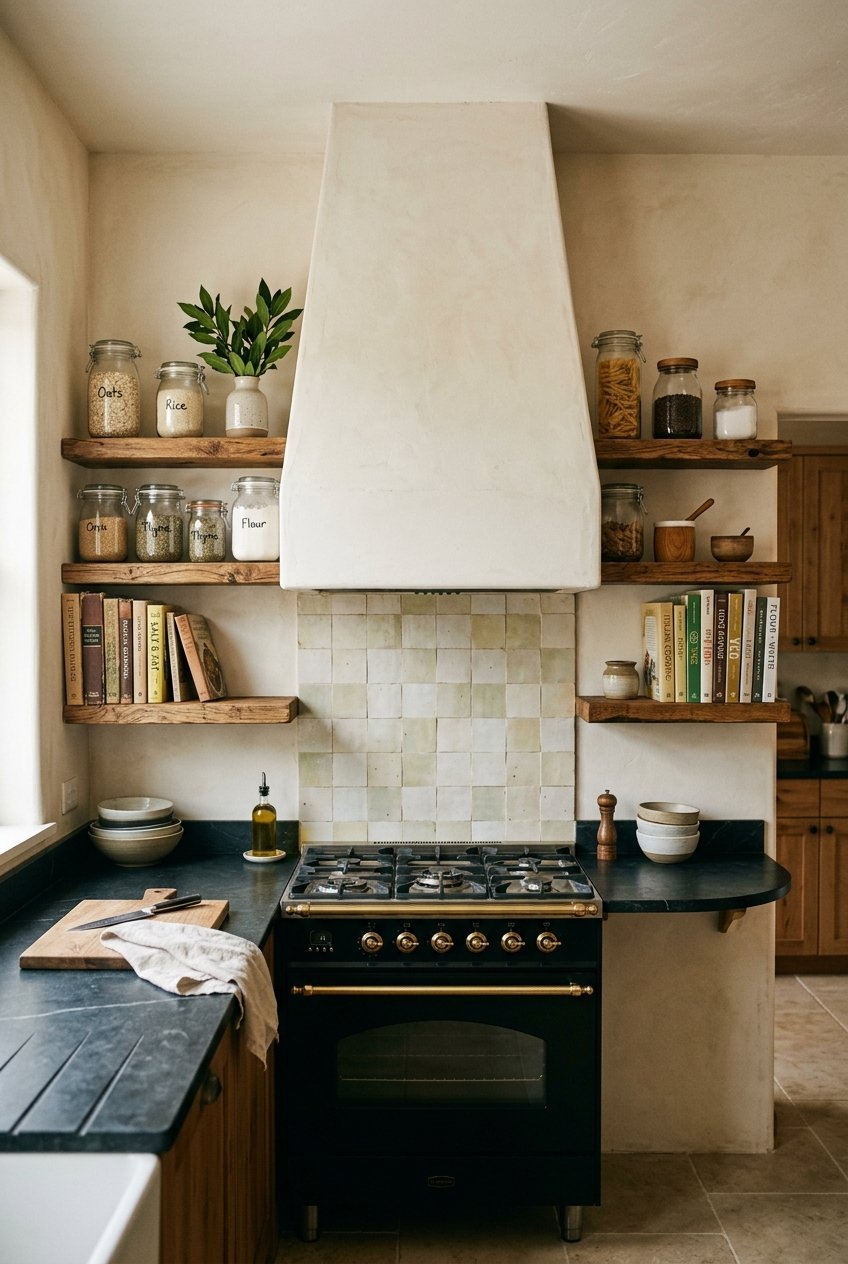
A pair of shelves on either side of a range hood is a classic layout because it frames the cooking area and gives you storage right where you need oils, salt, and spices. The symmetry also makes the wall look planned.
Keep anything delicate away from the stove itself. Items near the cooktop pick up grease quickly, so reserve those spots for jars, wooden spoons, and ceramics that wash easily.
6. Adding Under-Shelf Lighting
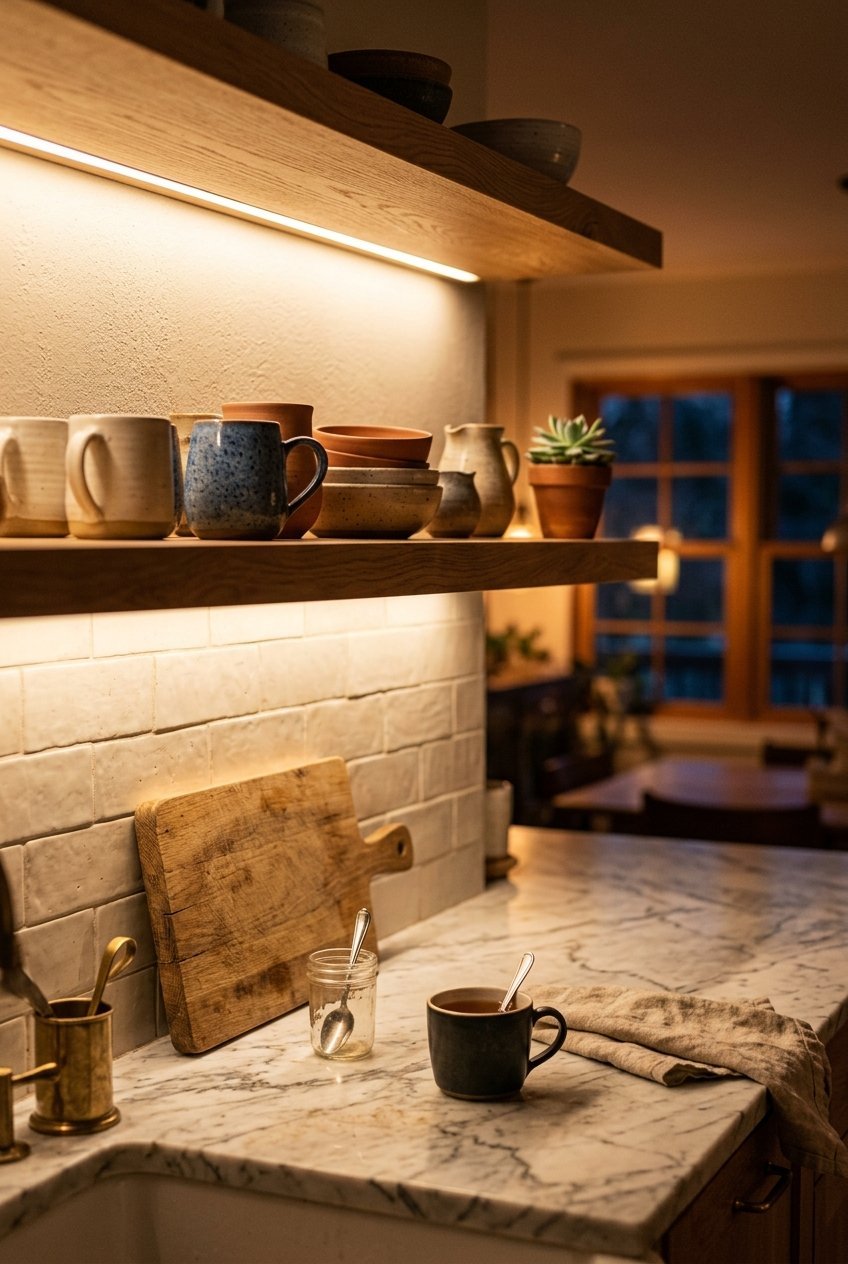
When shelves replace cabinets, you often lose the spot where task lighting used to hide. A slim LED strip tucked under the front edge of each shelf lights the counter below and makes the dishes above glow softly in the evening.
Choose a warm white around 2700K to 3000K, and put it on a dimmer if you can. Plug-in or battery strips work well for renters and avoid any wiring.
7. Statement Brackets
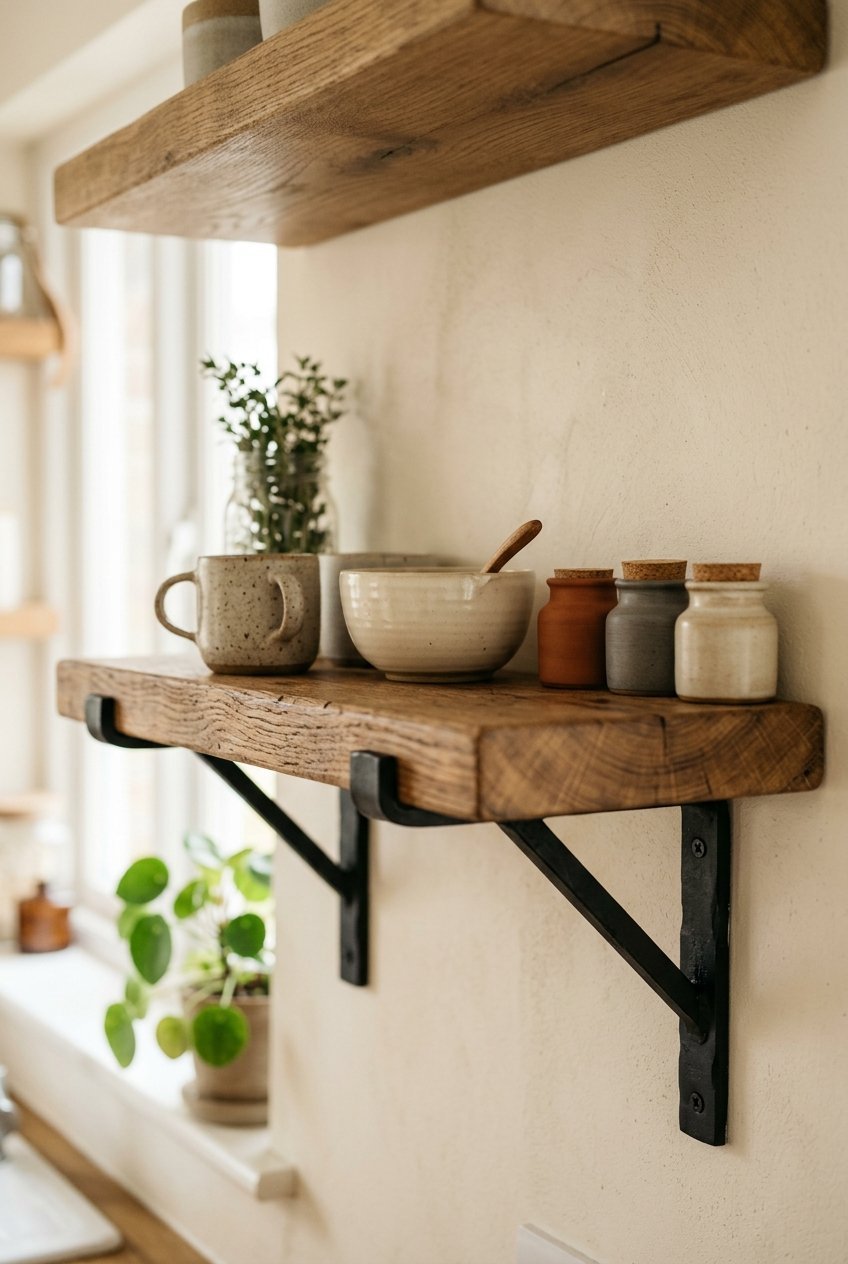
If you do not want the shelf to look invisible, make the brackets part of the design. Chunky black metal, simple brass, or a wooden corbel adds character and signals that the shelf is meant to carry real weight.
Check the weight rating before you buy. A shelf loaded with a full set of dishes needs sturdy brackets screwed into studs, not just plastic anchors in drywall.
8. A Tile Backdrop Behind the Shelves
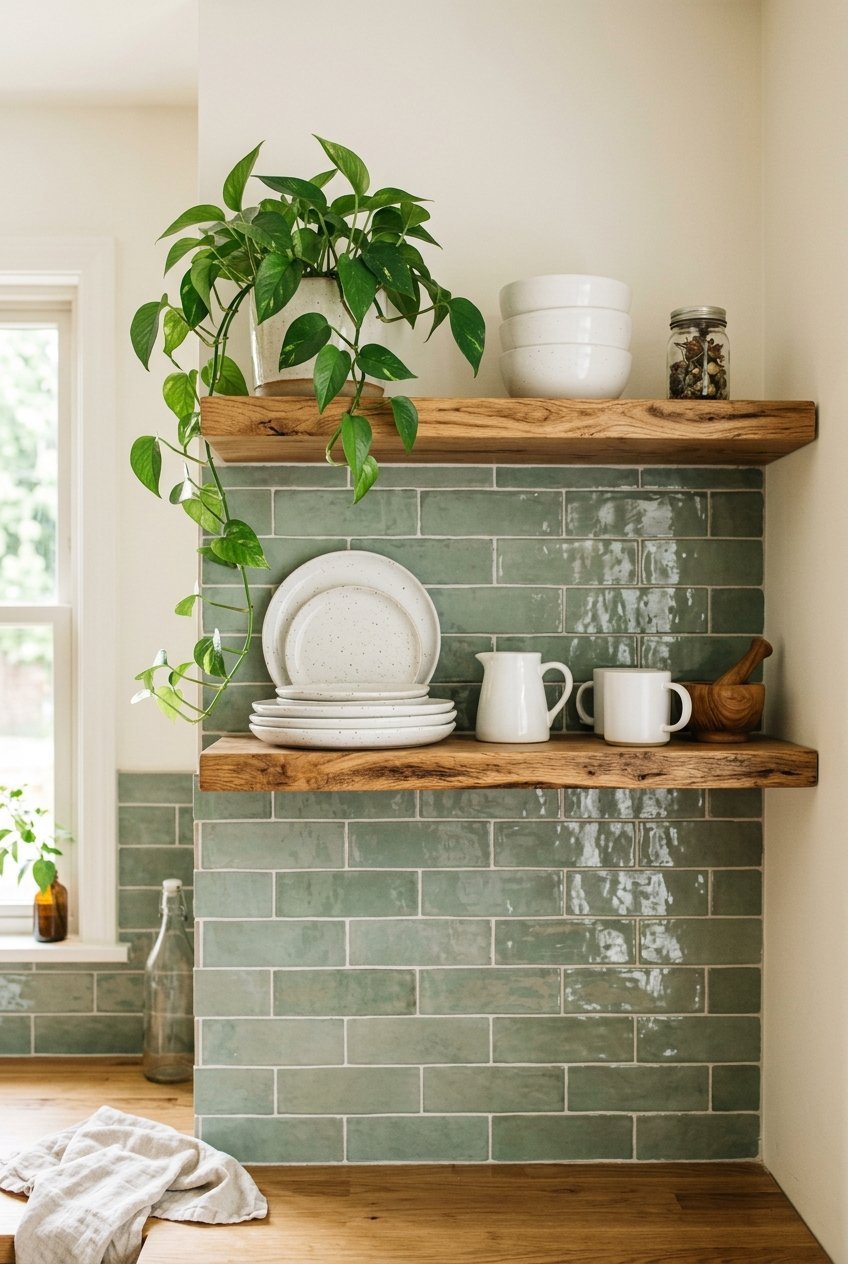
Putting shelves directly over the backsplash tile turns the wall into one feature. A handmade green, a warm white, or a patterned tile behind white dishes looks rich, and tile wipes clean far more easily than painted drywall.
Let the tile run all the way up behind the shelves rather than stopping partway. A clean, continuous surface is part of what makes this look finished.
9. Keeping Open Storage Practical
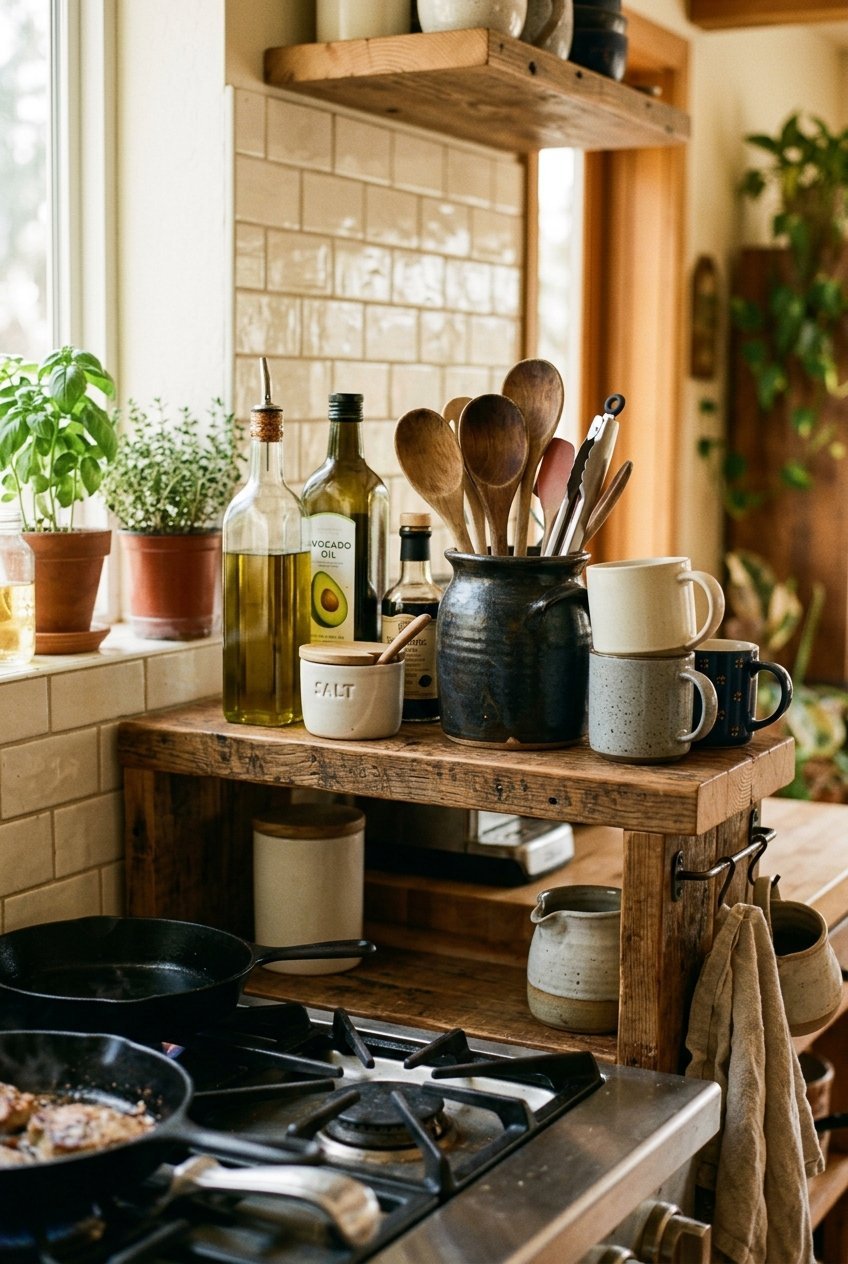
The best open shelf kitchen ideas put the things you use daily within reach and leave the rest behind doors. Oils, wooden spoons, mugs, and a few bowls make good candidates. Rarely used appliances, food packaging, and anything greasy belong in closed storage.
Plan to wipe the shelves every week or two. If that sounds like too much, start with one shelf and see how it goes before committing to a whole wall.
Is Open Shelving Right for Your Kitchen?
Open shelving works best when you are willing to edit what you own and keep a few simple habits. It rewards a calm, pared-back approach. If you are weighing the idea against other layouts, our guide to kitchen without upper cabinets mistakes covers what can go wrong, and our post on how to organize kitchen cabinets helps with everything that stays behind closed doors. For finishes and layout beyond the shelves, kitchen decor ideas for a dream kitchen is a good next read.
For more kitchen inspiration, follow along on Pinterest.
Frequently Asked Questions
Are open shelves in a kitchen practical?
They can be, as long as you keep daily-use items on them and store the rest behind doors. Wiping them down regularly keeps dust and grease from building up.
How do you keep open kitchen shelves from getting greasy?
Keep them away from the stovetop where you can, store items you use often so they get washed anyway, and give the shelves a quick wipe every week or two. A good range hood also helps a lot.
What should I put on open kitchen shelves?
Everyday dishes, glasses, mugs, wooden spoons in a crock, and a few cookbooks or plants work well. Choose items in a small range of colors so the shelf looks cohesive.
How far apart should open shelves be?
About 14 to 16 inches between shelves suits most dishware. Measure your tallest items before you install, so nothing ends up too tight.
Can open shelves hold the weight of dishes?
Yes, if they are installed properly. Use sturdy brackets and screw into wall studs rather than relying on drywall anchors alone, and check the weight rating on the shelf and brackets.
Should I replace all my upper cabinets with open shelves?
Not necessarily. Many kitchens look and work best with a mix of closed cabinets and one or two open shelves. That way you keep hidden storage and still get the open, airy feel.