Simple, practical systems that keep every shelf and drawer easy to use, not just tidy for a day.
Organize kitchen cabinets once with the right system, and it tends to stay organized, which is the real test most quick fixes fail. A cabinet that looks neat for a week and falls apart the moment life gets busy was never actually organized to begin with. It just looked that way in the photo.
These ten ways to organize kitchen cabinets focus on systems that hold up to daily use, not just a one-time tidy-up that unravels within a month.
Table of Contents
1. Sort and Declutter Before Organizing
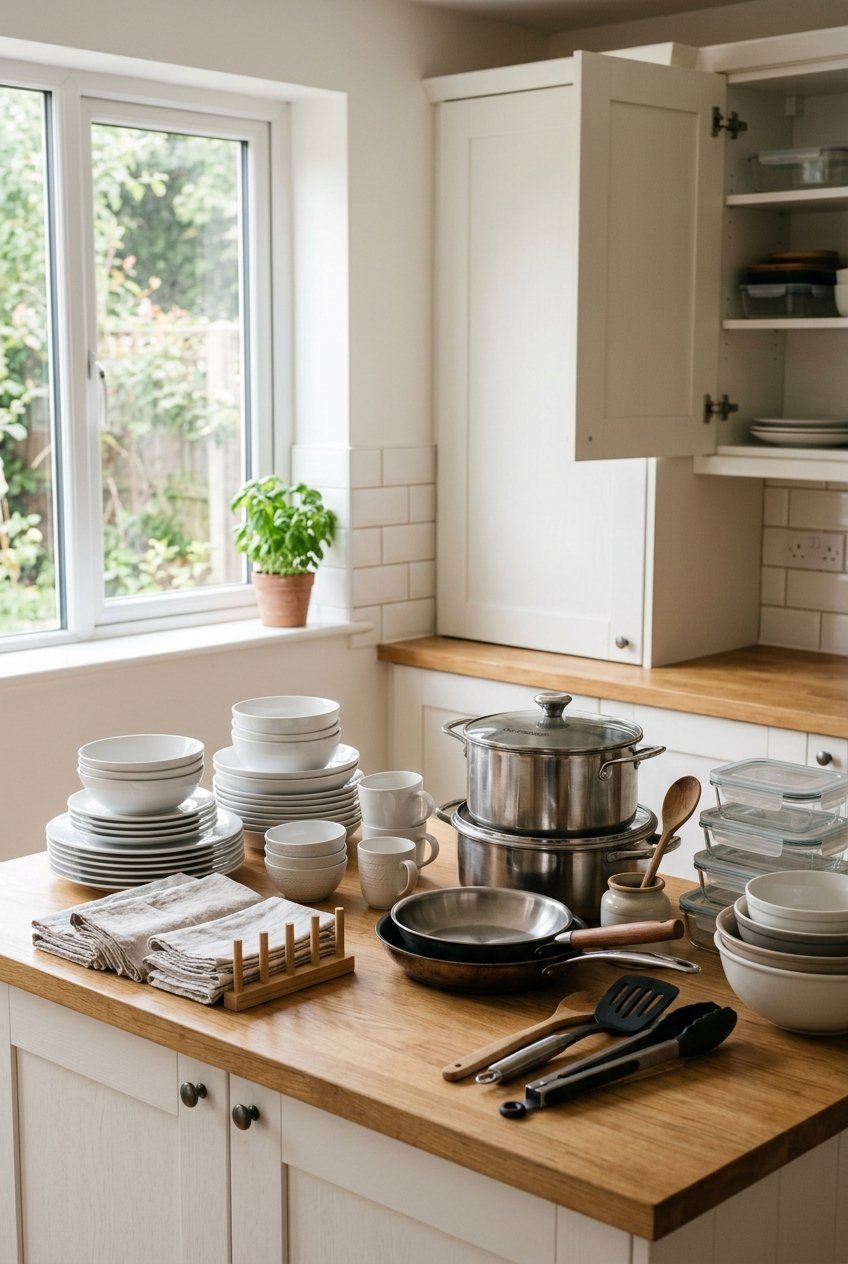
Before buying a single organizer, empty each cabinet and sort what comes out of it. Duplicate tools, expired pantry items, and gadgets that have not been touched in a year are the main reason cabinets feel crowded in the first place.
Any organizing system put in place after this step works better, because it is solving for what actually needs storing rather than trying to fit everything that happened to accumulate over time.
2. Use Drawer Dividers for Utensils
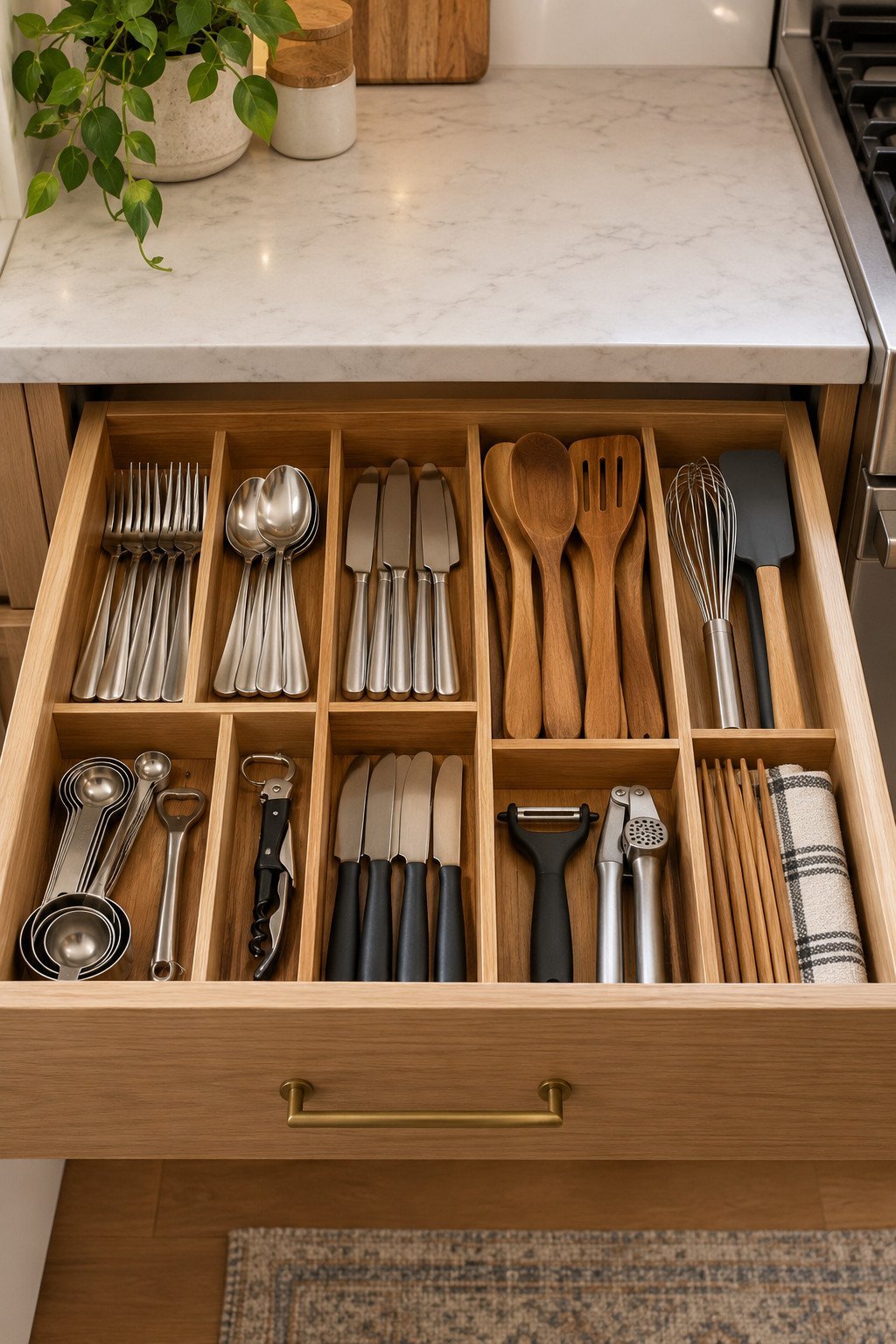
A junk drawer of loose utensils is one of the most common complaints in kitchens of every size. Simple wood or bamboo dividers, sized to the drawer, keep spatulas, whisks, and measuring spoons in their own defined spot instead of sliding into a pile every time the drawer opens.
Adjustable dividers are worth the slightly higher cost over fixed ones, since they can be reconfigured as tools get added or replaced over time.
3. Install a Lazy Susan for Corner Cabinets
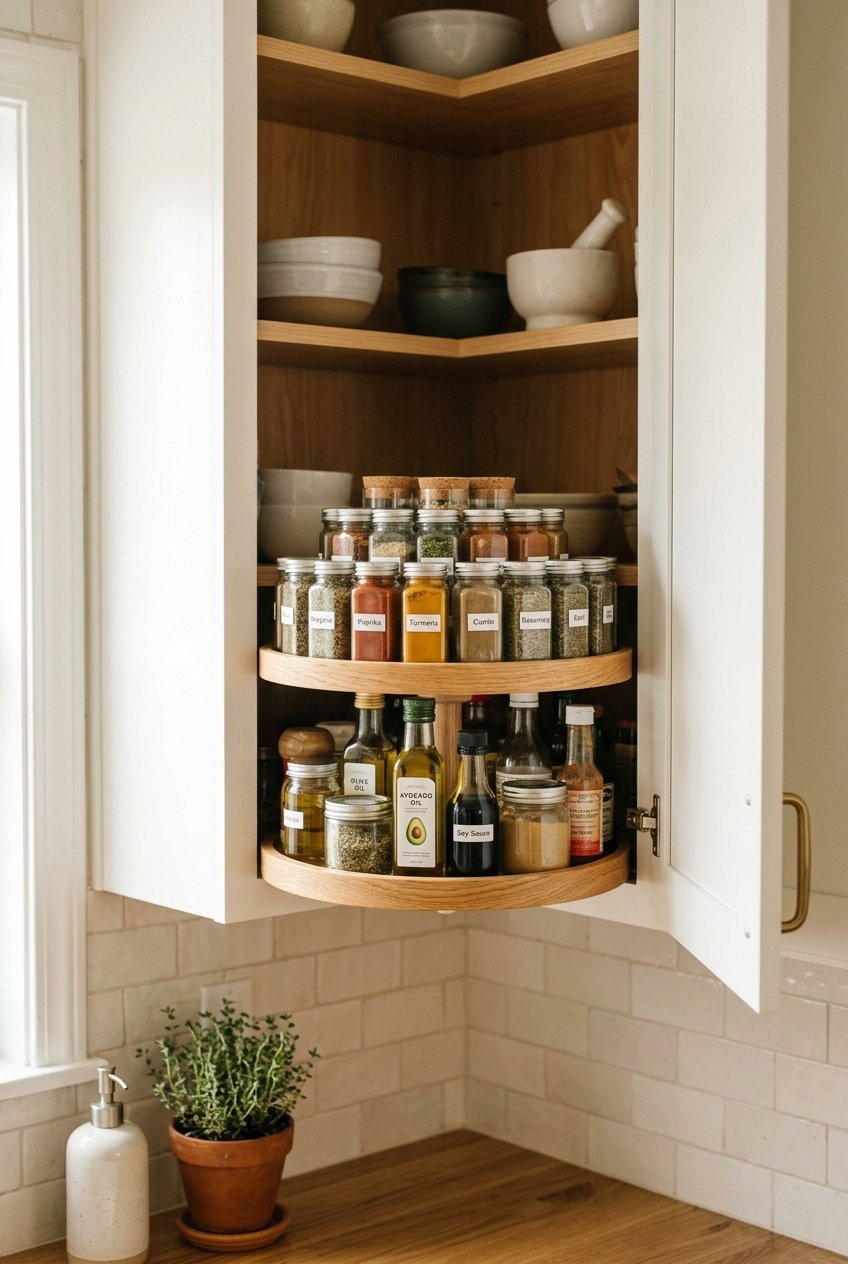
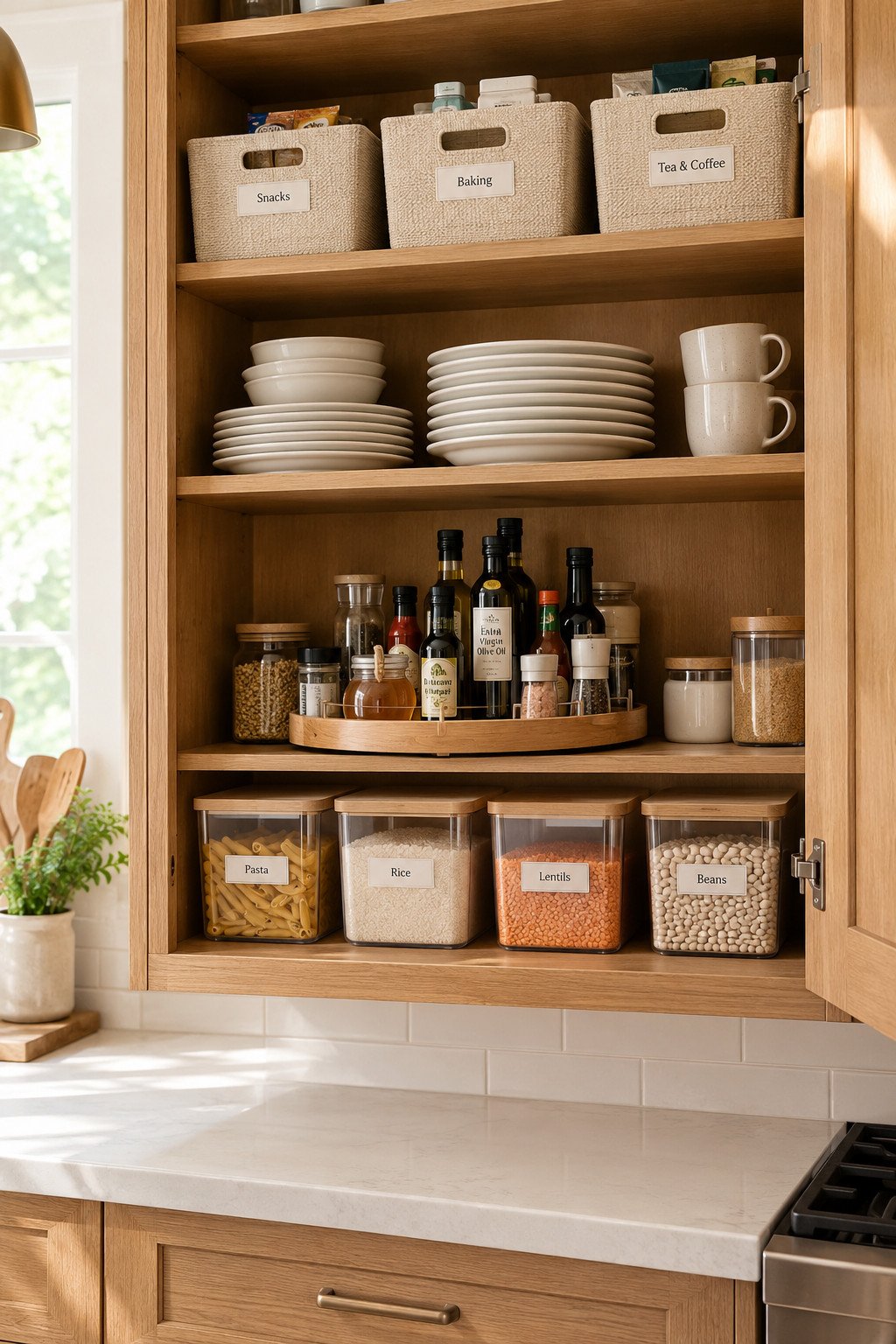
Corner cabinets are the most commonly wasted storage space in a kitchen, since the deep back corner is hard to reach without pulling everything out in front of it first. A lazy susan solves this by letting the whole shelf rotate, bringing items at the back within reach with a simple spin.
It works especially well for oils, condiments, and jars, anything round or short enough to sit stably on the rotating shelf.
4. Stack Plates and Bowls by Size
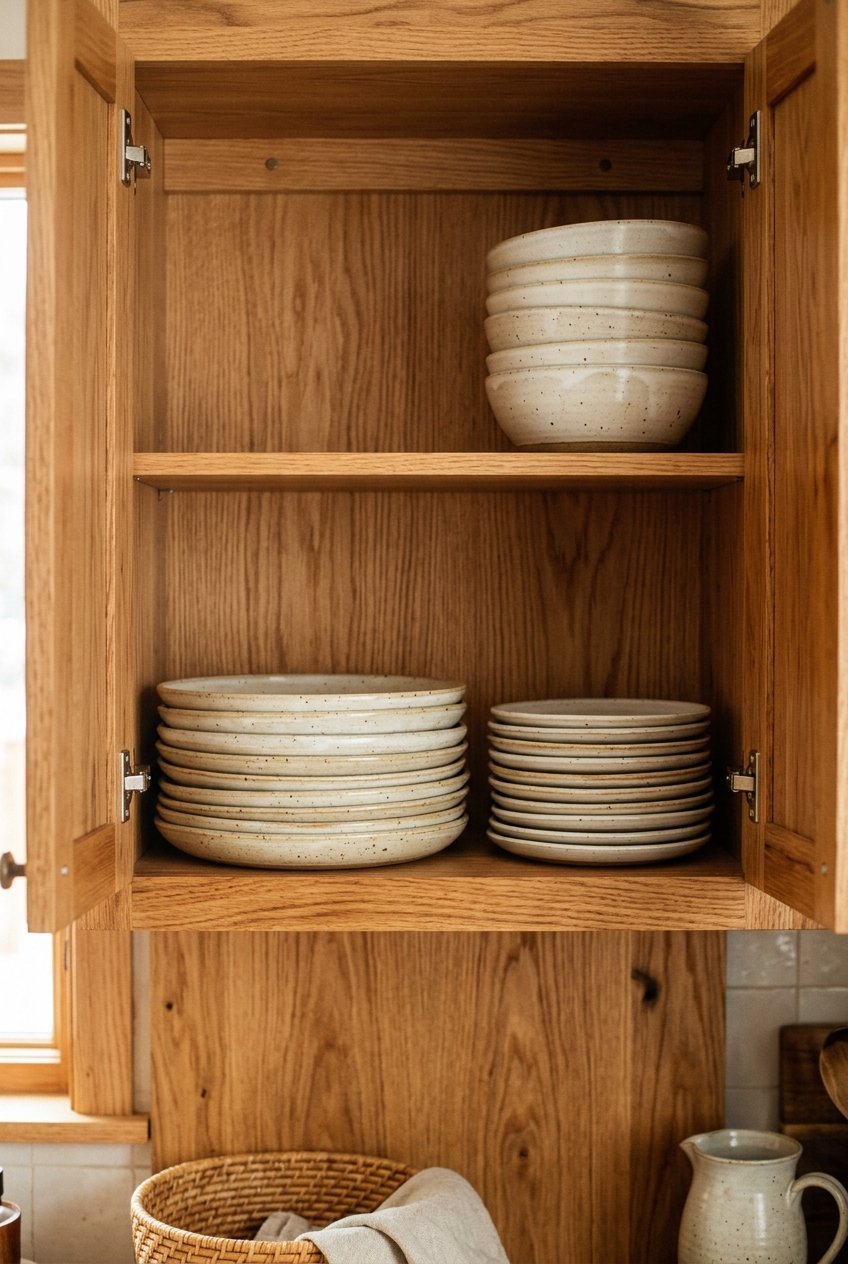
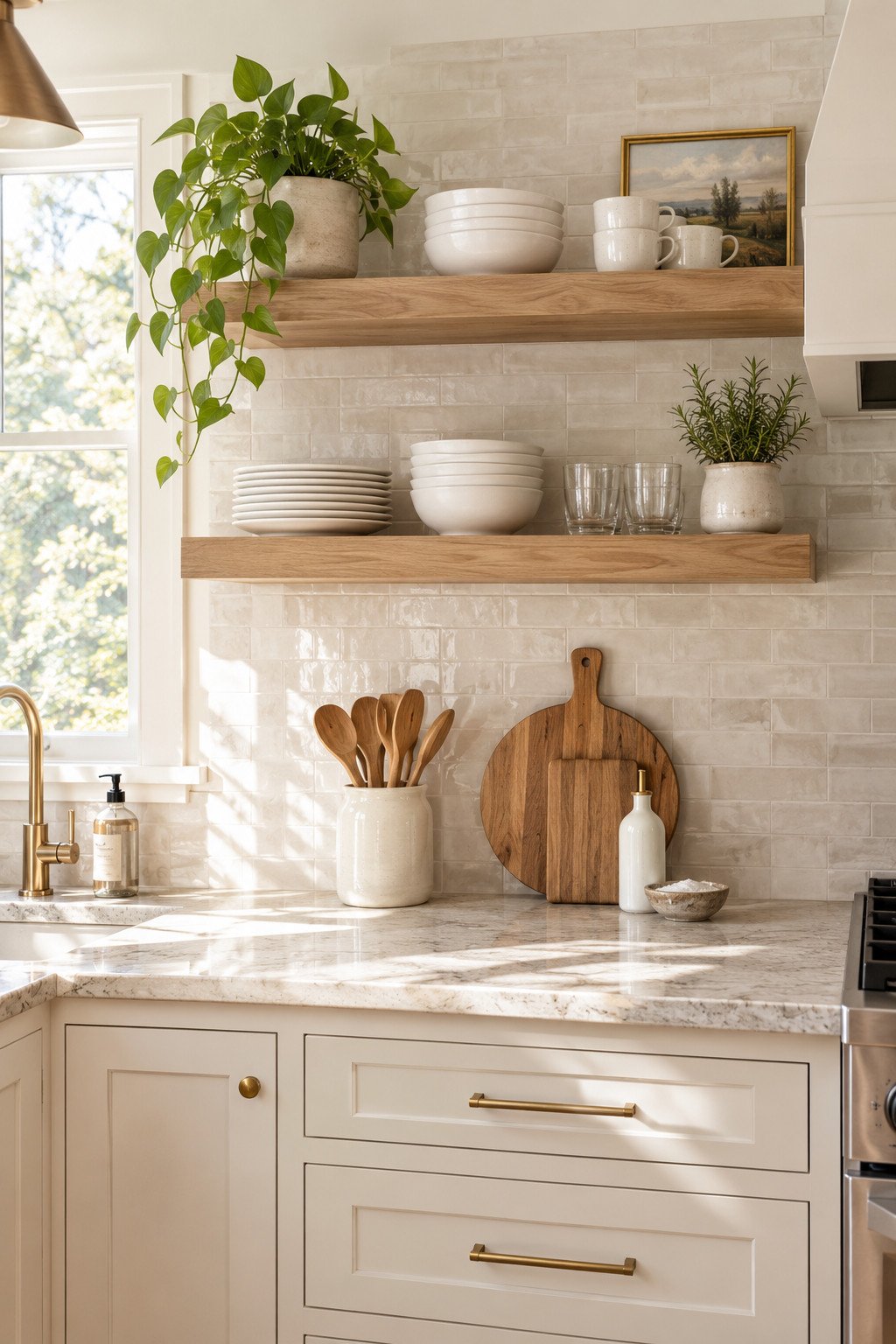
Grouping plates and bowls by size rather than mixing everyday and special-occasion pieces together makes it faster to grab what’s needed without digging through a stack. A plate rack or shelf riser adds a second usable level above the stack instead of leaving that vertical space empty.
Keep the most-used set at the front and eye level, with occasional-use dishware on a higher or lower shelf out of the way.
5. Use Vertical Dividers for Trays and Baking Sheets
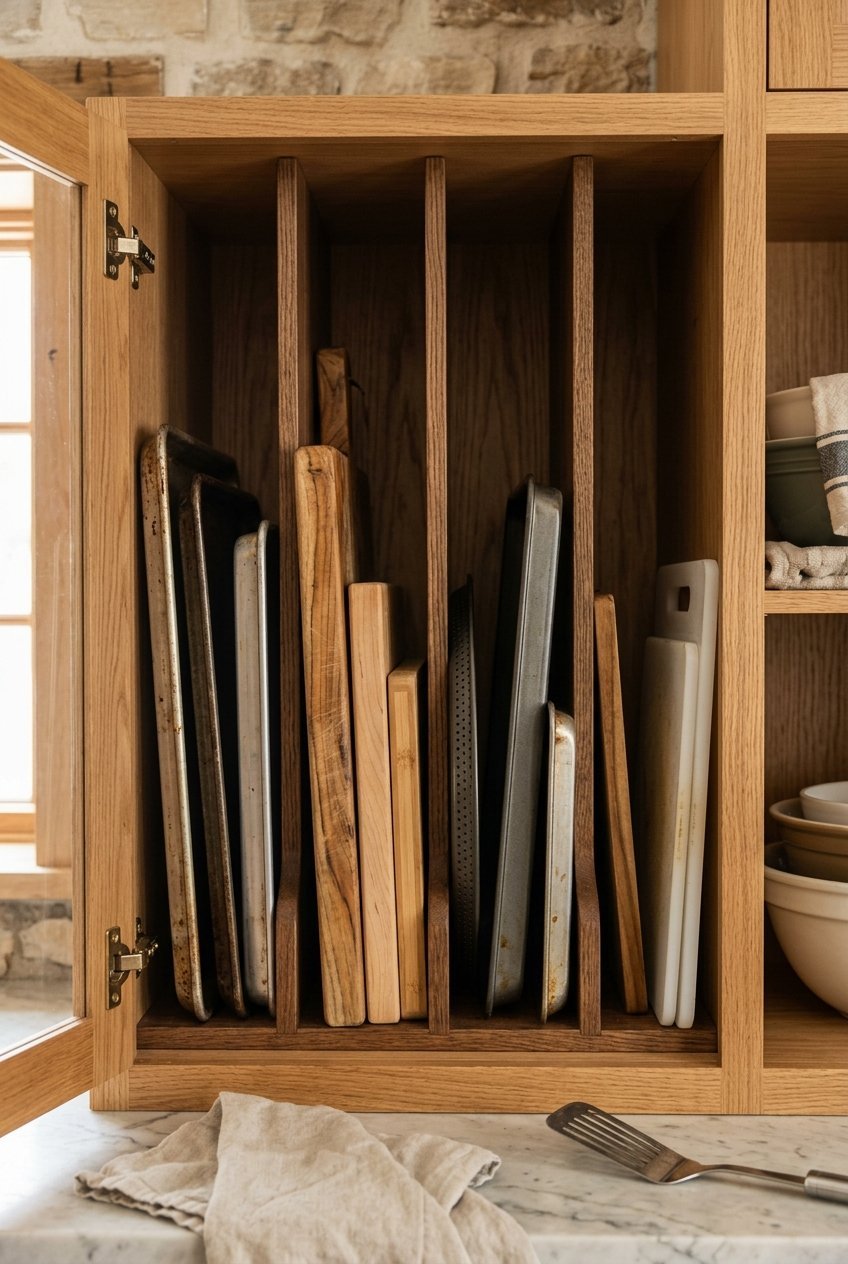
Flat items like baking sheets, cutting boards, and muffin tins are awkward to stack horizontally, since reaching the bottom one usually means moving everything on top of it first. Vertical dividers let each item slide in and out independently, which is a small change that saves real time during regular cooking.
This works in a dedicated cabinet or even a single slot next to the oven, as long as the dividers are spaced to fit the items on hand.
6. Add Pull-Out Shelves to Deep Cabinets
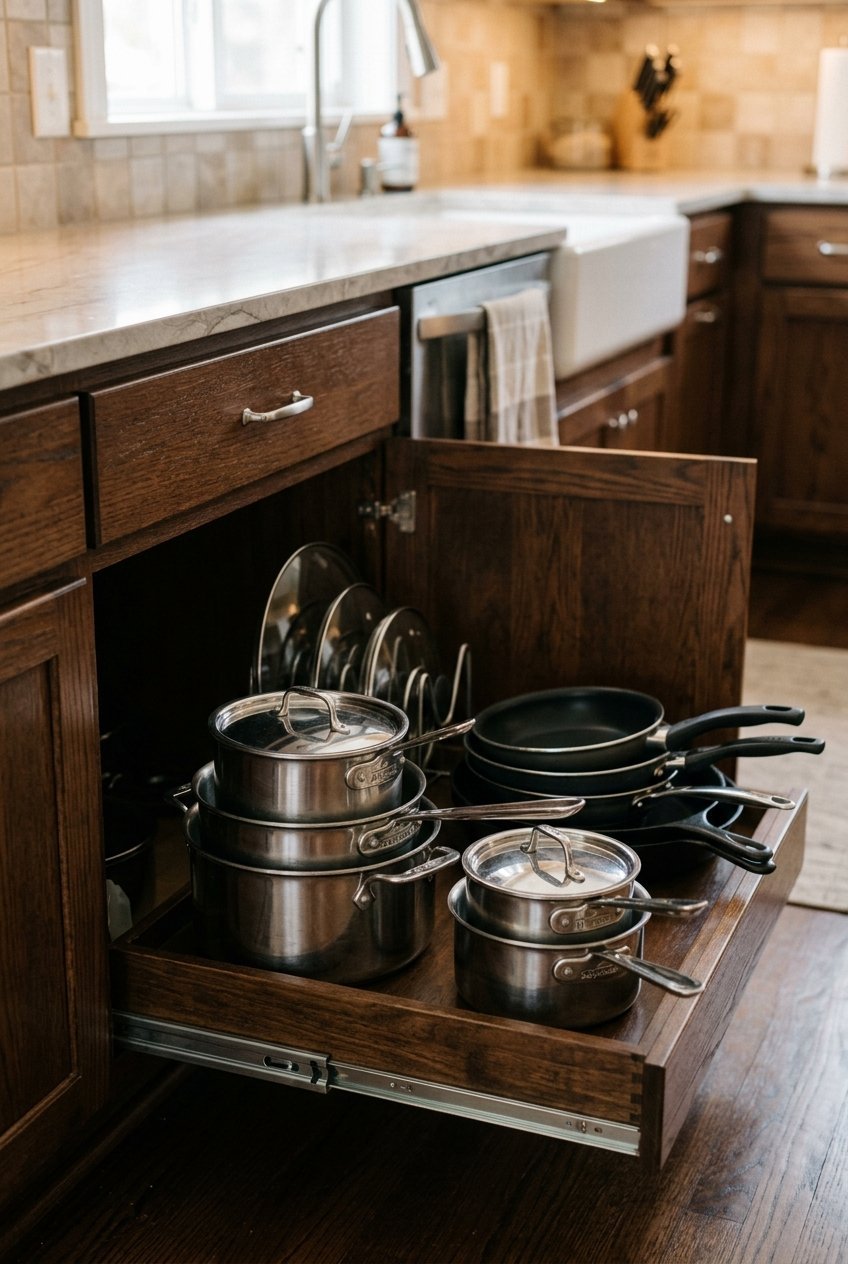
A deep lower cabinet without pull-out shelving tends to turn into a black hole where pots and pans get buried at the back and forgotten. Retrofitted pull-out shelves bring the entire contents forward with one motion, so nothing at the back stays permanently out of reach.
Most standard cabinets can be fitted with pull-out shelving without a full renovation, which makes this one of the higher-impact upgrades on this list for the effort involved.
7. Use Clear, Labeled Bins for Pantry Items
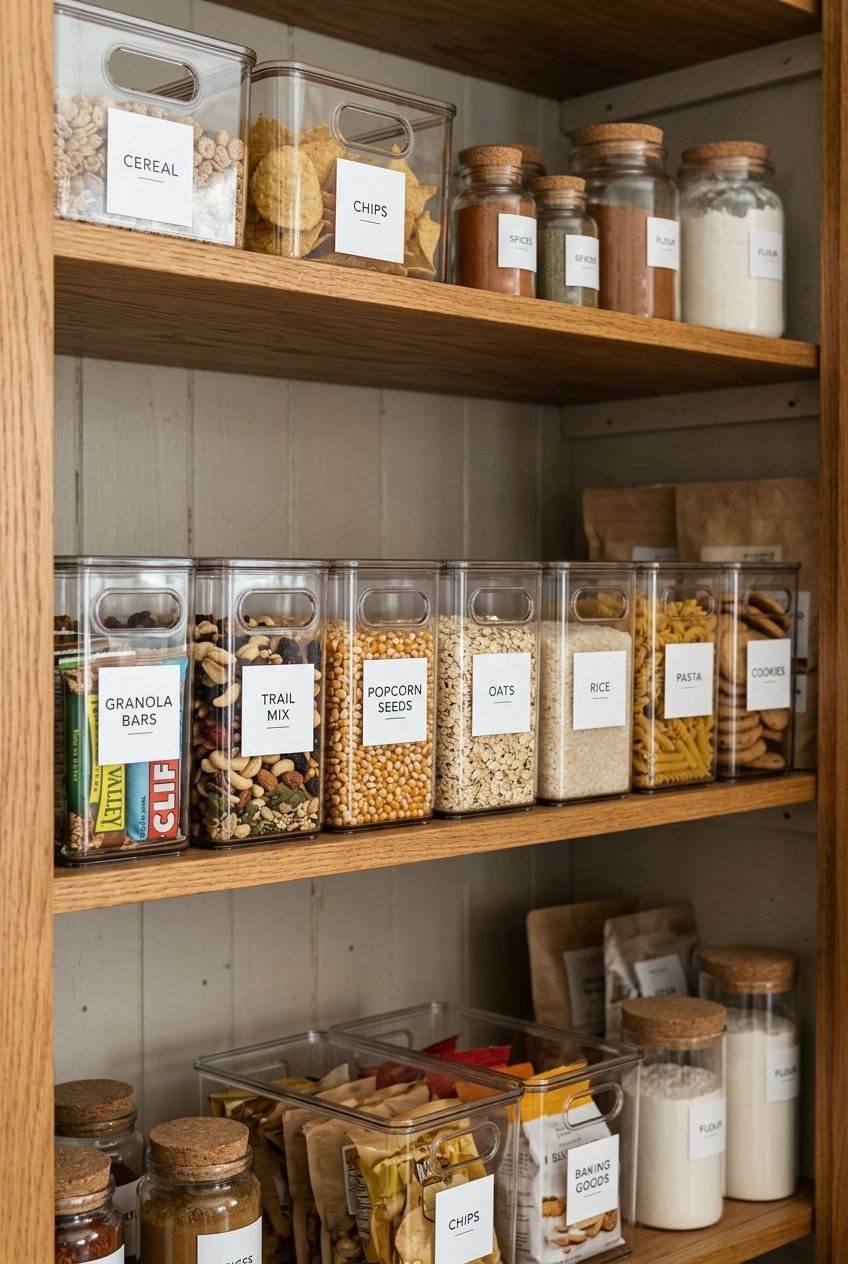
Loose bags and boxes of pantry items rarely stay tidy for long, since they are different shapes and sizes that do not stack well together. Clear bins group similar items and let you see what is running low without opening every container.
Labels matter more than they might seem to, especially in a shared kitchen, since they keep everyone putting things back in the same spot instead of wherever there happens to be room.
8. Store Lids Separately With a Lid Rack
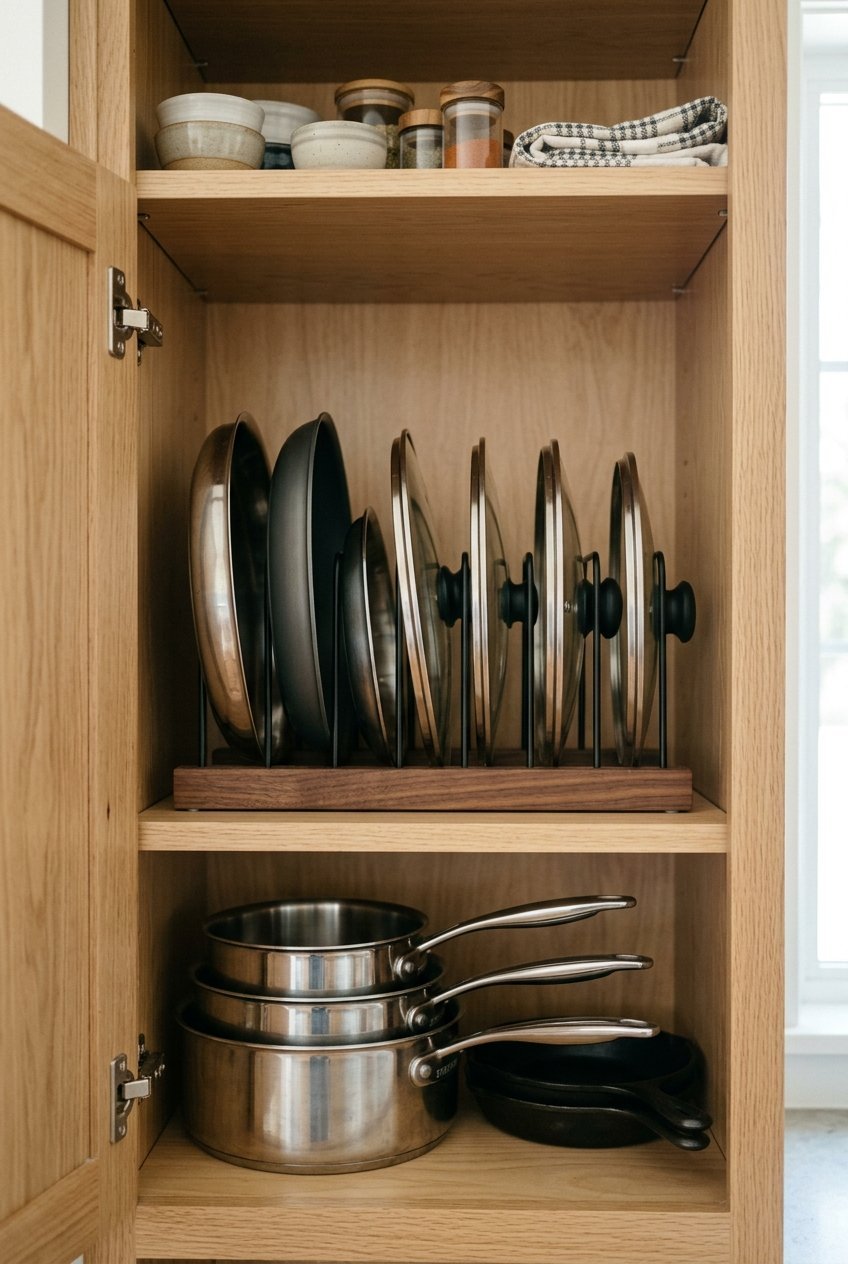
A pile of loose lids is one of the most common sources of clatter and mismatched searching in a kitchen cabinet. A simple vertical lid rack, either freestanding or mounted inside a cabinet door, keeps each lid upright and visible instead of stacked in a shifting pile.
Pair it with pots stored nearby, nested by size, so the whole cookware system stays grouped together rather than scattered across multiple cabinets.
9. Use Door-Mounted Racks for Small Items
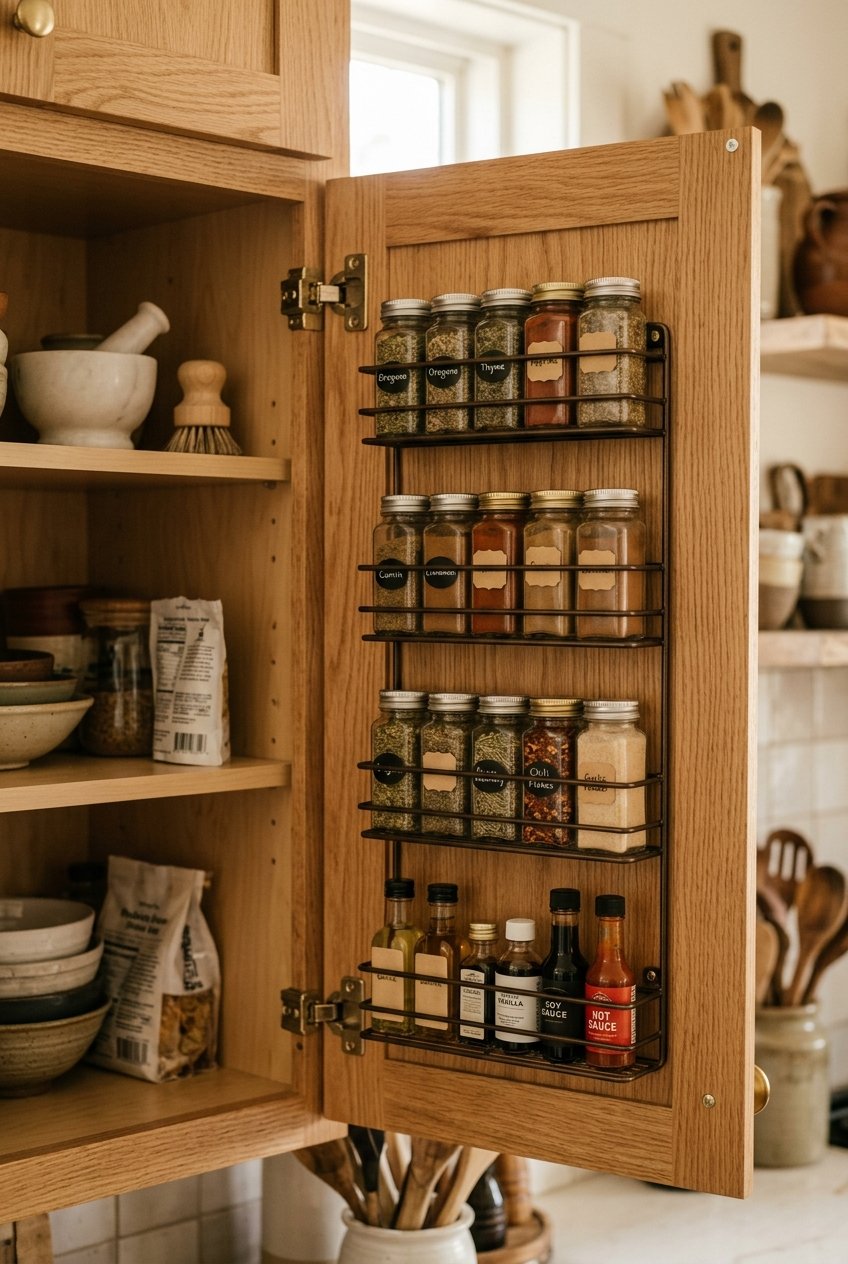
The inside of a cabinet door is one of the most overlooked storage spots in the kitchen. A mounted spice rack, a small wire basket, or a mesh organizer fitted to the door holds spice jars, foil, or small bottles without using any shelf space at all.
This is one of the cheapest ways to organize kitchen cabinets on this whole list, since most door racks install without tools beyond a screwdriver.
10. Group Items by How Often They’re Used
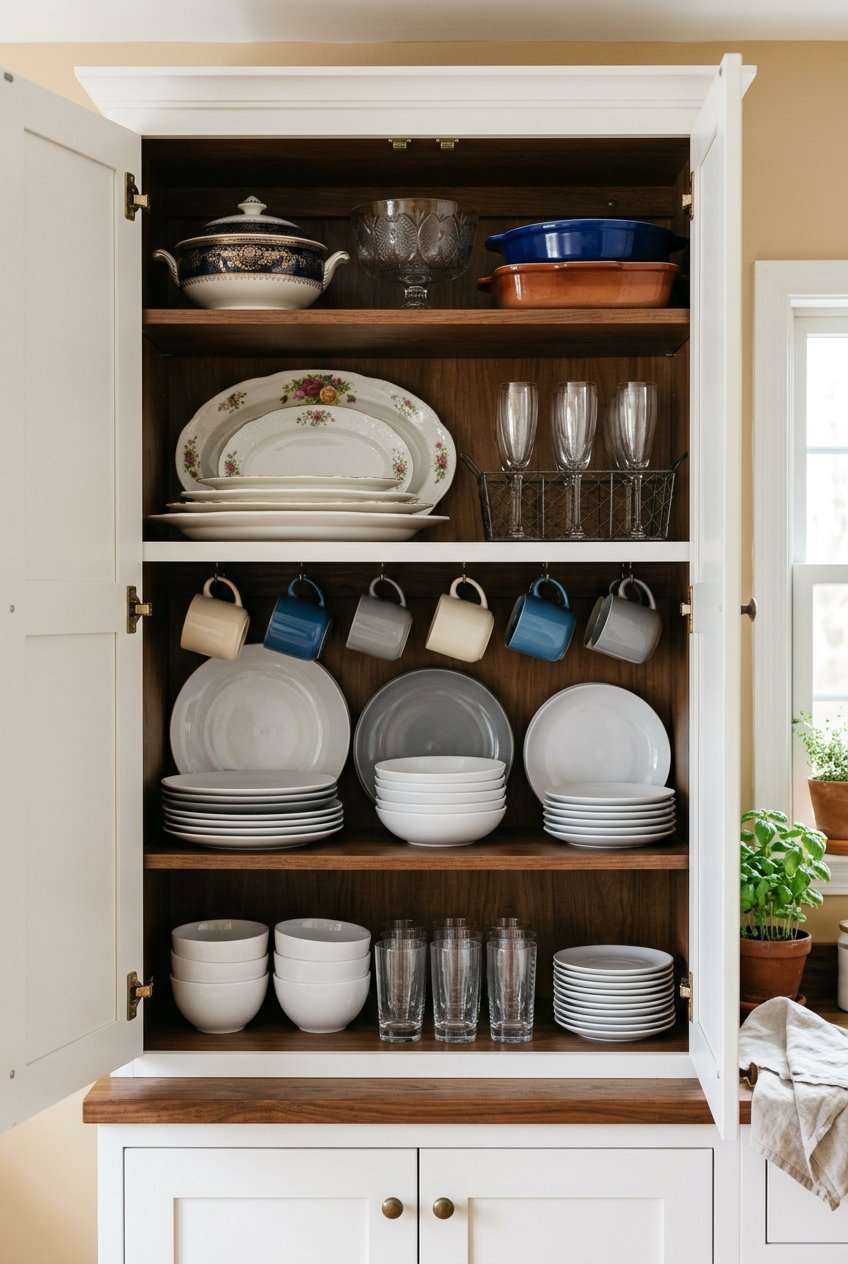
The cabinets and shelves at eye level and within easy reach should hold what gets used daily, everyday plates, regular cookware, common spices. Items used only occasionally, holiday dishware, a rarely used appliance, belong on a higher shelf or in a less convenient spot.
This single principle ties every other item on this list together. The best organization system in the world will not hold up if the most-used items are not stored where they are easiest to reach.
Keeping It Organized Long Term
The systems that last are the ones built around how a kitchen is actually used day to day, not just how it looks freshly organized on the first afternoon. If you are planning other kitchen updates alongside this, our guide to kitchen cabinet design ideas covers finishes and hardware, and our piece on small apartment kitchen decor ideas that look expensive on a budget pairs well if space is also limited.
For more kitchen organization inspiration, follow along on Pinterest.
Frequently Asked Questions
What is the first step to organize kitchen cabinets?
Emptying and decluttering each cabinet before adding any organizers is the most important first step. Sorting out duplicates, expired items, and rarely used tools makes any system put in place afterward far more effective.
How do I organize a deep corner cabinet?
A lazy susan is usually the most effective fix, since it lets the whole shelf rotate and brings items at the back within reach without needing to unload everything in front of it first.
What is the best way to organize pots and pans?
Nesting pots by size and storing lids separately in a vertical lid rack keeps cookware from becoming a loud, unstable stack, and pull-out shelves make deep cabinets holding pots much easier to access.
Should I use clear bins or baskets for pantry organization?
Clear bins make it easier to see what is running low at a glance, while baskets work well for items that do not need to be seen as often. Many kitchens use a mix of both depending on the item.
How often should kitchen cabinets be reorganized?
A quick check every few months is usually enough to catch clutter before it builds up again, with a more thorough declutter once or twice a year as cooking habits and household needs change.
What is the cheapest way to organize kitchen cabinets?
Door-mounted racks and drawer dividers are among the most affordable options, since both typically install without tools and make a noticeable difference in how usable the space feels.