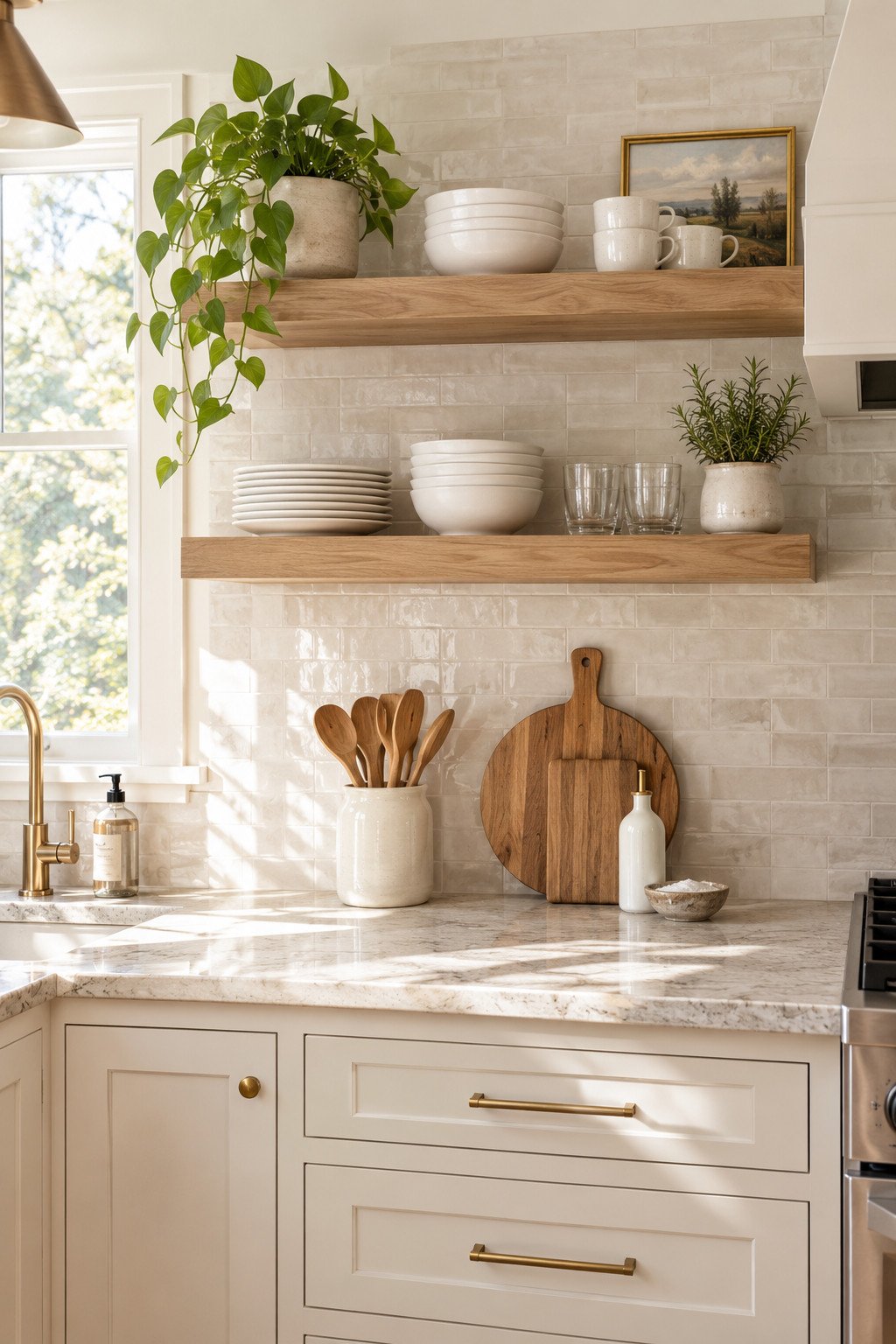
Furniture, color, and styling choices that keep a living room feeling open instead of empty.
A modern minimalist living room is often misunderstood as just a room with less stuff in it. Taken that far, it ends up feeling cold and unfinished instead of calm. The living rooms that actually pull off the look well are not sparse by accident. They are edited carefully, with fewer pieces chosen more deliberately, and warmth brought in through texture and light rather than a pile of extra objects.
These nine modern minimalist living room ideas cover the furniture, color, and styling decisions that make the difference between a room that feels calm and one that just feels bare.
Table of Contents
1. A Restrained Neutral Color Palette
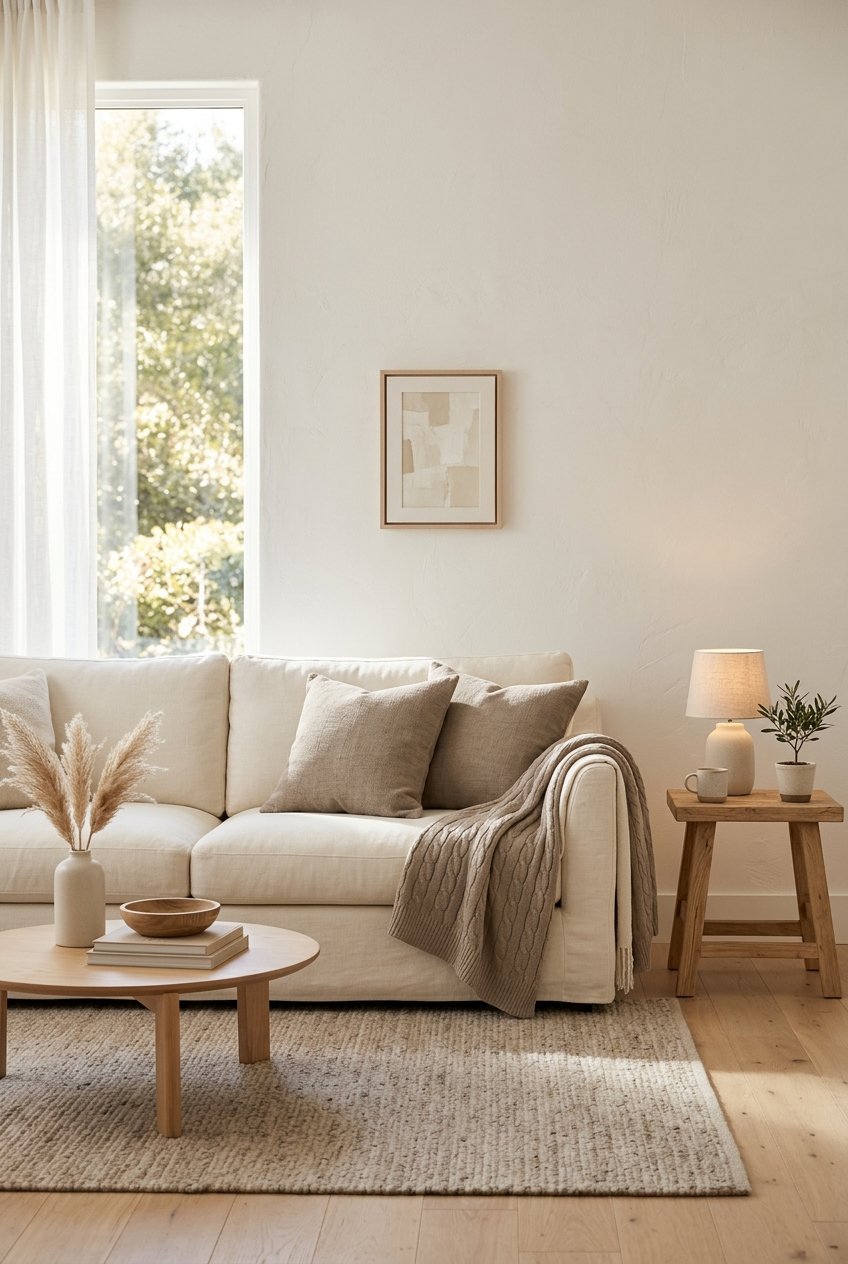
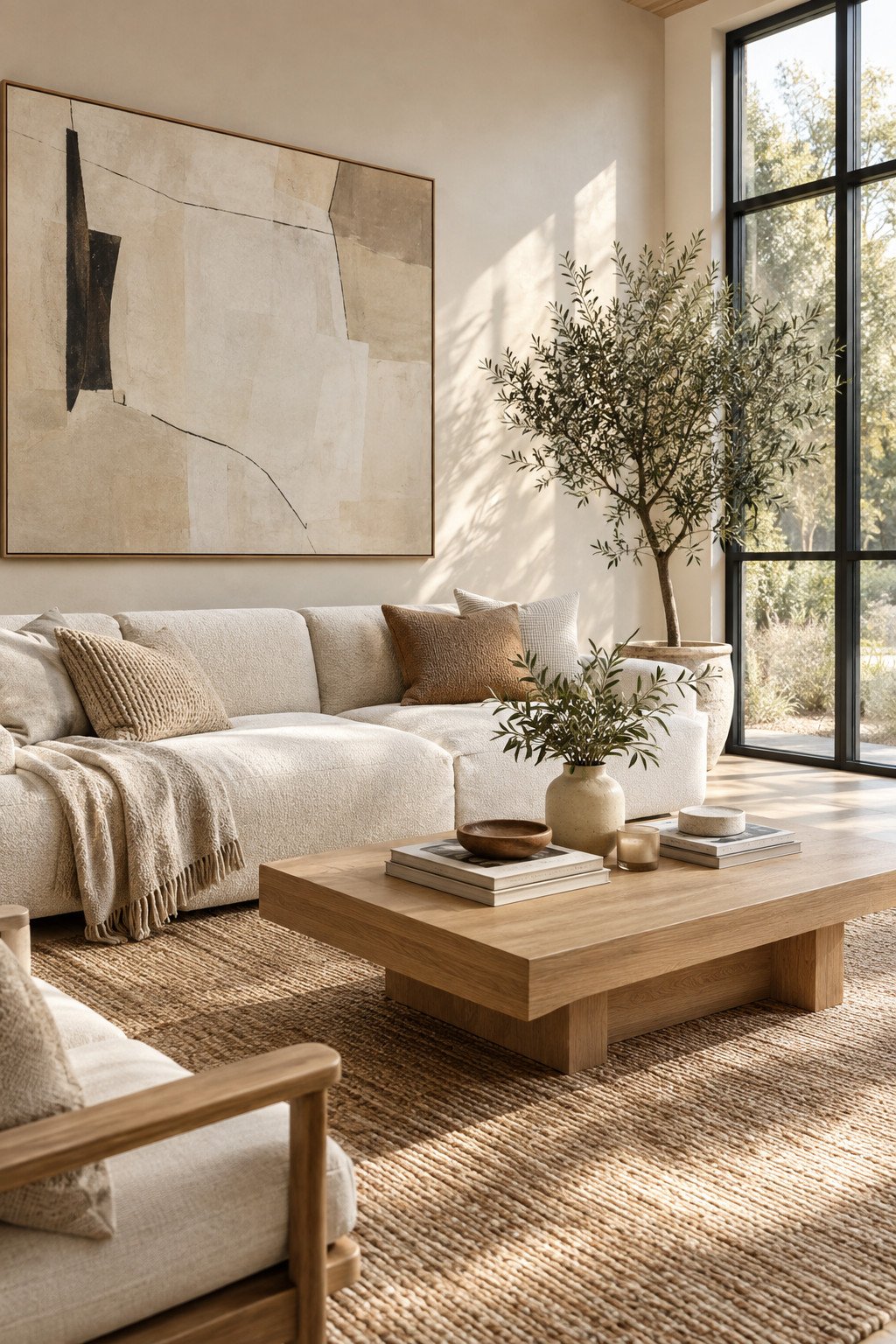
A modern minimalist living room usually works within two or three tones at most, warm white, cream, soft taupe, rather than a wider mix of colors. This restraint is what gives the room its calm feeling, since there is nothing competing for attention.
It does not mean the room has to be all white. A warm neutral base with one slightly deeper accent tone, in a rug or a single chair, keeps the palette from feeling flat.
2. Low-Profile, Simple Furniture
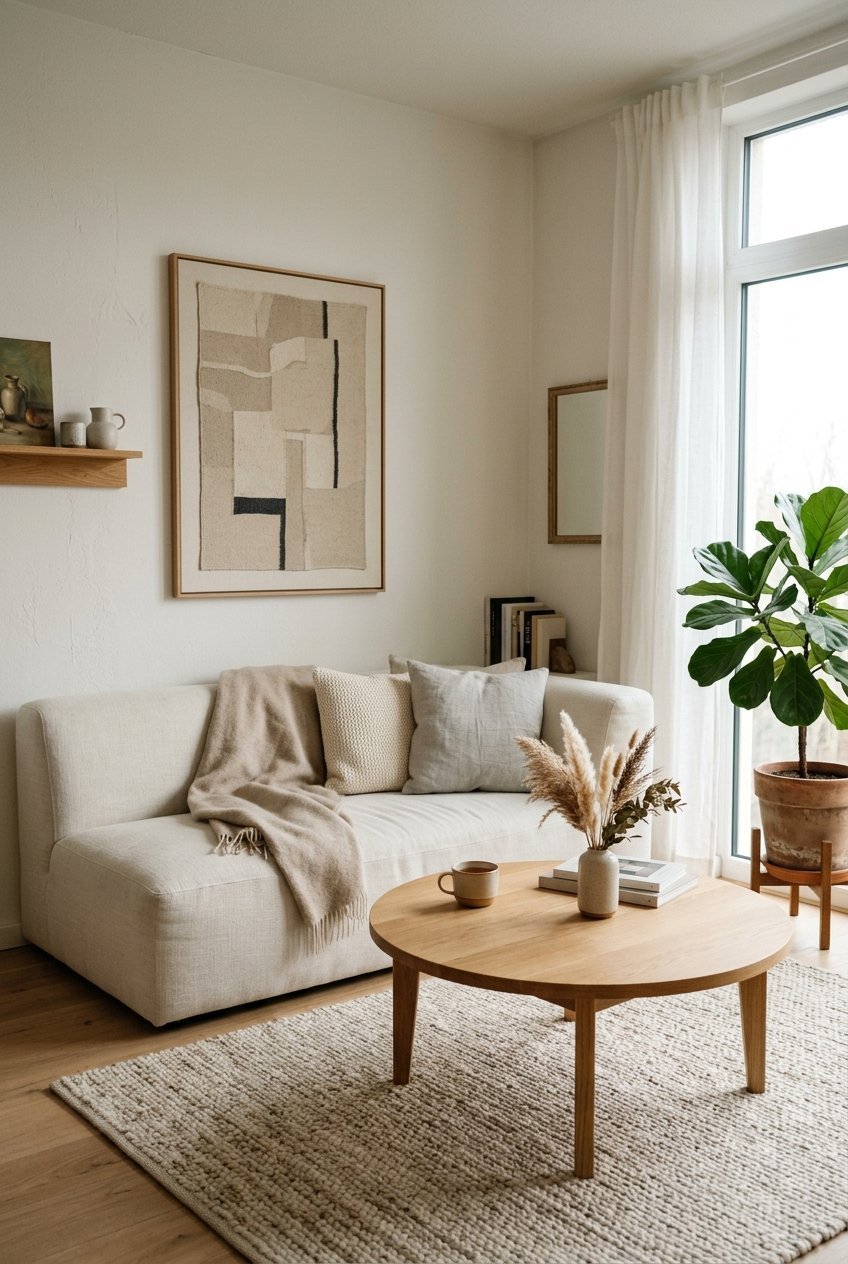
Furniture with clean lines and a lower profile tends to make a room feel more open than bulky, heavily upholstered pieces. A sofa with slim arms, a simple round or rectangular coffee table, and chairs without ornate detailing all support the calmer feel a modern minimalist living room is going for.
Choose fewer, better pieces rather than filling every open spot with furniture. Empty floor space is part of the design, not a gap to fill.
3. One Statement Piece Instead of Many Small Ones
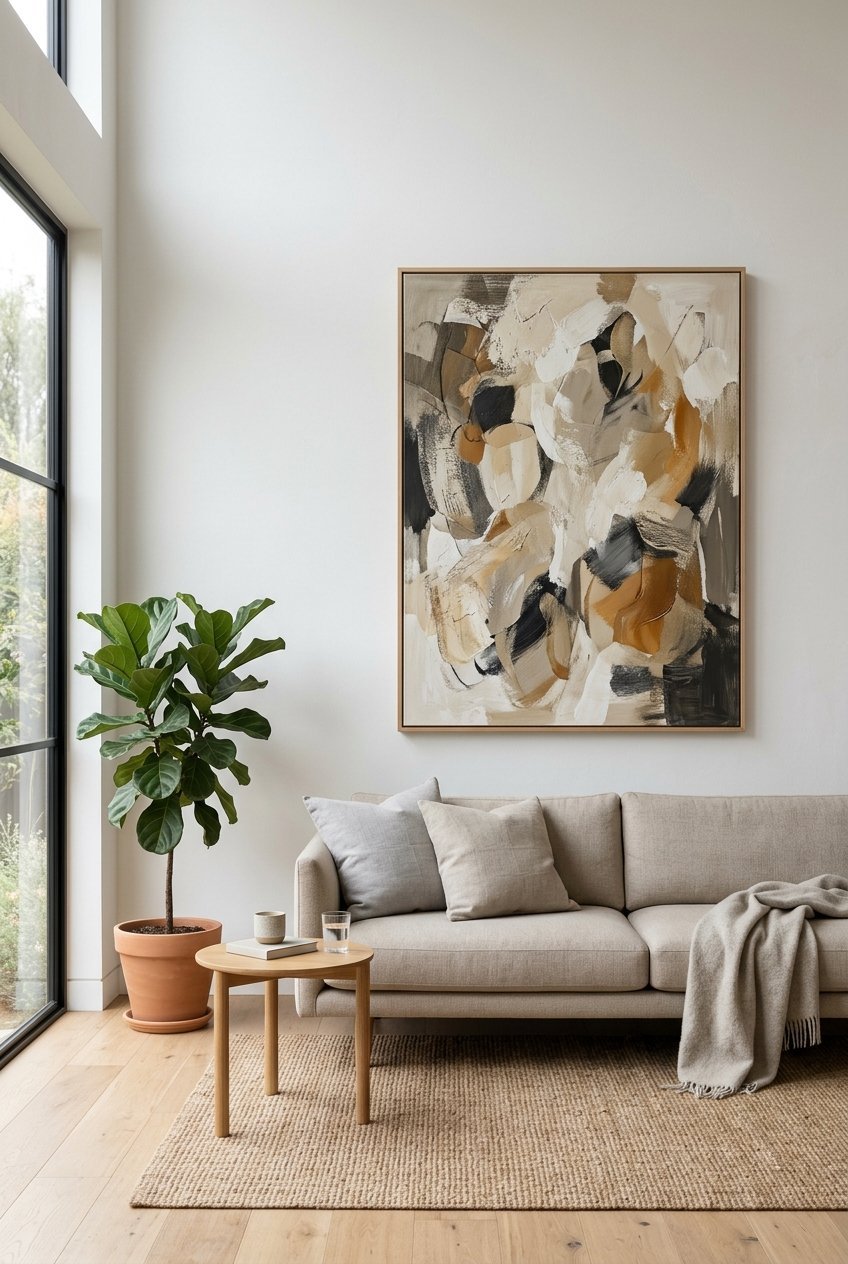
Rather than scattering several small decorative objects around the room, a modern minimalist living room usually centers on one larger piece, a single large artwork, a sculptural light fixture, or one substantial plant. That one piece gets room to stand out instead of competing with a dozen smaller items.
This is often the easiest change to make in an already-furnished room. Removing several small decor pieces and keeping just one tends to improve the room more than adding anything new.
4. Hidden Storage to Keep Surfaces Clear
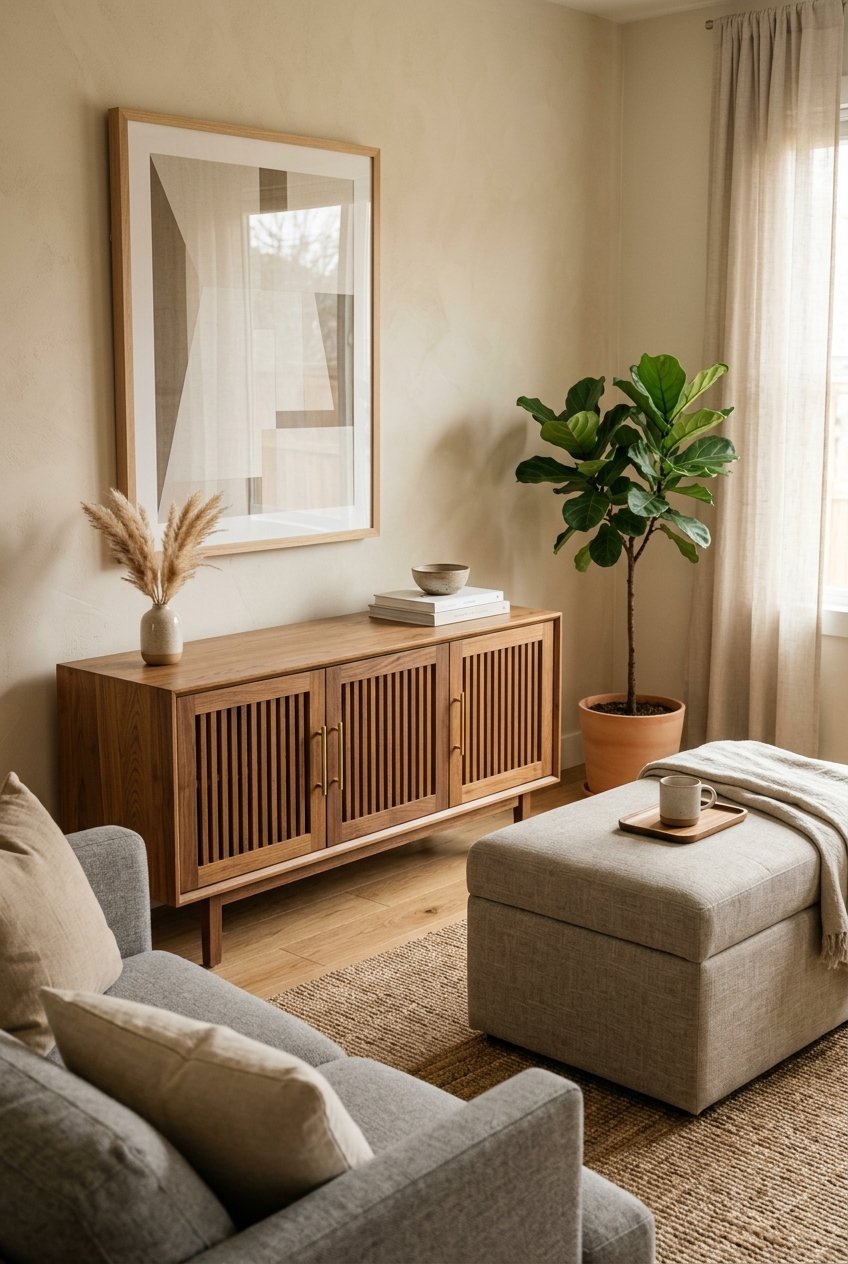
A minimalist look depends almost entirely on clear surfaces, which means remotes, cables, and everyday clutter need somewhere to go that is not the coffee table. Closed media cabinets, a storage ottoman, or a drawer in the console table all keep daily items out of sight without needing to get rid of them.
Build this storage in before finalizing the rest of the room. Trying to style a cluttered space is far harder than designing around proper storage from the start.
5. Natural Light as the Main Decor Element
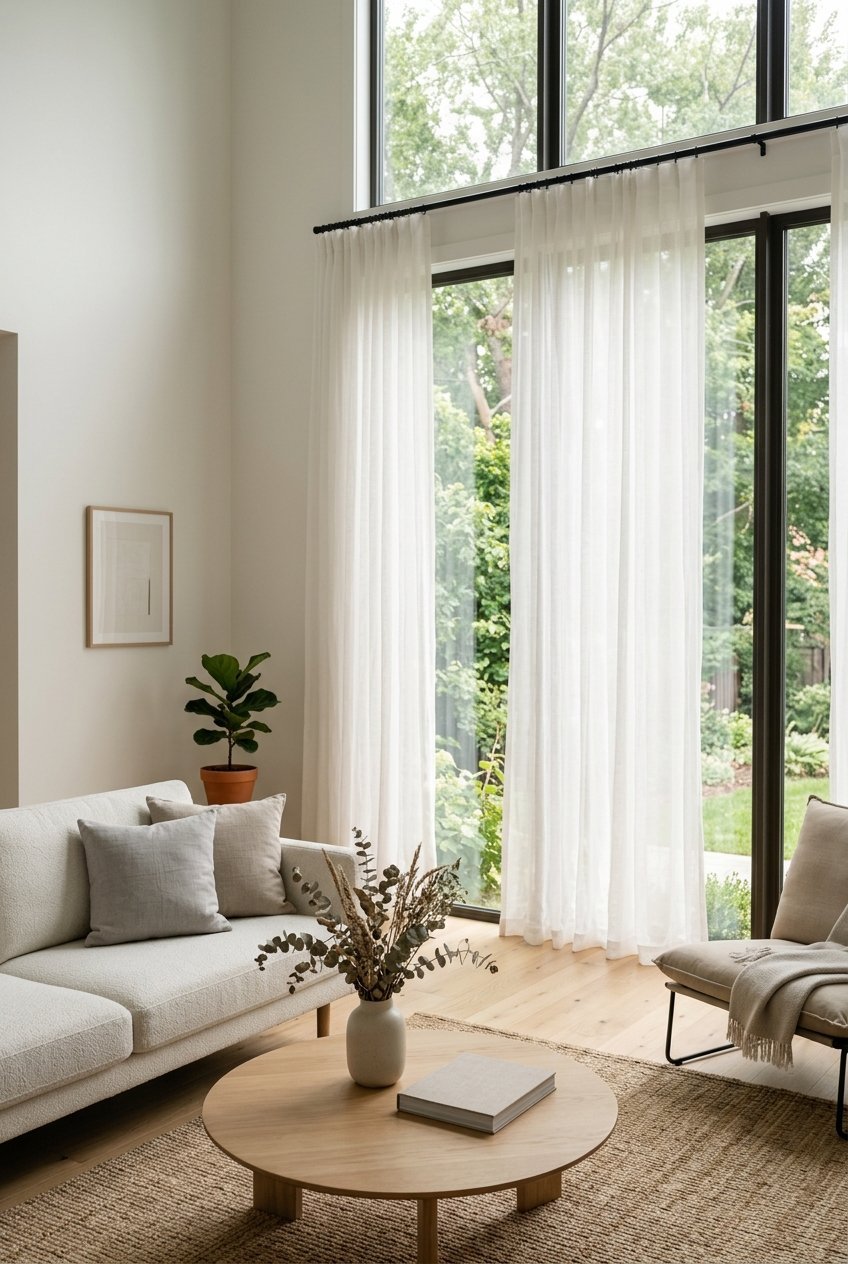
With fewer decorative objects doing the visual work, light becomes one of the most important elements in a modern minimalist living room. Sheer or lightweight curtains that let daylight through, rather than heavy drapes that block it, keep the room feeling open throughout the day.
In the evening, a couple of warm lamp sources, rather than one bright overhead light, keep the same calm feeling after dark.
6. Texture Instead of Pattern
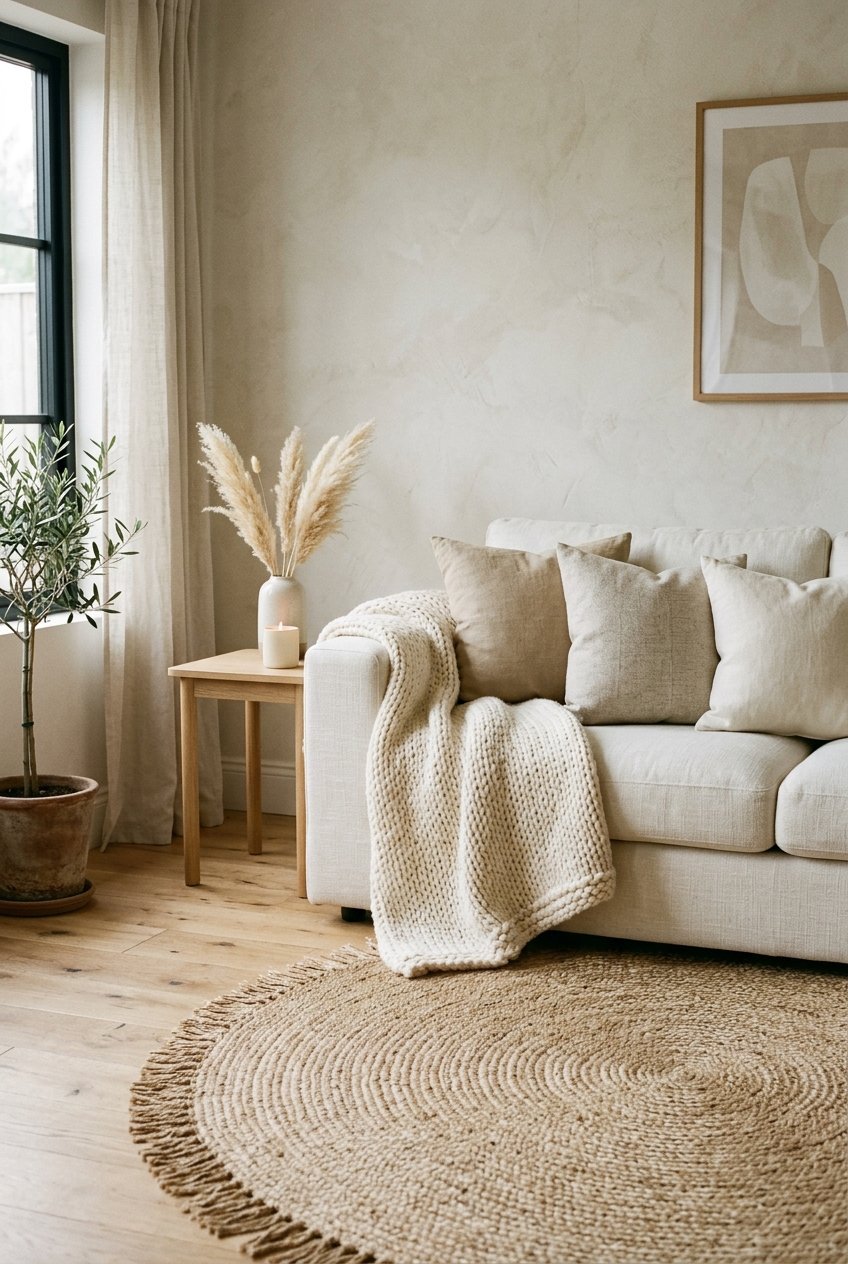
A fully plain room can feel flat, which is where texture does the job pattern usually would. A jute rug, a wool throw, and linen cushions, all in a similar neutral tone, give the room depth and interest without introducing a busy print.
This is one of the more overlooked modern minimalist living room ideas, but it is the detail that stops a neutral room from reading as cold or unfinished.
7. One or Two Plants, Not a Jungle
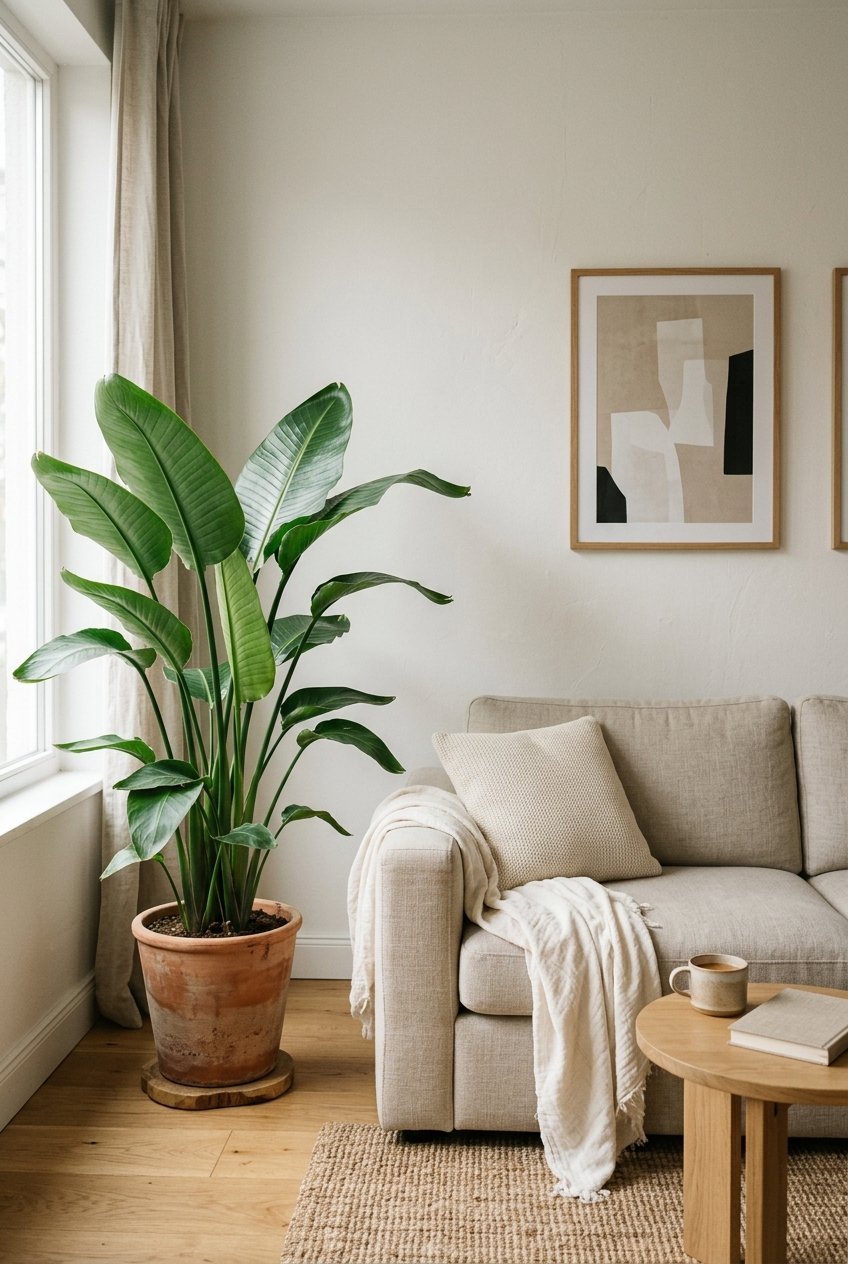
A single large plant brings life into the room without crowding it the way a collection of smaller plants on every surface would. It also gives the eye a natural, organic shape to rest on against the straighter lines of the furniture.
Pick one spot, usually a corner or beside a window, rather than spreading plants throughout the room.
8. A Clear, Defined Furniture Layout
Furniture pulled together and anchored by a properly sized rug reads as intentional, while furniture pushed against every wall with a small rug floating in the middle tends to feel scattered, even in an otherwise minimal room.
Size the rug so the front legs of the sofa and chairs sit on it, and leave clear walking paths around the seating area rather than cutting through the middle of it.
9. Warm Wood Tones to Prevent a Cold Feel
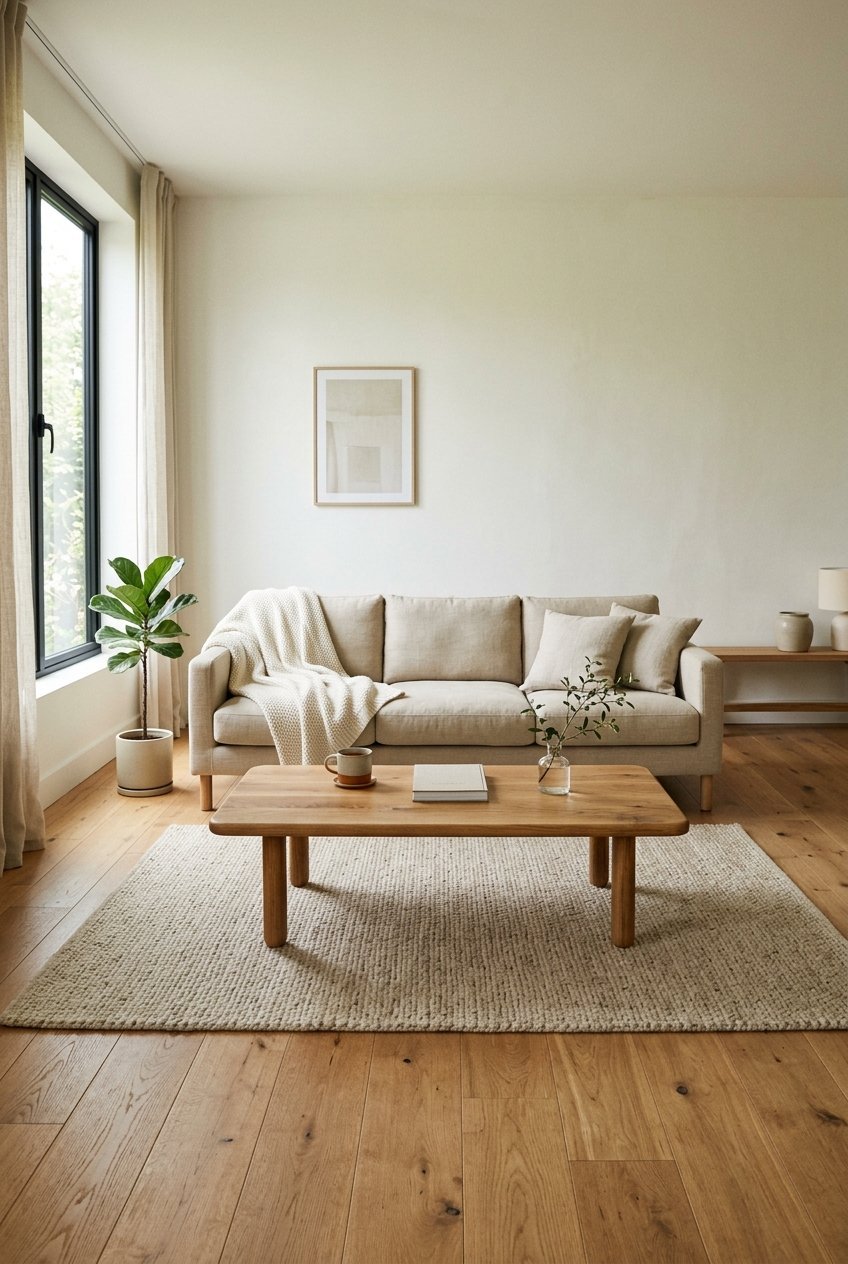
An all-white or all-gray room can start to feel sterile without some warmth brought in. A wood coffee table, wood flooring, or a wood-framed mirror adds that warmth without breaking the simplicity a modern minimalist living room depends on.
Stick to one wood tone throughout the room rather than mixing several different finishes, since that consistency is part of what keeps the space feeling calm.
Making Minimalist Feel Warm, Not Empty
The difference between a modern minimalist living room that feels calm and one that feels bare almost always comes down to texture, light, and one or two intentional pieces, not simply removing everything from the room. If you are working through the rest of the home with the same approach, our guide to modern apartment decor ideas for a stylish small space covers similar principles in a compact layout, and our piece on home decor ideas that make a home look expensive has finish tips that pair well with a minimalist palette.
For more minimalist living room inspiration, follow along on Pinterest.
Frequently Asked Questions
How do I make a minimalist living room feel warm instead of cold?
Bring in texture through a wool throw, a jute rug, and linen cushions, and add warmth through wood tones in the furniture or flooring. Both do more than color alone to keep a minimalist room from feeling sterile.
What colors work best in a modern minimalist living room?
Warm neutrals, cream, soft white, taupe, work best as a base, usually with one slightly deeper accent tone in a rug or a single chair rather than several competing colors.
How much furniture should a minimalist living room have?
Enough to serve the room’s actual function, usually a sofa, one or two chairs, and a coffee table, without extra pieces added just to fill space. Empty floor space is part of the design, not something to avoid.
Is minimalist decor practical for a family living room?
Yes, as long as storage is planned in from the start. Closed cabinets and ottomans with hidden storage let a family keep everyday items accessible without them staying visible on open surfaces.
Can a small living room be minimalist?
Minimalist design often works especially well in a small living room, since fewer, well-chosen pieces and clear floor space can make the room feel larger than it actually is.
What is the biggest mistake people make with minimalist decor?
Removing too much without adding texture or warmth back in, which leaves the room feeling empty rather than calm. A successful minimalist room is edited carefully, not just stripped bare.