Clean lines, warm palettes, and styling tips to create a cohesive, stylish space from room to room.
House interior design ideas usually get tackled one room at a time, which is how most homes end up feeling disconnected, a cool gray living room next to a warm wood kitchen, with no thread tying the two together. The homes that feel the most put together aren’t necessarily the most expensive ones. They’re the ones where a handful of decisions, color palette, material choices, lighting, repeat consistently through the whole house.
These seven house interior design ideas cover the rooms that matter most and the small decisions that make the biggest difference in each one.
Table of Contents
1. Living Room With Clean Lines and Neutral Tones

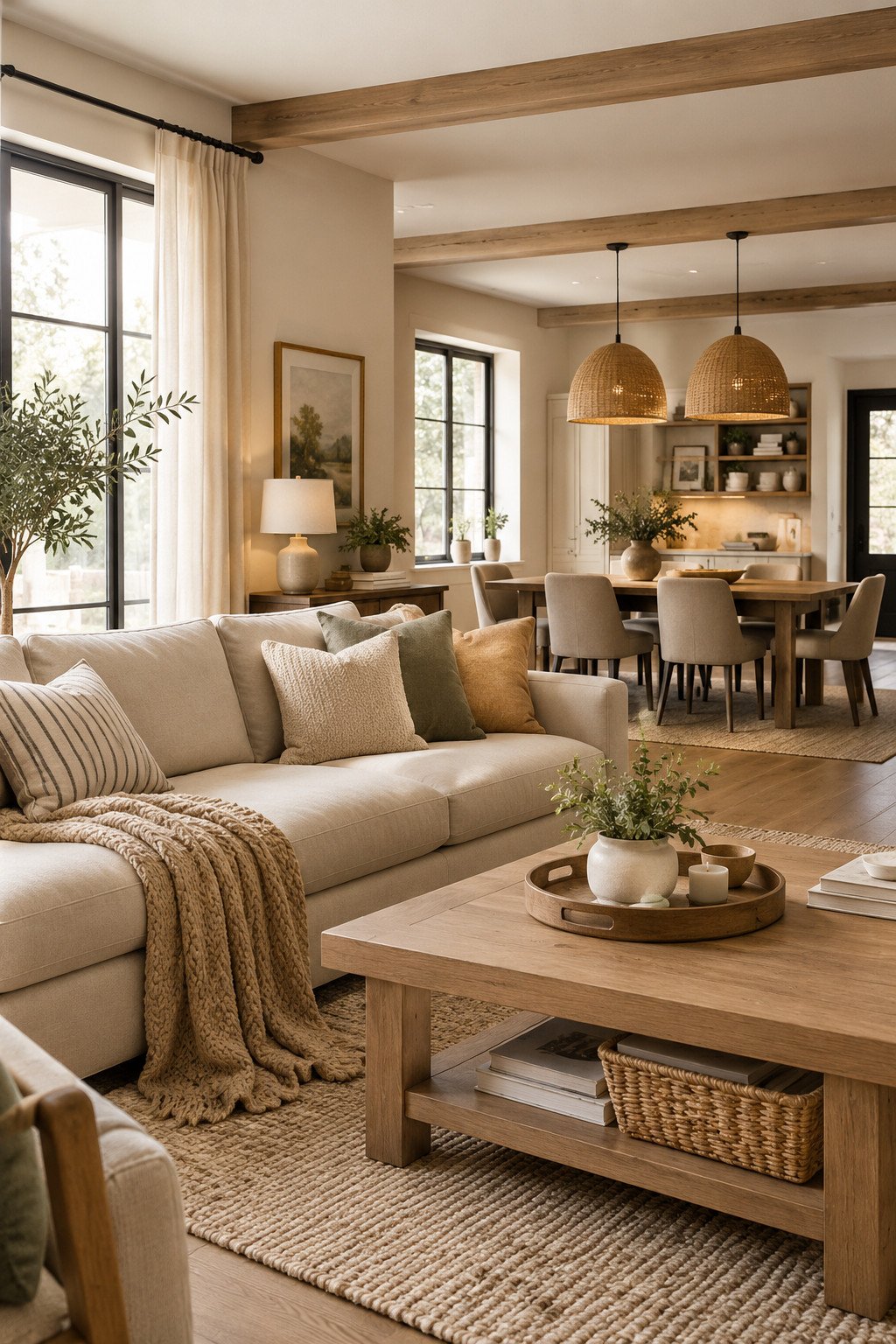
The living room sets the tone for most of these house interior design ideas, since it’s usually the room guests see first and the one families spend the most time in. A low-profile sofa in a neutral tone, simple wood furniture, and a restrained amount of decor keep the room feeling calm rather than cluttered.
Add warmth back in through texture, a wool throw, a jute rug, linen cushions, rather than through more objects on every surface.
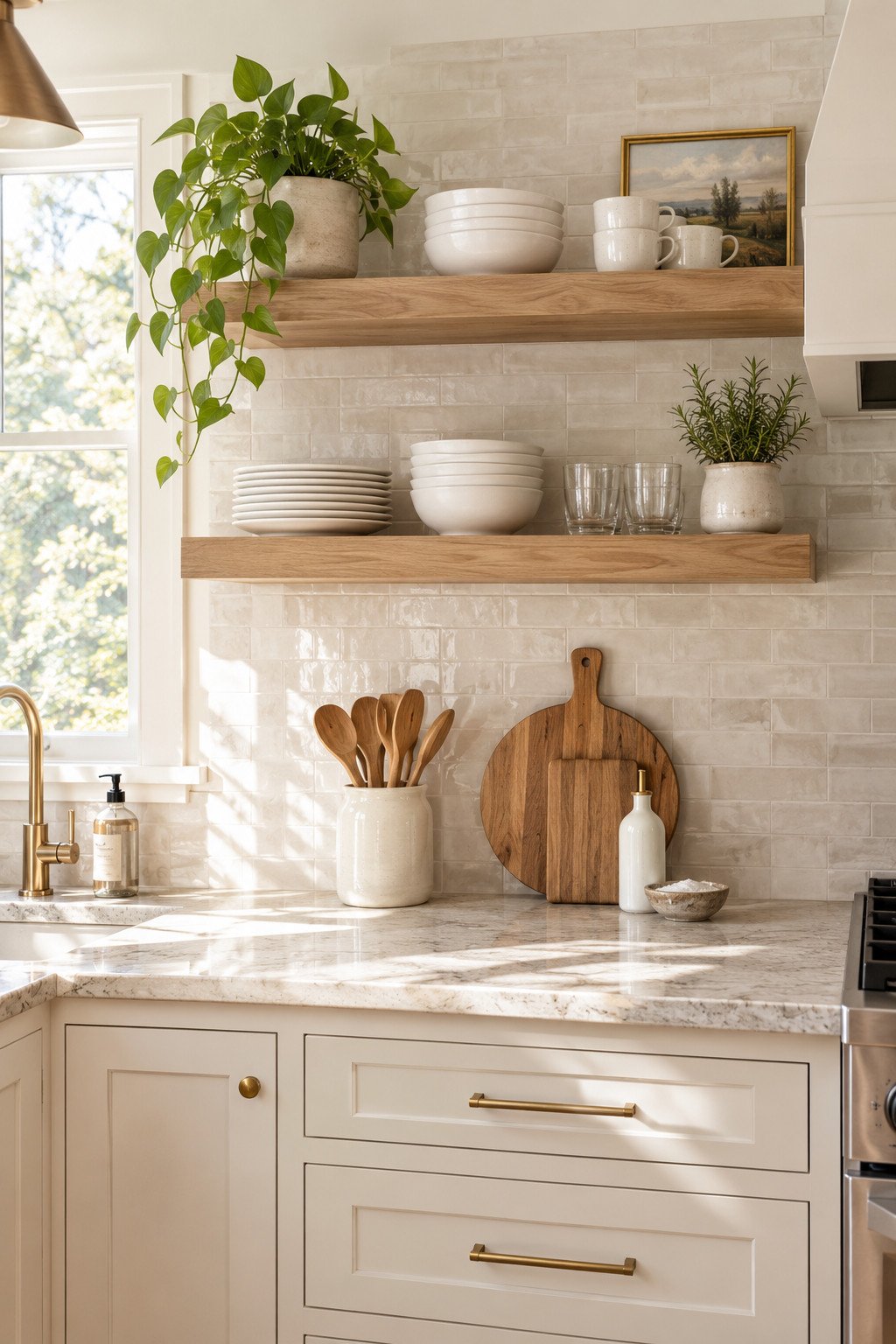
2. Kitchen With Warm Wood and Open Shelving

Warm wood cabinetry has largely replaced the all-white kitchen as the most requested look, paired with a small amount of open shelving styled with everyday ceramics rather than decorative pieces that never get used.
Keeping counters mostly clear does more for how put-together a kitchen looks than any single finish choice, so build in enough closed storage to support that before finalizing the layout.
3. Bedroom With Layered Textiles

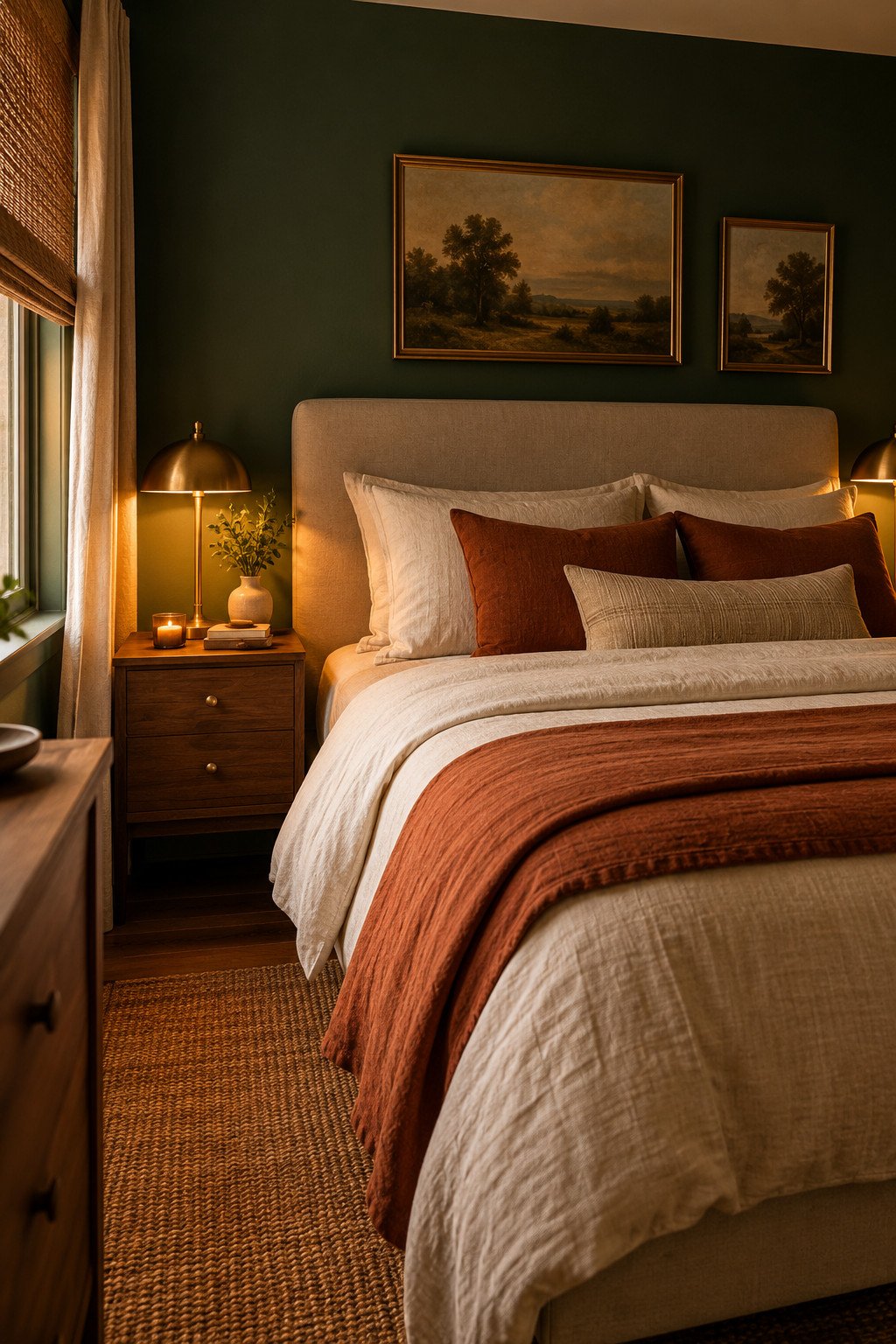
A bedroom benefits more from texture than from color variety. Layering a linen duvet, a wool blanket, and a few different pillow textures on a neutral base gives the bed visual depth without needing a bold pattern or a bright accent wall.
Keep the palette within one or two tones so the room reads as restful rather than busy, especially since the bedroom is usually the last room seen before sleep.
4. Bathroom With Spa-Like Finishes

Natural stone or stone-look surfaces, matte black or brushed brass fixtures, and a wood stool or shelf bring a spa feel into a bathroom without a full renovation. These are some of the smaller house interior design ideas on this list, but they change how a bathroom feels every single day.
A few plants and a folded stack of towels in a matching tone finish the look without adding real clutter.
5. Entryway With a Styled Console

The entryway sets first impressions for the whole house, but it’s often left as a drop zone for shoes and mail. A simple wood console with a mirror above it, a small lamp, and one or two styled objects turns that same space into a room that feels intentional the moment someone walks in.
Keep a closed basket or drawer nearby for the actual clutter, keys, mail, so the surface itself can stay styled.
6. Dining Room With Mixed Seating

Matching every dining chair to the table can feel formal in a way that doesn’t suit most homes anymore. Mixing wood chairs with one or two upholstered ones, or adding a bench on one side, gives the room a more collected, less showroom feel.
A pendant light sized correctly for the table, roughly two-thirds the table’s width, does more to elevate the room than any single furniture piece.
7. A Cohesive Color Palette Through the Whole Home

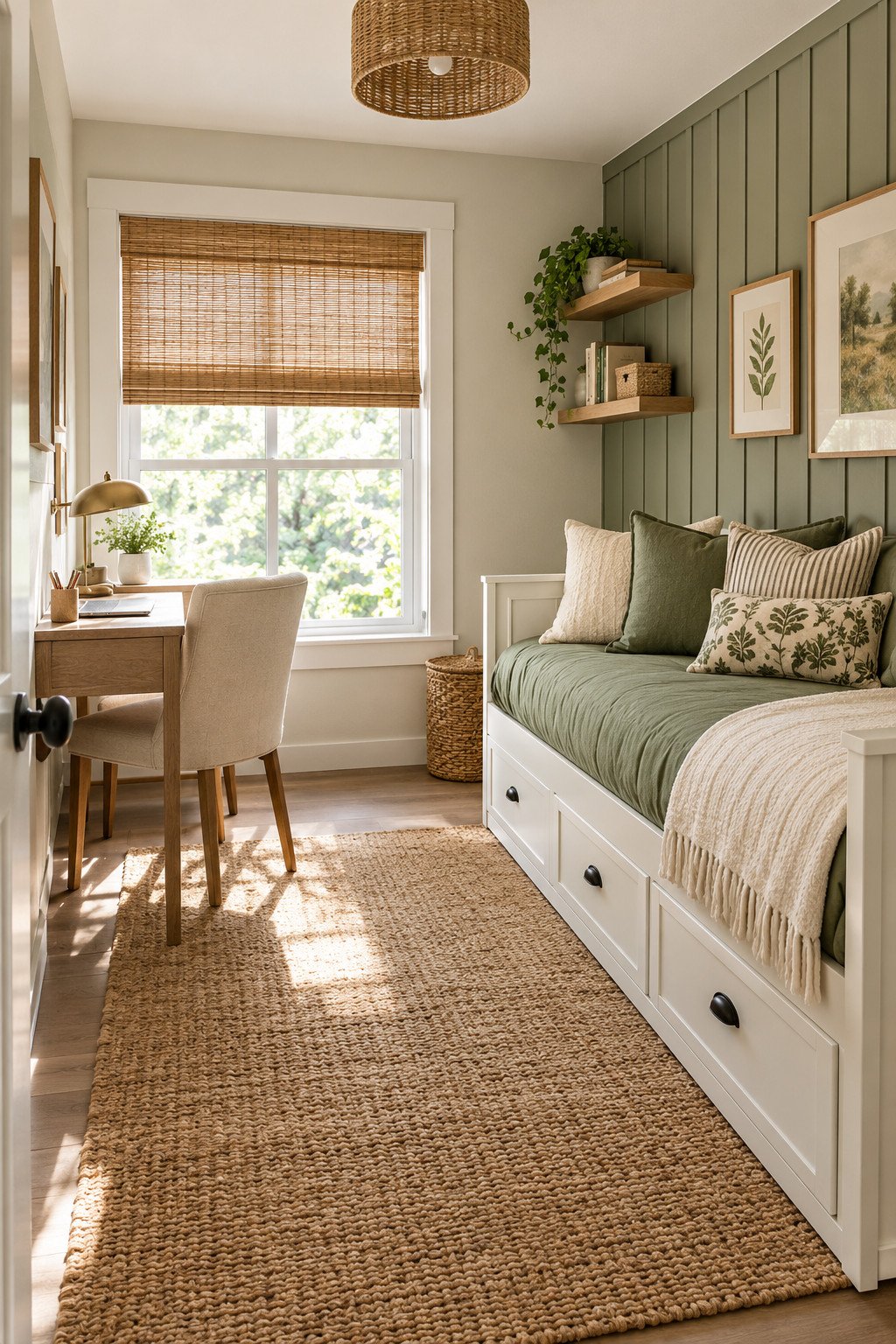
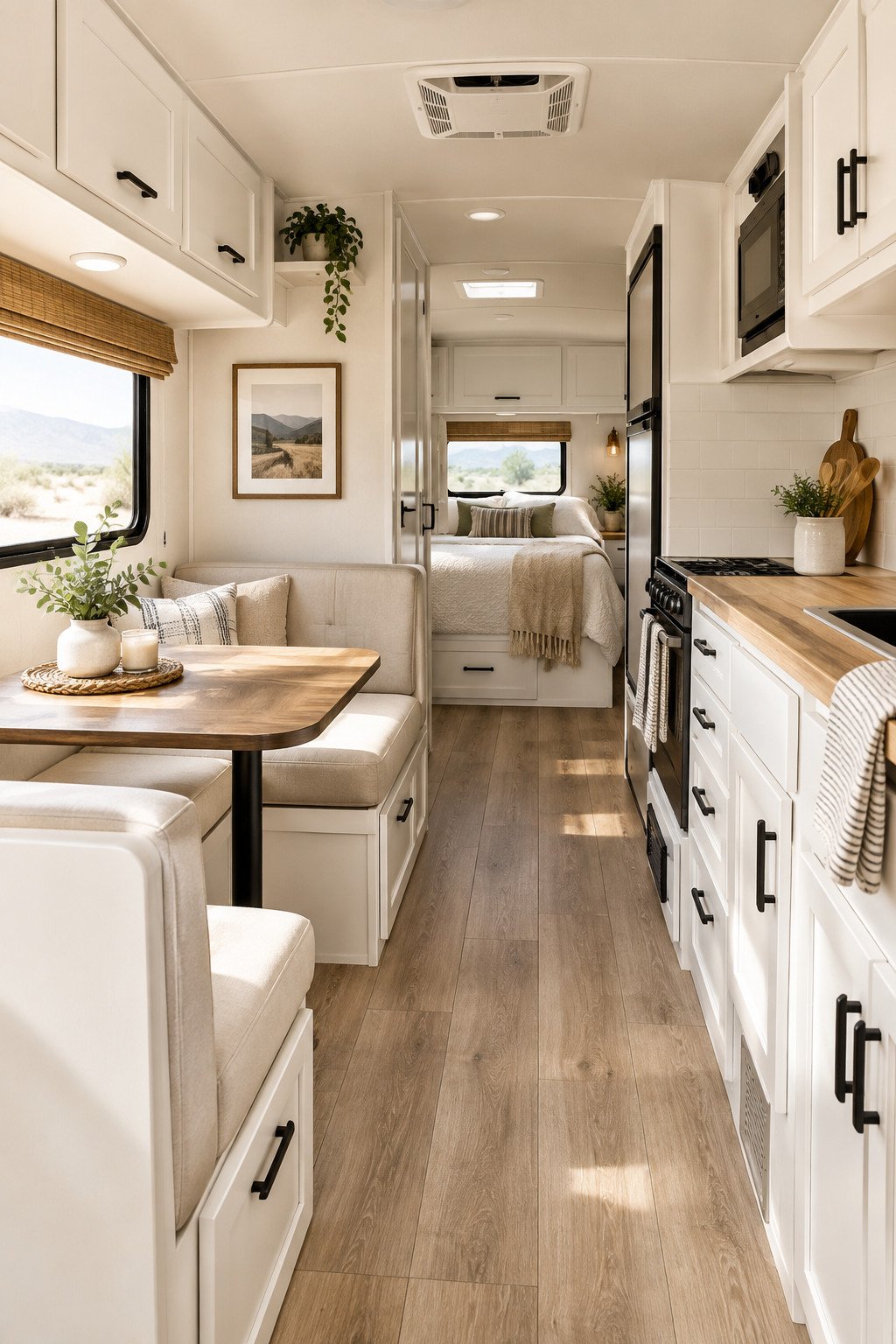
Of all the house interior design ideas on this list, this is the one that ties everything else together. Picking two or three core tones, a warm neutral wall color, one wood tone, one metal finish, and repeating them through every room keeps a home from feeling like a collection of separate design decisions.
It doesn’t mean every room looks identical. It means the transition between rooms feels intentional instead of jarring.
Bringing It All Together
The homes that feel the most finished usually aren’t the ones with the most decor. They’re the ones where a few consistent choices, wood tone, color palette, fixture finish, repeat from room to room. If you want to go deeper on a specific space, our guide to kitchen decor ideas for a dream kitchen and our piece on small bathroom decor ideas to make it look bigger both build on the principles covered here.
For more whole-home styling inspiration, follow along on Pinterest.
Frequently Asked Questions
How do I make my whole house feel cohesive?
Pick two or three core tones, a wall color, a wood finish, and a metal finish, and repeat them consistently through every room rather than choosing a new palette for each space.
What is the easiest room to start with when redesigning a home?
The living room is usually the best starting point, since it sets the tone families and guests notice first, and the color palette chosen there is easy to carry into adjoining spaces.
Do all rooms in a house need to match?
Not exactly, but they should relate. Repeating the same wood tone, metal finish, or one or two wall colors keeps rooms feeling connected without needing identical furniture or decor throughout.
What is the biggest mistake in house interior design?
Decorating room by room without a shared palette in mind, which leads to a home that feels like several unrelated design decisions rather than one cohesive space.
How much decor is too much for a room?
If a surface has more than three or four objects, or objects are chosen just to fill space rather than serve a purpose, it’s usually time to edit down. Clear surfaces with a few intentional pieces read as more put-together than fuller ones.
What is a budget-friendly way to update a whole home’s interior design?
Repainting in one consistent neutral tone across connecting rooms and updating hardware or light fixtures to match a single metal finish are two of the highest-impact, lowest-cost changes across a whole house.