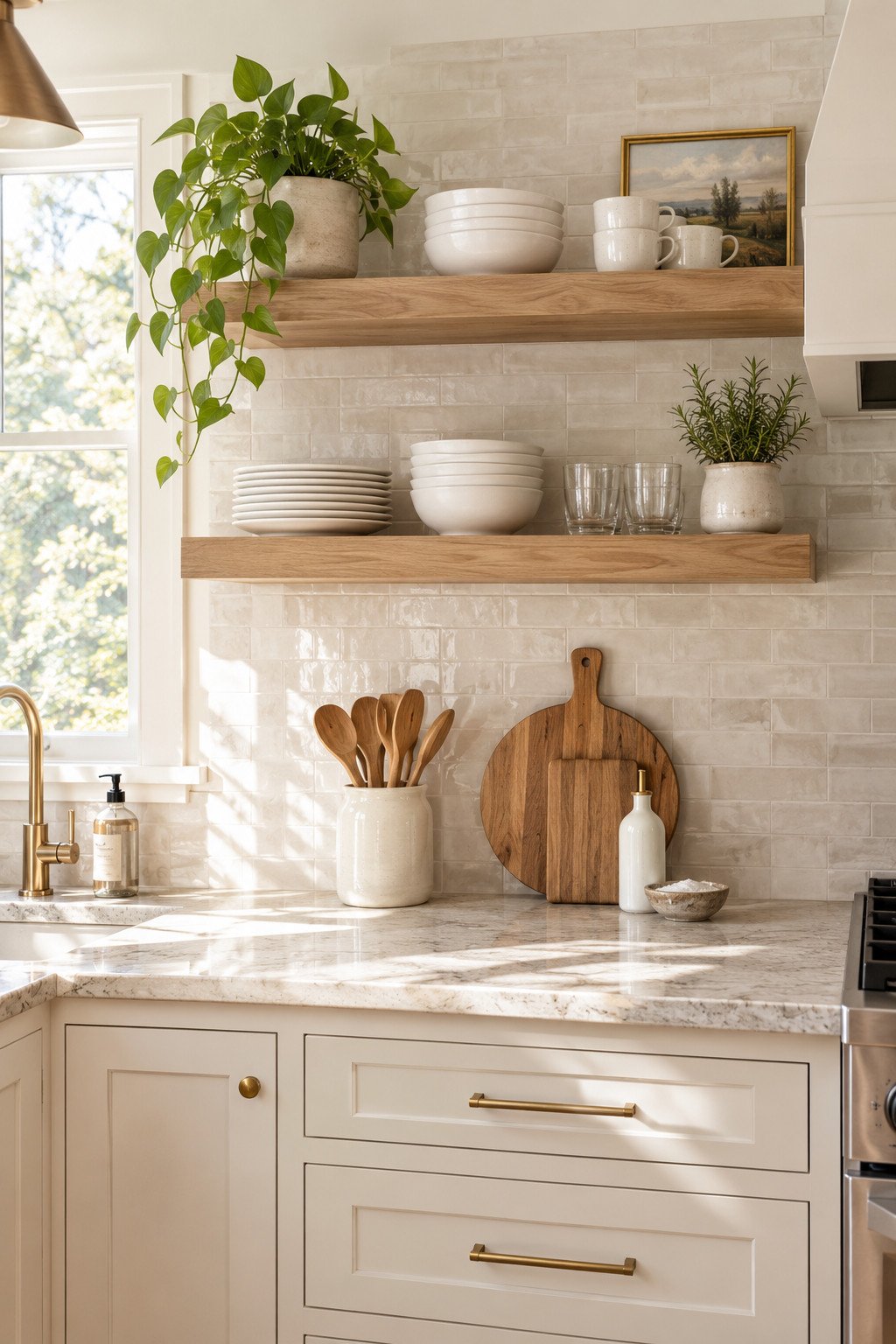
Ten vanity styles, and the kind of bathroom each one actually suits.
Bathroom vanity styles range from sleek and minimal to warm and traditional, and the right one depends less on personal taste alone and more on the size, lighting, and overall style of the room it’s going into. A vanity that looks stunning in a large primary bathroom can overwhelm a small powder room, and the reverse is just as true.
These ten bathroom vanity styles cover the designs worth considering, along with which bathrooms they suit best and how to style each one once it’s installed.
Table of Contents
1. Modern Floating Vanity
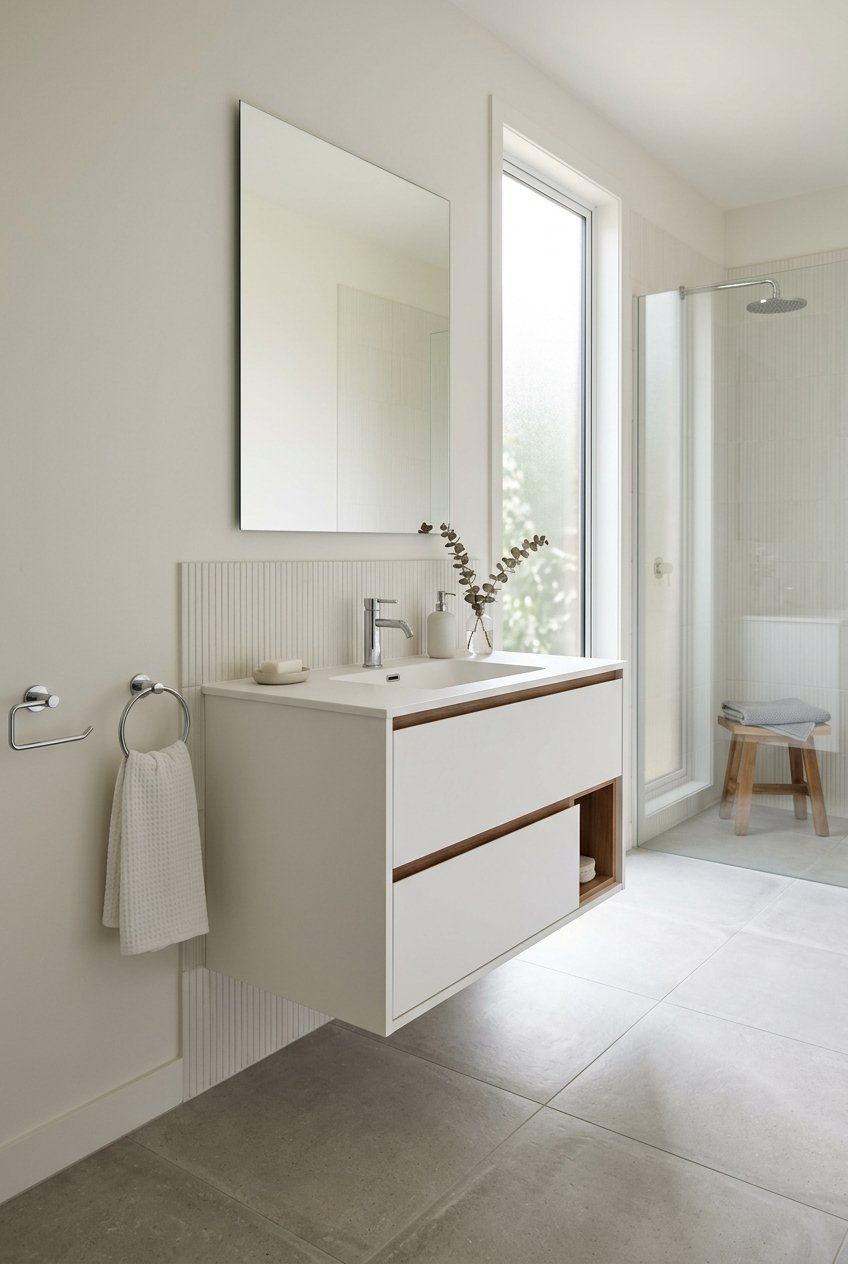
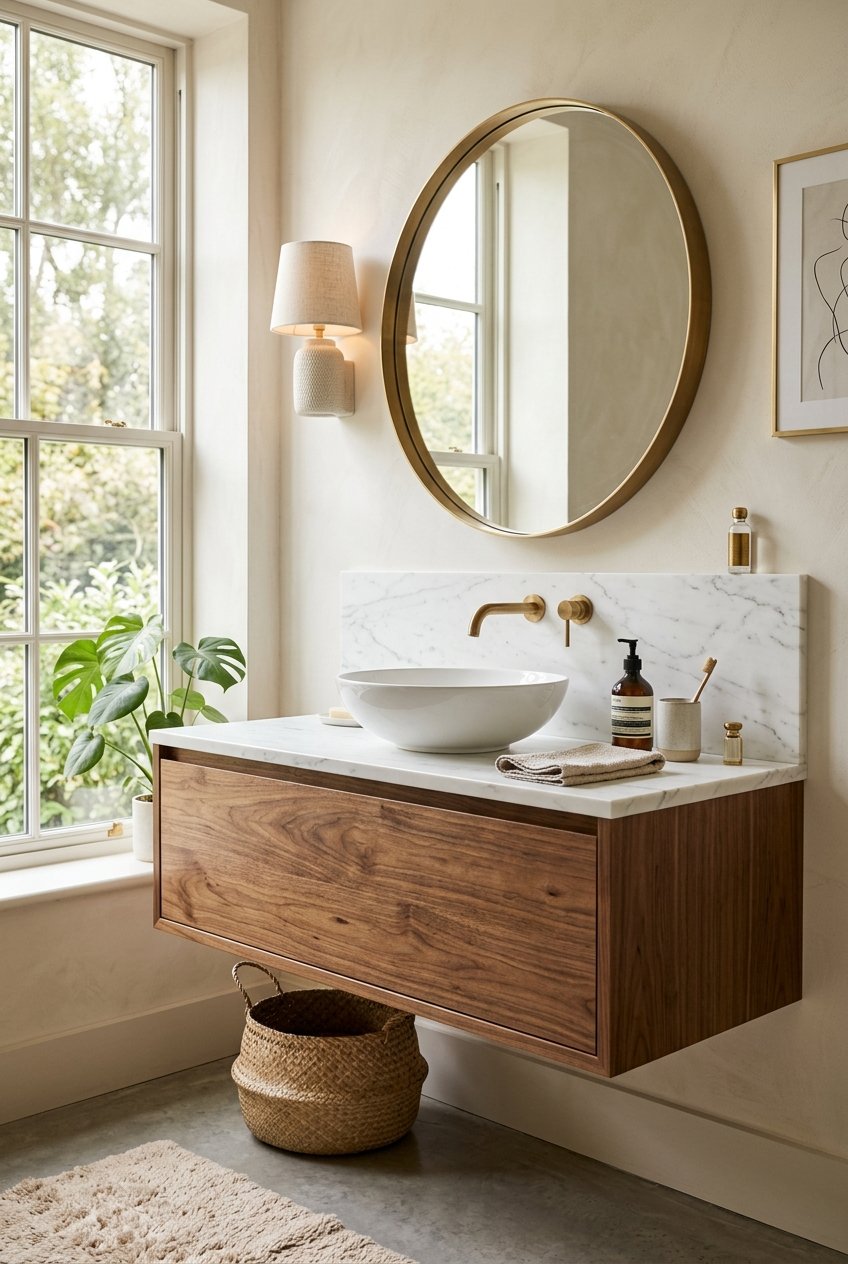
A floating vanity mounts directly to the wall, leaving the floor underneath fully visible. The look is clean and architectural, with no legs or base cabinet breaking up the line between the vanity and the floor tile below.
It suits modern and minimalist bathrooms best, especially smaller or mid-size rooms where visible floor space makes the room read as larger. It also works well in bathrooms with statement floor tile, since more of it stays on show.
Style it with a round or arched mirror to soften the straight lines of the vanity, and keep hardware minimal, either handleless or a single slim pull per drawer, so the floating effect stays the focus.
2. Small Bathroom Vanity
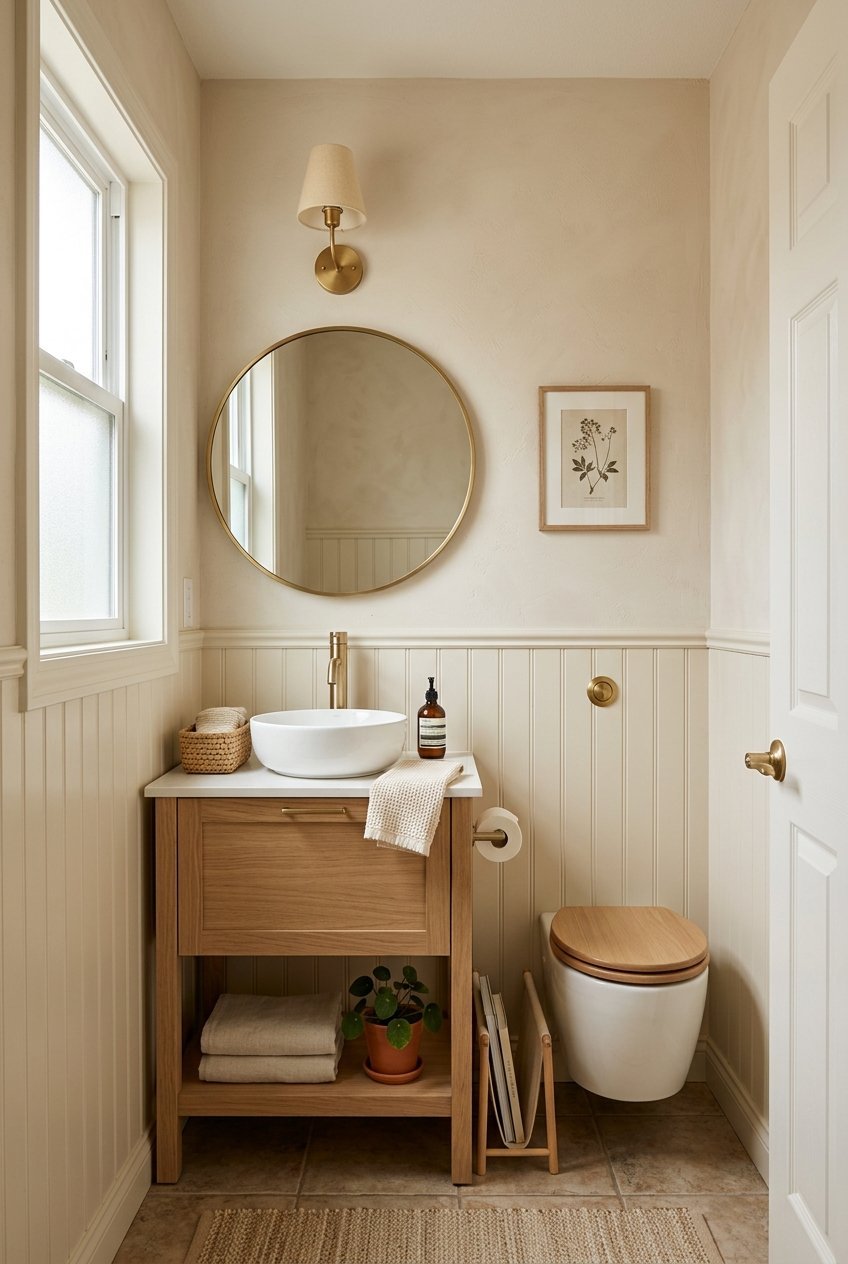
A small vanity is built for tight footprints, often under 30 inches wide, sometimes narrower for a powder room. The priority here is function within limited space rather than making a large design statement.
It’s the right choice for powder rooms, guest bathrooms, and small ensuites where a standard-size vanity simply won’t fit without blocking the door or shower.
Style it with a mirror sized close to the vanity’s own width, light wall colors to keep the room feeling open, and slim vertical storage nearby if the vanity itself doesn’t have much drawer space.
3. Double Sink Vanity
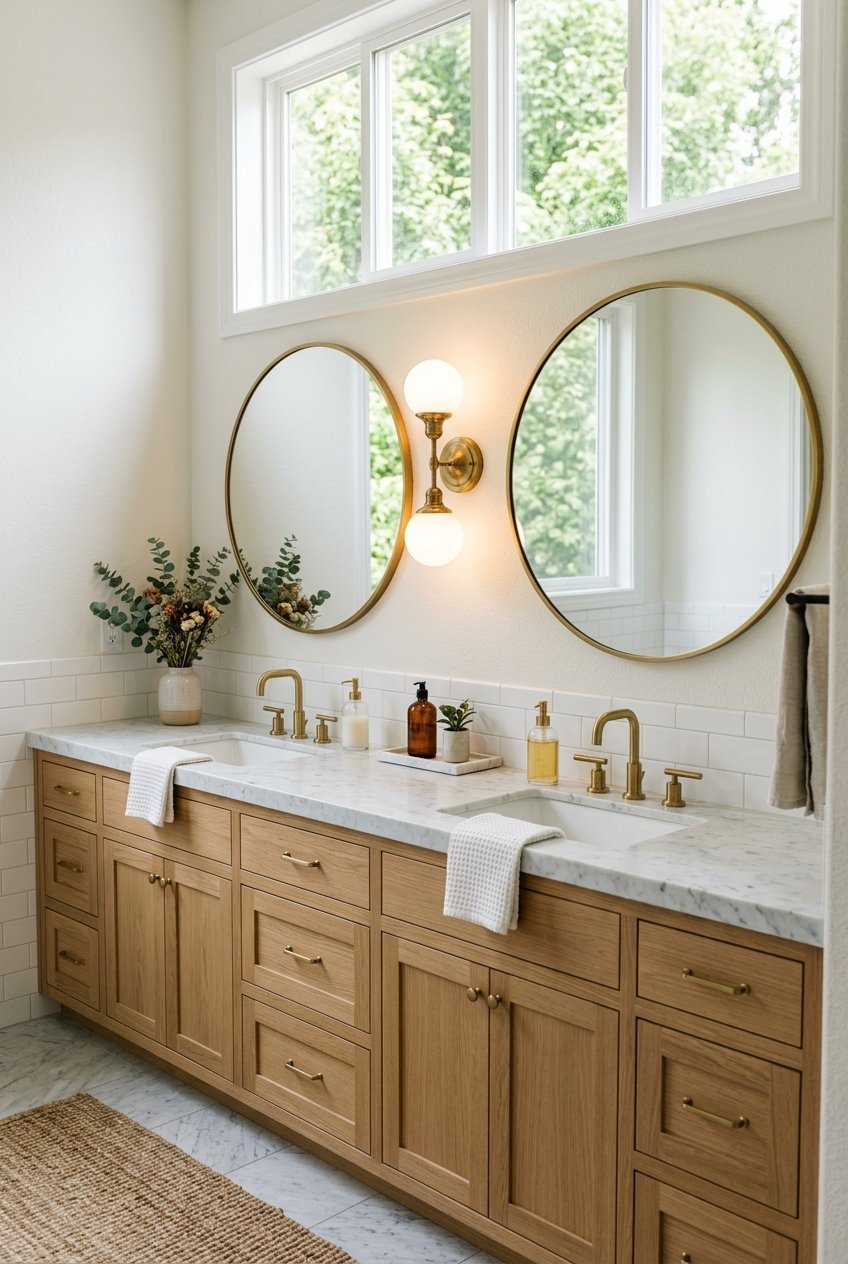
A double sink vanity is one long countertop with two separate basins and typically two sets of hardware, built for more than one person getting ready at the same time.
It suits shared bathrooms best, a primary bathroom used by a couple, or a family bathroom where mornings get busy. It needs more wall width than a single vanity, so it’s worth confirming the room can fit it comfortably alongside the door swing and any other fixtures.
Style it with two separate mirrors rather than one long one, so each side feels like its own defined space, and add a sconce or pendant centered above each sink for even, personal lighting.
4. Wood Bathroom Vanity
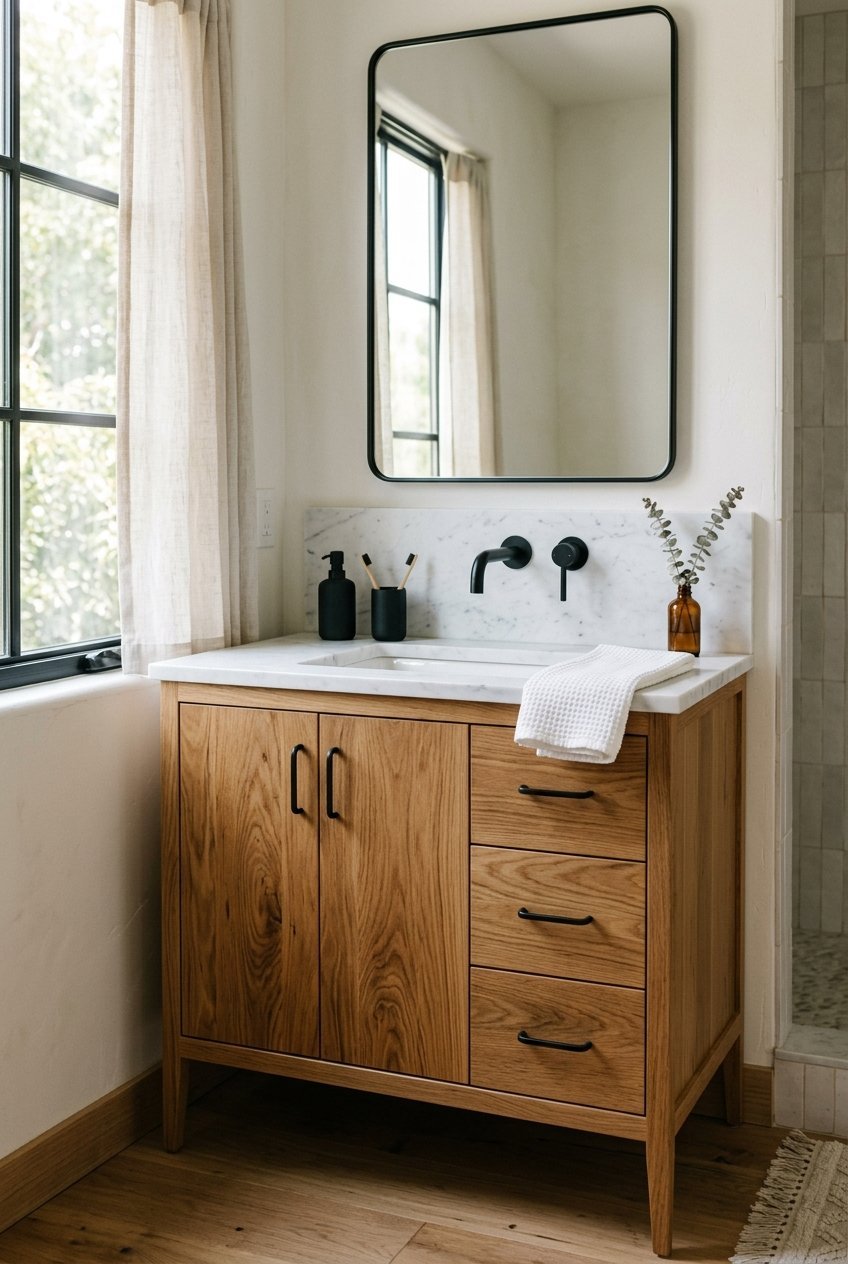
A wood vanity brings natural grain and warm tone into a room that’s usually dominated by tile, stone, and glass. Oak and walnut are the most common choices, both offering texture that painted vanities can’t replicate.
It works well in organic modern, Scandinavian, or spa-style bathrooms where warmth is the goal, and it pairs naturally with stone countertops and greenery.
Style it with black or brass hardware depending on the rest of the room’s finishes, and make sure the wood is properly sealed for a humid bathroom environment so it holds up over time.
5. White Bathroom Vanity
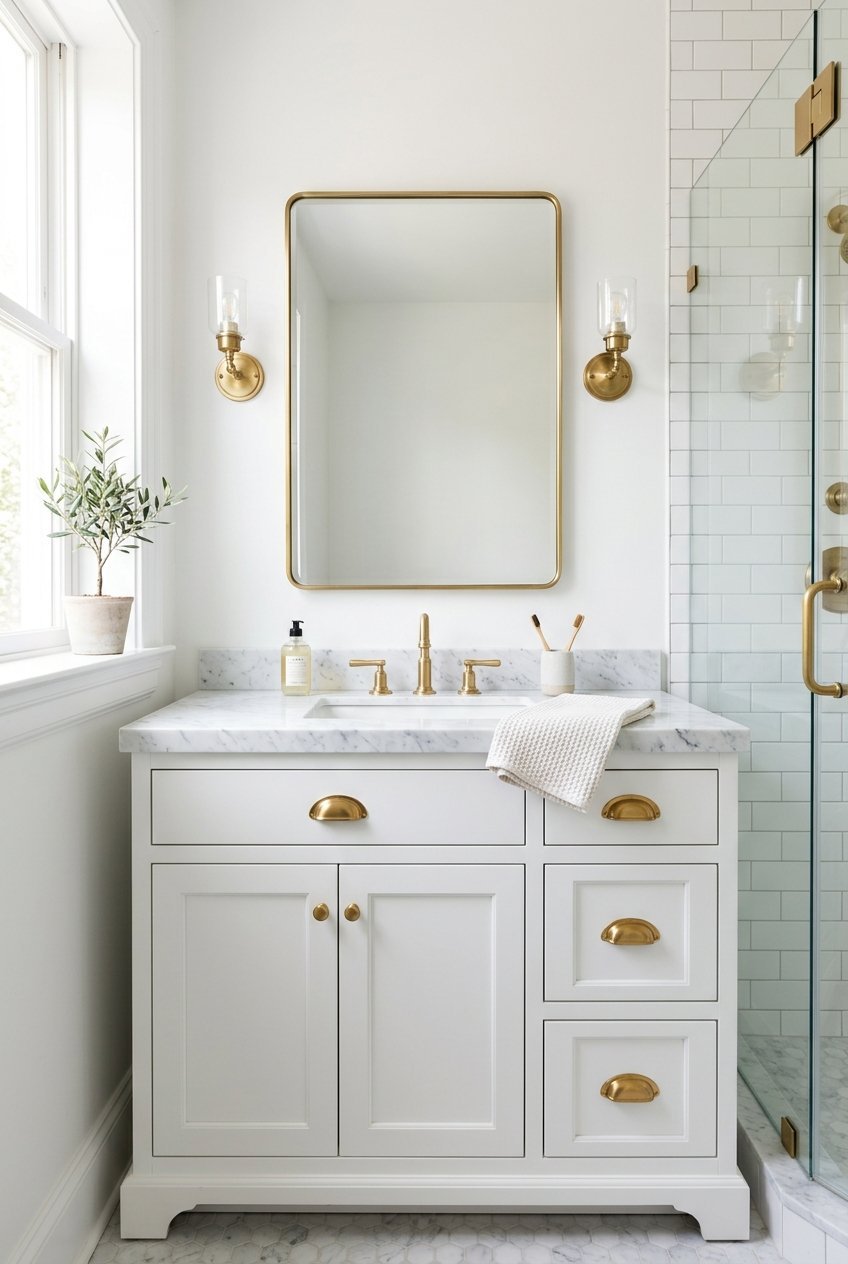
A white vanity is the most classic and versatile option on this list, working in traditional, modern, and transitional bathrooms alike without clashing with other design choices.
It suits almost any bathroom, but it’s especially useful in small or dark rooms where a light-colored vanity helps the space feel brighter and more open.
Style it with contrasting hardware, black, brass, or brushed nickel, to keep it from feeling flat, and bring in texture through the mirror frame, a woven basket, or a stack of towels in a warmer tone.
6. Black Bathroom Vanity
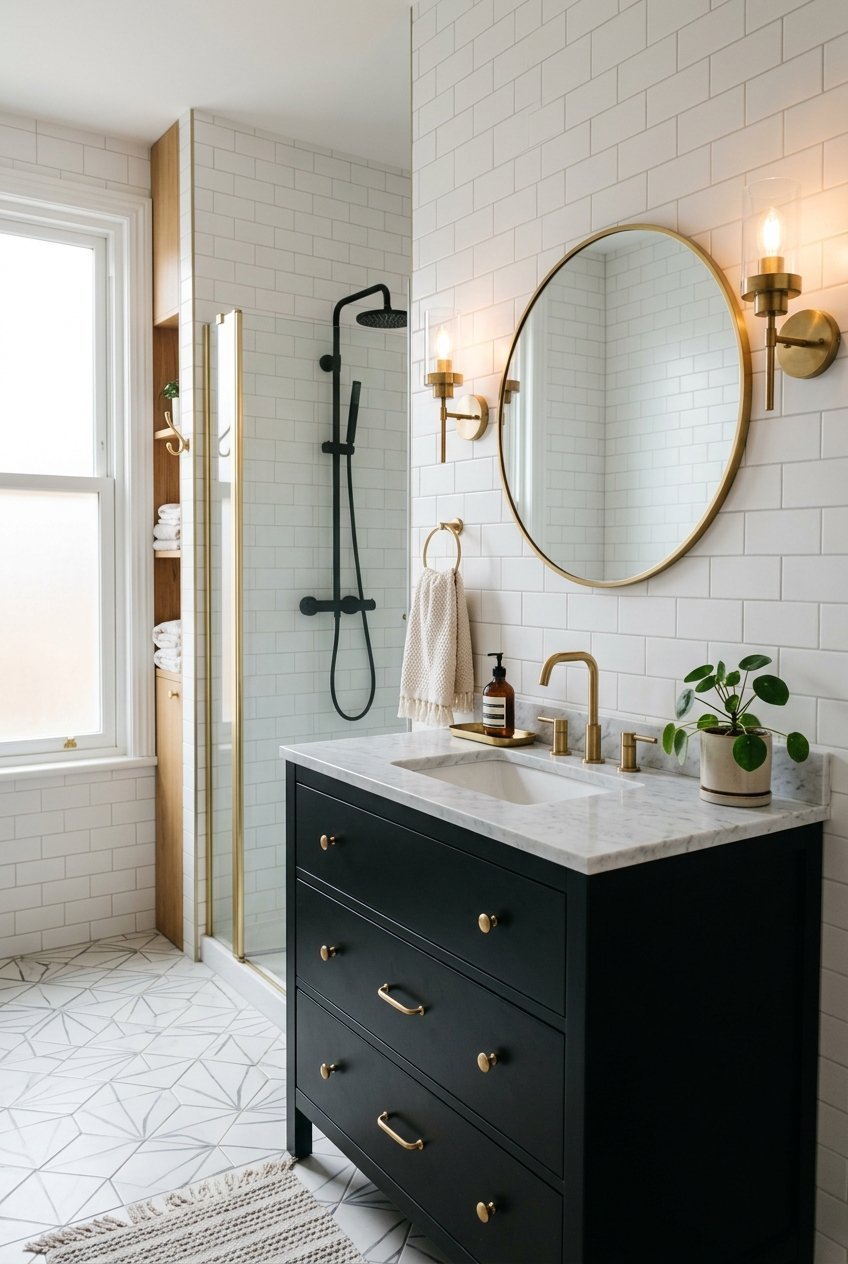
A black vanity is a bold, dramatic choice that works as the clear focal point of the room rather than blending into the background. It reads as more luxurious and more modern than a lighter vanity, but it needs the right surroundings to avoid feeling heavy.
It suits bathrooms with strong natural light or bright white tile and walls to balance the darker tone, which is why it’s a common choice in primary bathrooms with larger windows.
Style it with brass or gold fixtures for contrast, and keep the countertop and wall color light so the vanity has room to stand out without closing the space in.
7. Minimalist Vanity
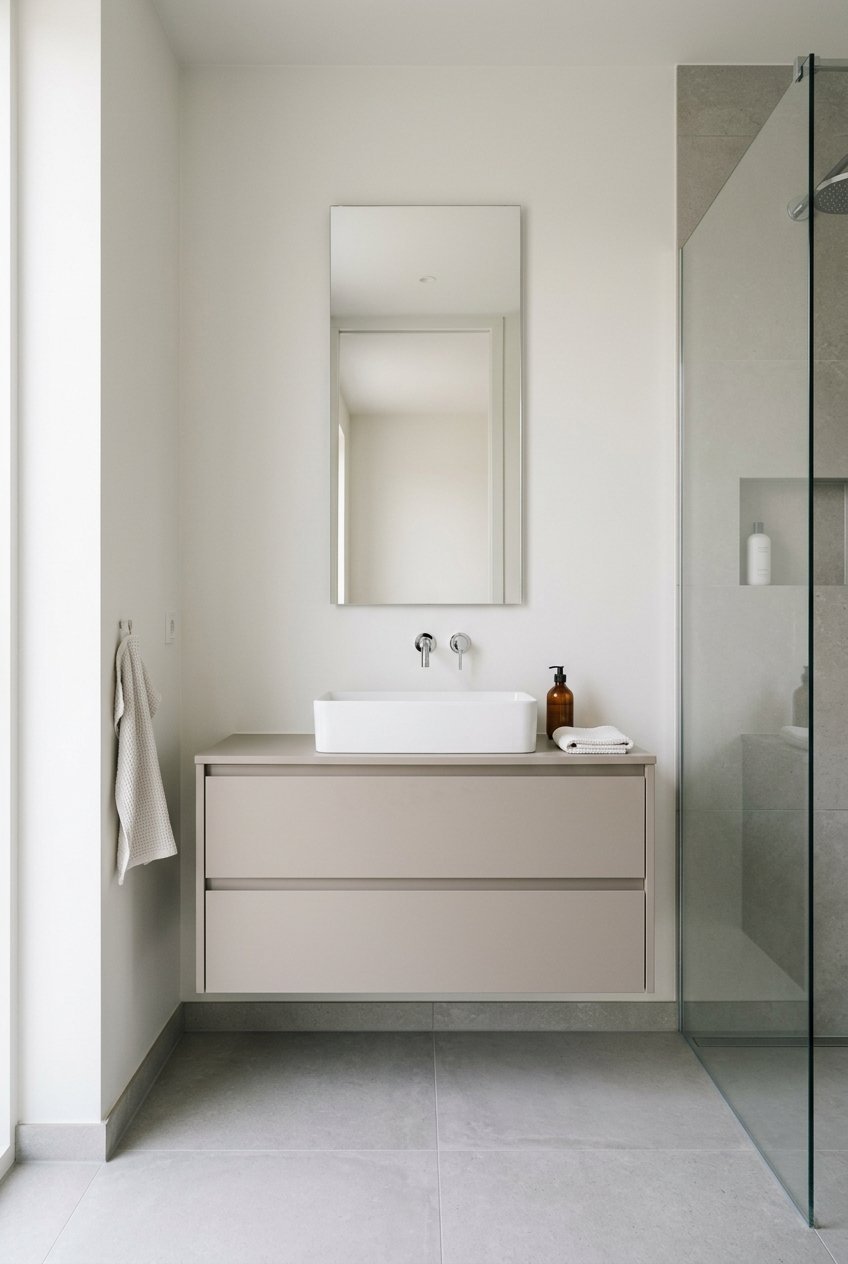
A minimalist vanity strips away ornamentation entirely, slab fronts, no visible hardware, straight lines, and a single neutral tone. The goal is a vanity that disappears into the room rather than drawing attention to itself.
It suits modern, minimalist, or Japandi-style bathrooms where the overall design relies on restraint rather than statement pieces.
Style it by keeping the countertop almost entirely clear, just one or two objects at most, and choose push-to-open drawers or recessed finger pulls so no hardware interrupts the clean surface.
8. Farmhouse Bathroom Vanity
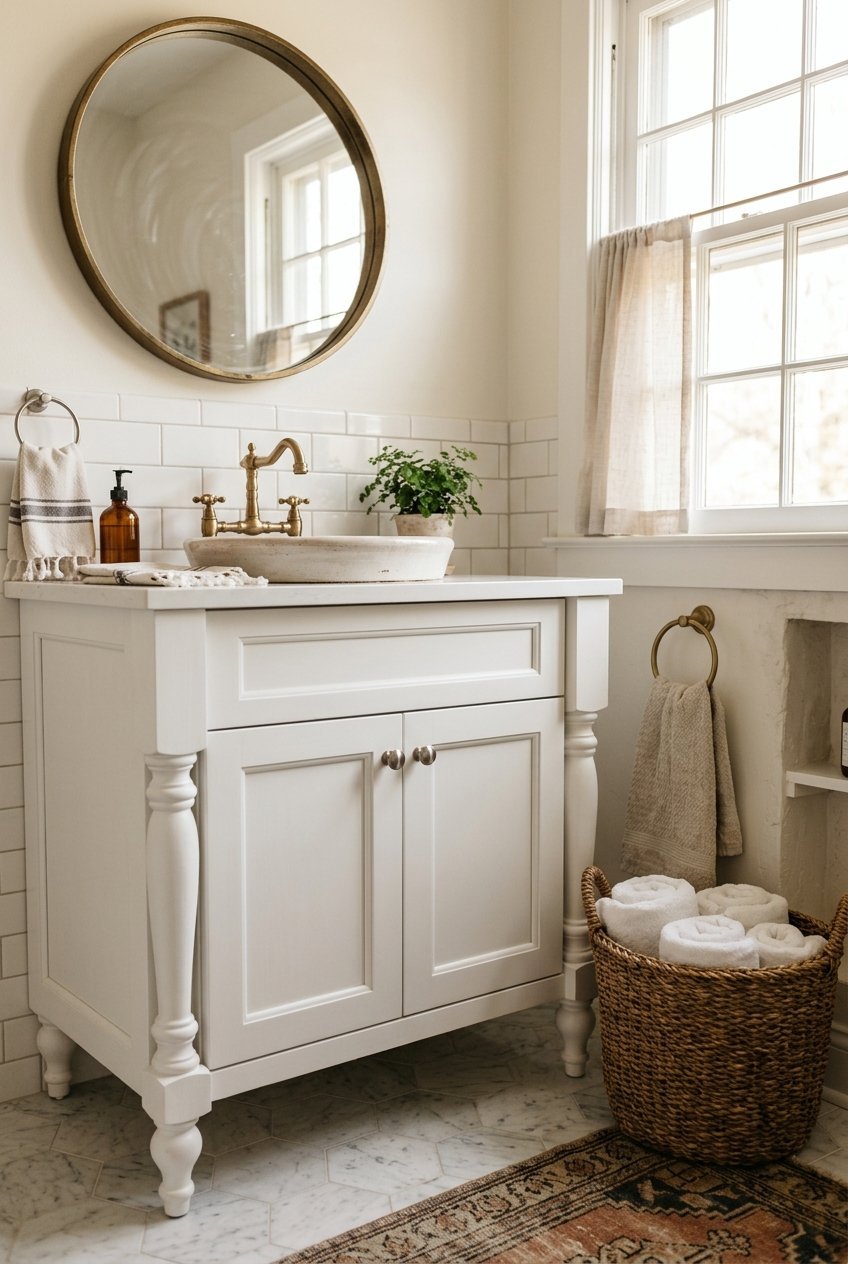
A farmhouse vanity leans into shaker-style doors, often with an apron front or turned legs, usually in white or a warm wood tone. It feels more like a furniture piece than a built-in fixture.
It suits farmhouse, cottage, and traditional-style homes, and works particularly well in bathrooms that already lean into natural materials and softer, lived-in finishes.
Style it with a cross-handle or bridge faucet, a woven basket for towels, and a slightly weathered or antique-style mirror to carry the farmhouse feel through the whole vanity area.
9. Freestanding Vanity
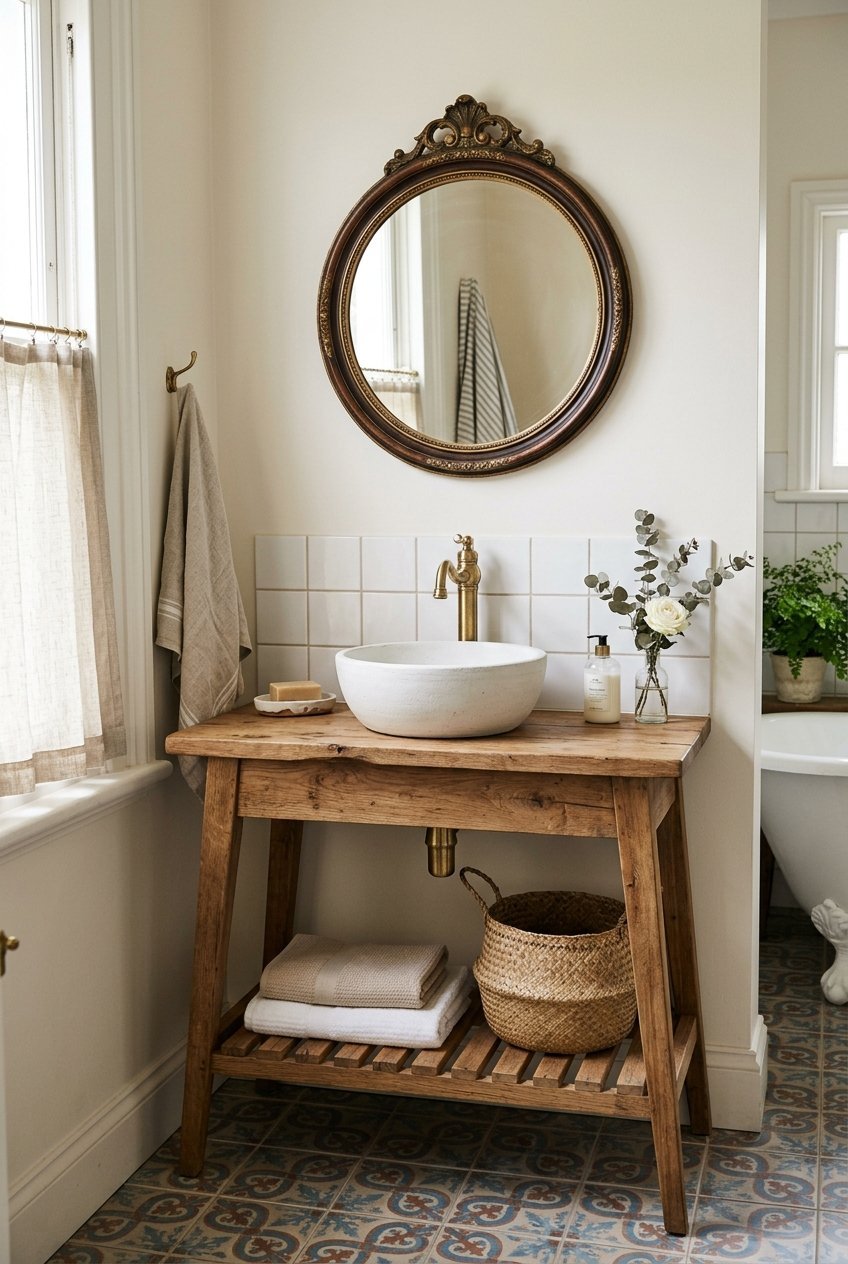
A freestanding vanity looks like a standalone piece of furniture, often with visible legs, rather than a built-in cabinet against the wall. It can be a converted console table or a vanity specifically designed to look unattached.
It suits vintage-inspired, boutique hotel, or eclectic bathrooms where the vanity is meant to feel collected rather than custom-built into the room.
Style it with a vessel sink sitting on top rather than an undermount sink, since that reinforces the furniture-like look, and add a vintage or ornately framed mirror above it for the same effect.
10. Luxury Bathroom Vanity
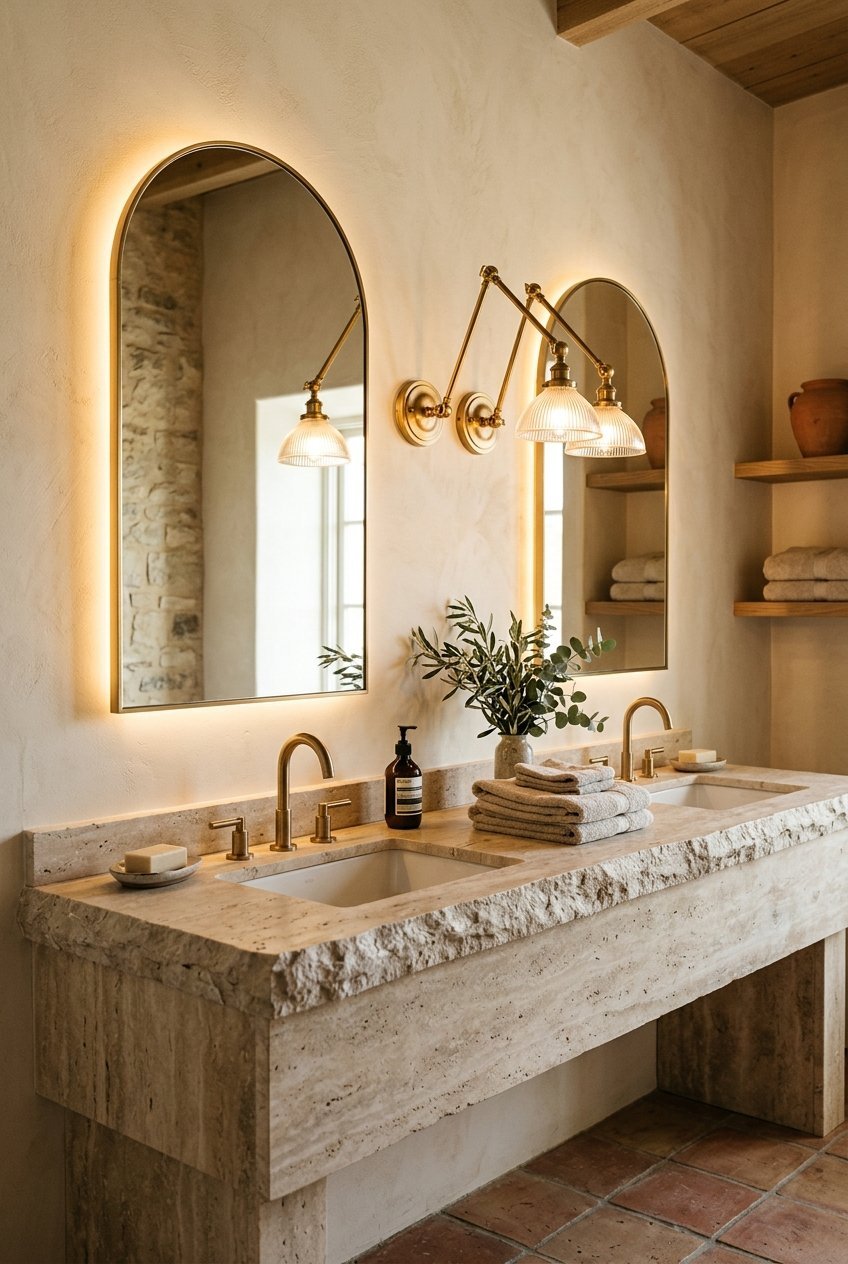
A luxury vanity combines high-end materials, natural stone, custom cabinetry, integrated lighting, into one piece built specifically for the space rather than chosen off the shelf. It’s usually larger and more detailed than any other style on this list.
It suits primary and master bathrooms designed as a retreat, where the vanity is meant to be a centerpiece rather than a purely functional fixture.
Style it with layered lighting, sconces plus a soft overhead fixture, a large statement mirror, and a small curated set of accessories rather than everyday clutter, so the vanity keeps its elevated feel day to day.
Choosing the Right Vanity for Your Bathroom
The right bathroom vanity style usually comes down to two things: how much space the room actually has, and what kind of mood the bathroom is meant to have, calm and minimal, warm and natural, or bold and dramatic. If you’re planning the rest of the bathroom around the vanity, our guide to luxury bathroom ideas for a spa-like retreat and our piece on small bathroom decor ideas to make it look bigger both build on the styles covered here.
Frequently Asked Questions
What vanity style works best in a small bathroom?
A floating vanity or a small, narrow vanity with slim built-in drawers usually works best in a tight space, since both keep more floor and wall area visible than a bulky freestanding piece.
Is a black vanity a good choice for a small bathroom?
It can work, but it needs strong natural light and light-colored walls or tile to balance the darker tone. In a small bathroom with little natural light, a lighter vanity is usually the safer choice.
Do double sink vanities need more plumbing work?
Yes, generally. Two sinks mean two full plumbing connections instead of one, so it’s worth confirming with a plumber whether the existing layout supports a double vanity before committing to the design.
What’s the difference between a freestanding and a floating vanity?
A freestanding vanity sits on the floor, often with visible legs, like a piece of furniture, while a floating vanity mounts to the wall with no contact with the floor at all. They create very different looks even when the cabinet style is similar.
Is wood a practical choice for a bathroom vanity?
Yes, as long as it’s properly sealed for a humid environment. A well-sealed wood vanity holds up for years and adds warmth that painted or laminate finishes don’t offer in the same way.
What makes a vanity feel luxury rather than standard?
Material quality, natural stone, custom cabinetry, integrated lighting, usually matters more than size alone. A smaller vanity with the right materials and lighting can read as more luxurious than a larger, plainer one.