From a simple subway tile to a single marble slab, these are the surfaces that keep splashes off the wall and give the sink area a finished look.
Bathroom backsplash ideas are about more than looks. The wall behind a sink takes toothpaste, soap, and water splashes every day, and plain painted drywall does not hold up well to that. A good backsplash protects the wall and gives the whole vanity area a focal point.
These thirteen bathroom backsplash ideas cover tile, stone, panels, and renter-friendly options. Each one comes with a note on where it works and what to watch for, so you can pick something that suits both your style and your budget.
Table of Contents
1. Classic Subway Tile, the Safe Pick Among Bathroom Backsplash Ideas
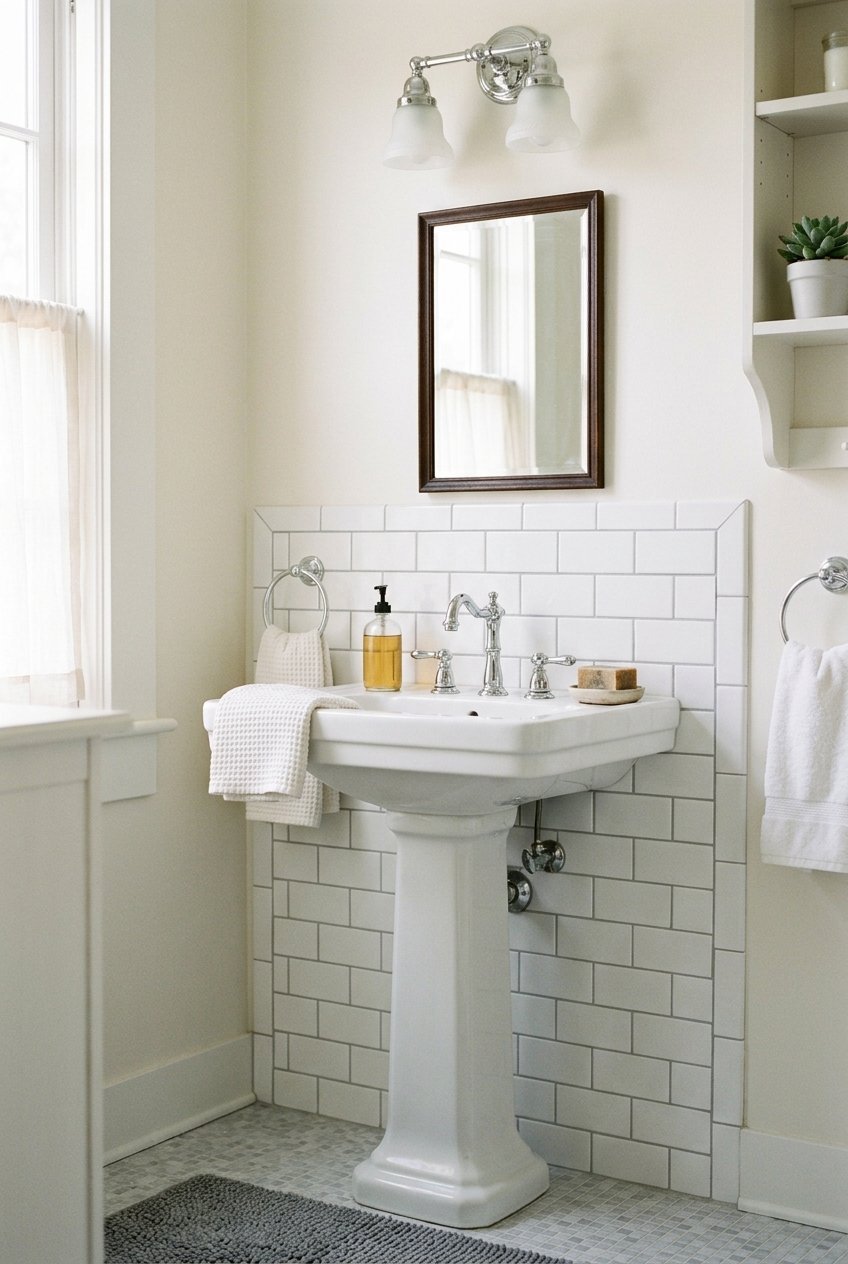
Subway tile is popular for a reason. It is affordable, easy to find, and looks good with almost any vanity, from traditional to modern. A white glossy tile reflects light and makes a small bathroom feel brighter.
It suits nearly every bathroom, especially a first remodel. Choose a grout color slightly darker than the tile if you want definition, or one close to the tile for a calm look. Stack the tiles vertically or in a straight grid if you want a more current feel than the usual brick pattern.
2. Marble or Marble-Look Slab
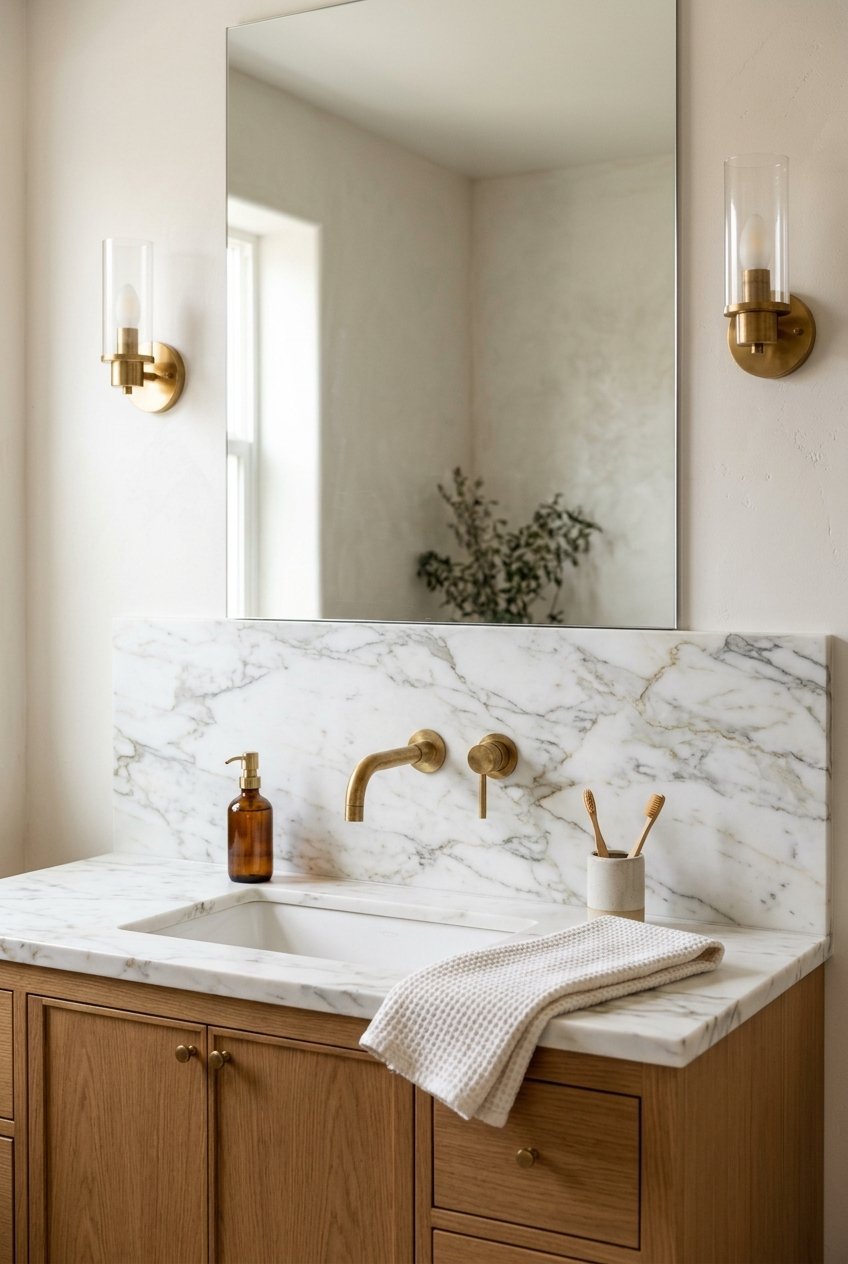
A single slab of veined stone behind the vanity looks like a luxury hotel and has no grout lines to clean. Real marble is beautiful but porous, so it needs sealing and can stain or etch over time. A marble-look porcelain slab gives a similar look with much less upkeep.
It suits primary bathrooms and powder rooms where the vanity is the star. Take the slab from the countertop up to the mirror or the ceiling for the most dramatic effect. Our guide to luxury bathroom ideas has more high-end details to pair with it.
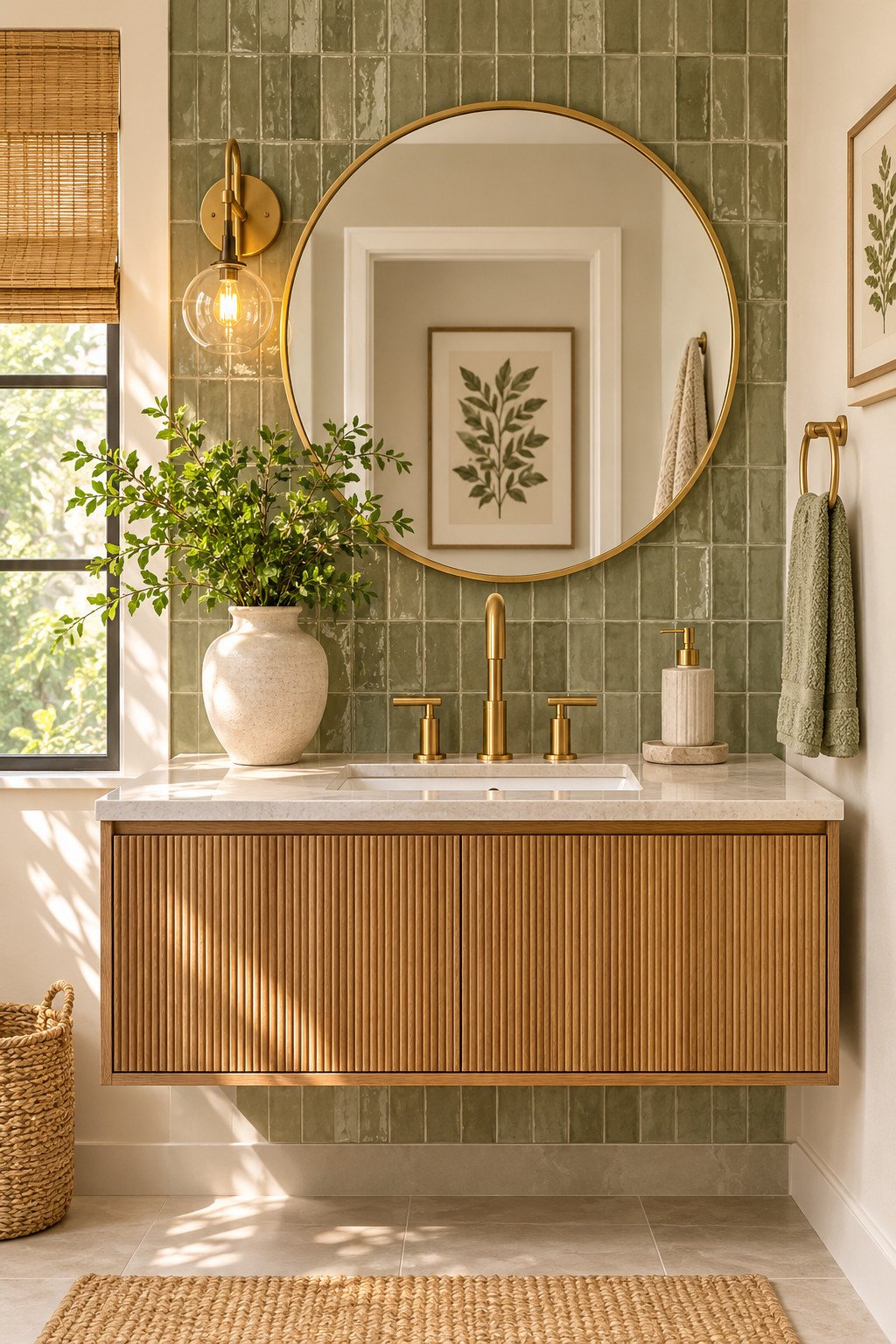
3. Zellige or Handmade-Look Tile
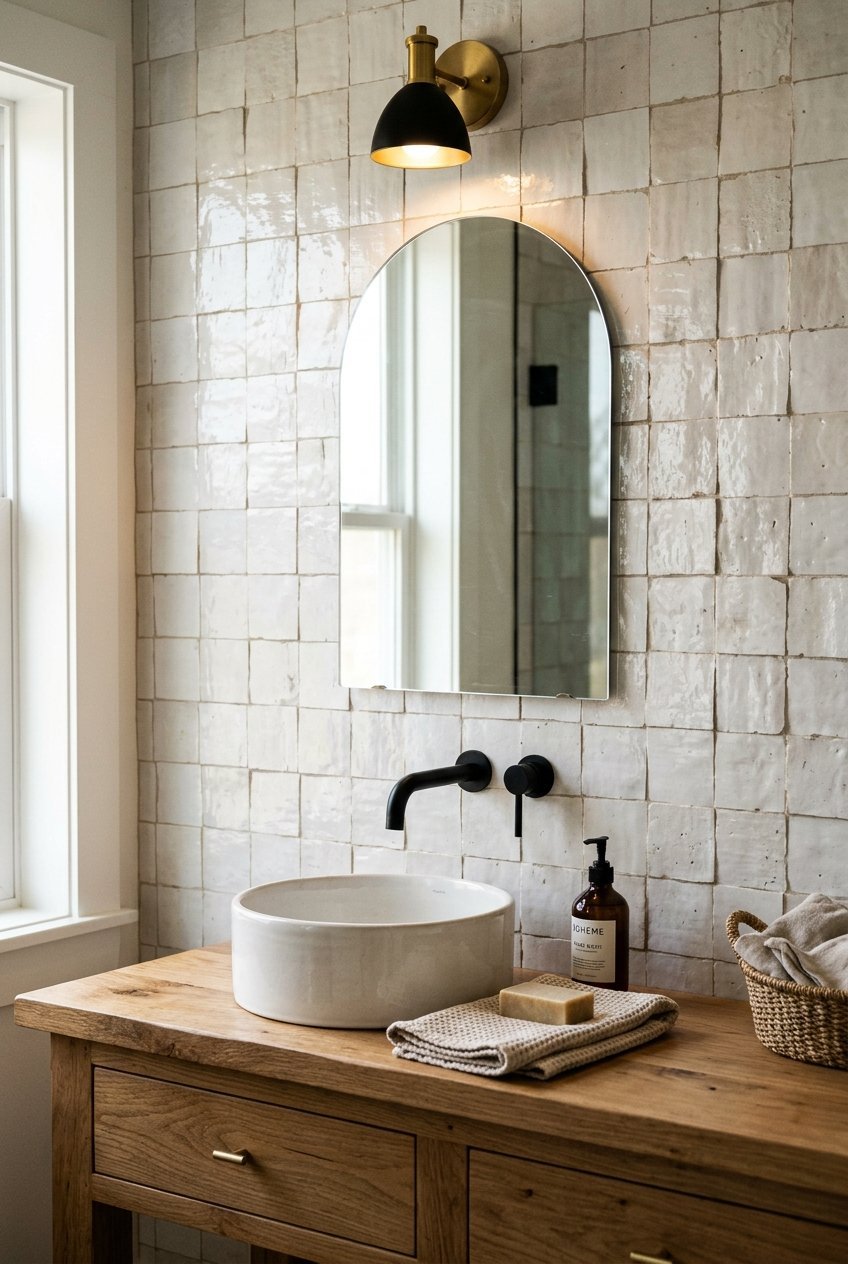
Zellige tile is handmade, so the surface is slightly uneven and every piece has a different shade. That variation catches light in a soft, glowing way that machine-made tile cannot match. Warm white, sage, and clay tones are popular choices.
It suits bathrooms with a relaxed, organic style. The tiles vary in thickness, so use a skilled installer and expect slightly irregular grout lines. Seal the grout, and clean with a gentle cleaner, since the glaze can be delicate.
4. Full-Height Tile Behind the Vanity
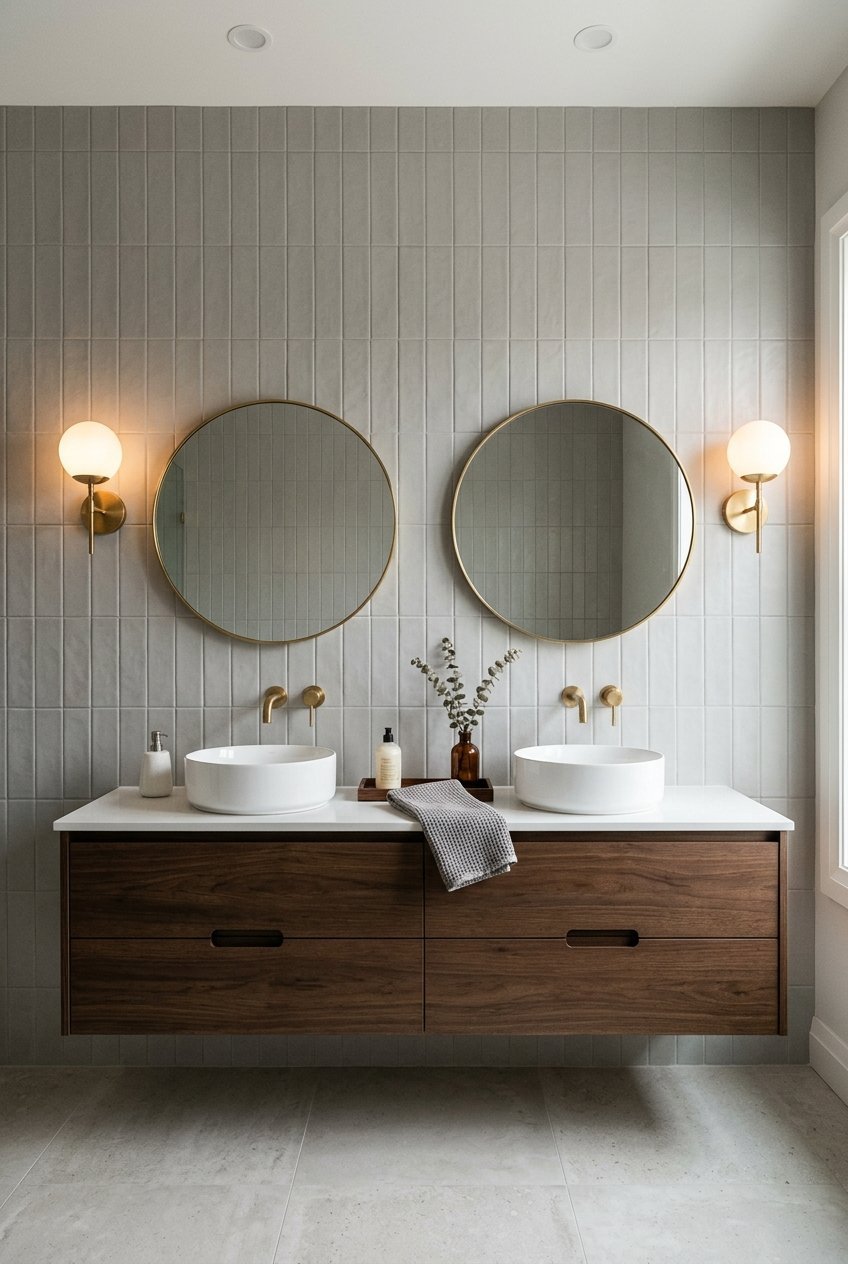
Running tile from the countertop all the way to the ceiling turns the vanity wall into a feature and makes the room feel taller. It also protects the whole wall, so you never have to think about splash zones.
It suits a bathroom with a long vanity or a double sink. Choose a simple tile in a calm color, so the wall looks clean around mirrors and lights. Plan the placement of sconces and outlets before the tile goes up, since cutting holes after the fact is harder.
5. Penny Round or Mosaic
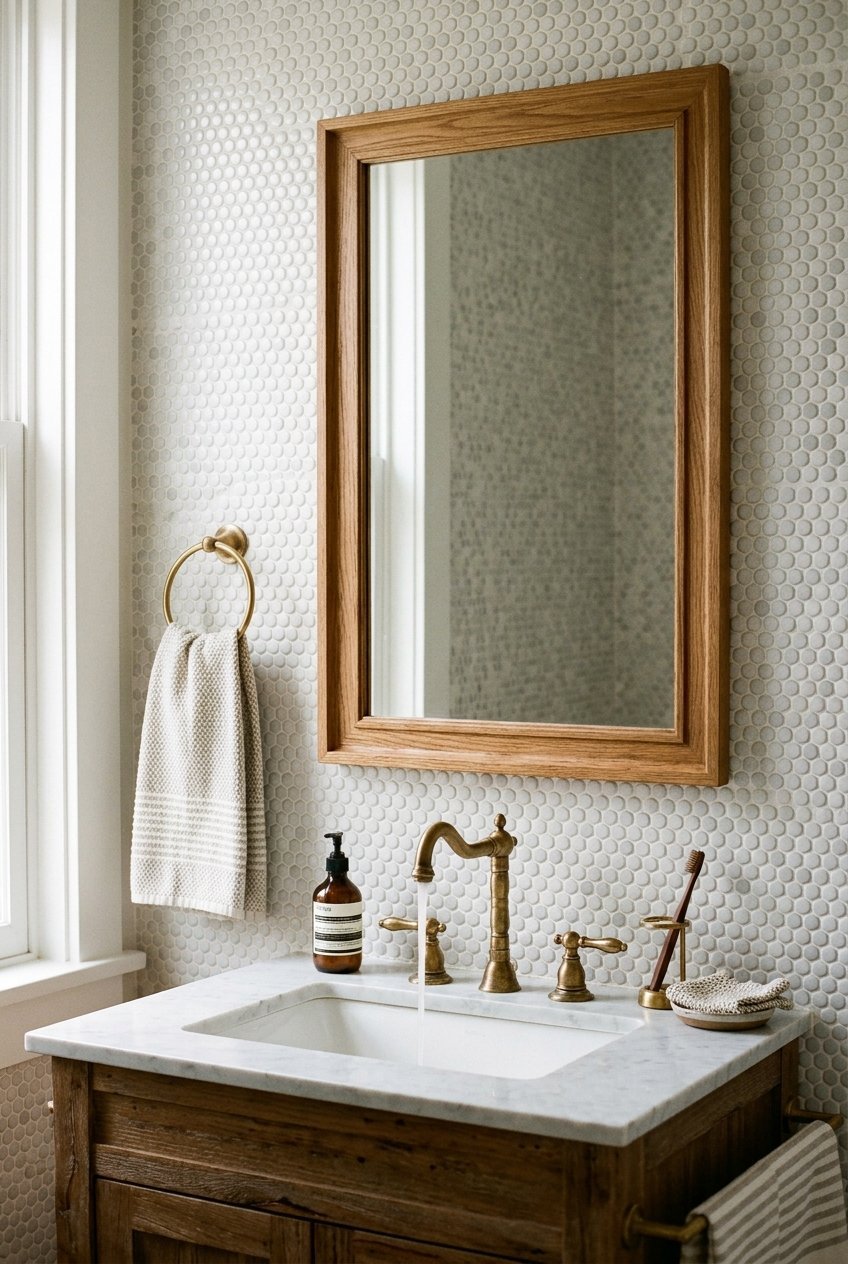
Small mosaic tiles add texture and a vintage feel. Penny rounds are the best known, and they come on mesh sheets that make installation faster than setting every piece. The many grout lines also give the wall a pleasing pattern.
It suits older homes, cottage-style bathrooms, and anyone who likes a soft, traditional look. More grout means more to keep clean, so use a stain-resistant or epoxy grout and wipe the wall with a damp cloth now and then.
6. Peel-and-Stick Tile
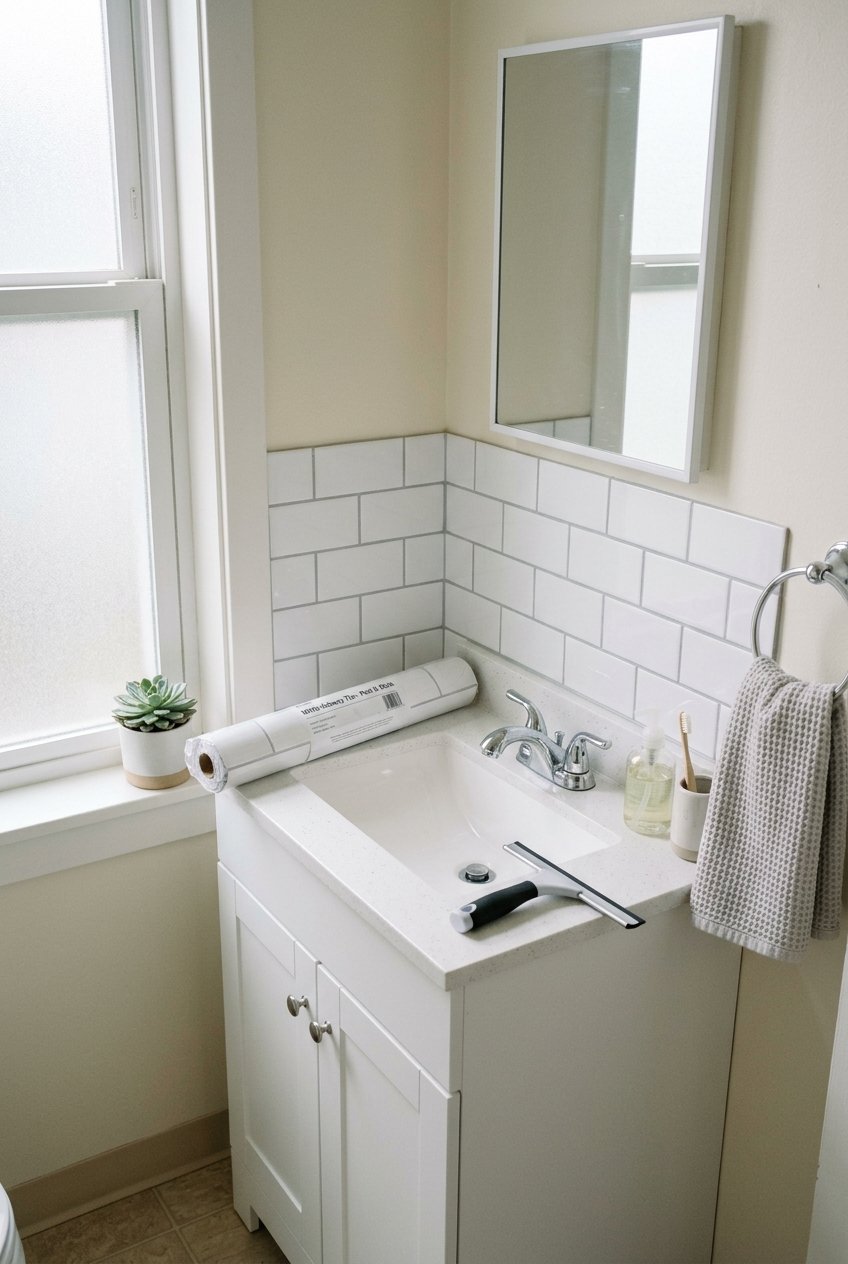
Peel-and-stick tile is the go-to for renters and quick updates. It goes on in an afternoon with no grout, and it comes off when you move. Many styles copy subway, marble, and patterned tile convincingly.
Use it only on the splash zone behind a sink, not inside a shower or tub. Clean the wall well, press every tile firmly, and seal the top and side edges with a thin line of silicone to keep water from sneaking behind. It suits smooth, painted walls best. For more small-room tricks, see our guide to tiny bathroom ideas.
7. Painted Beadboard or PVC Paneling
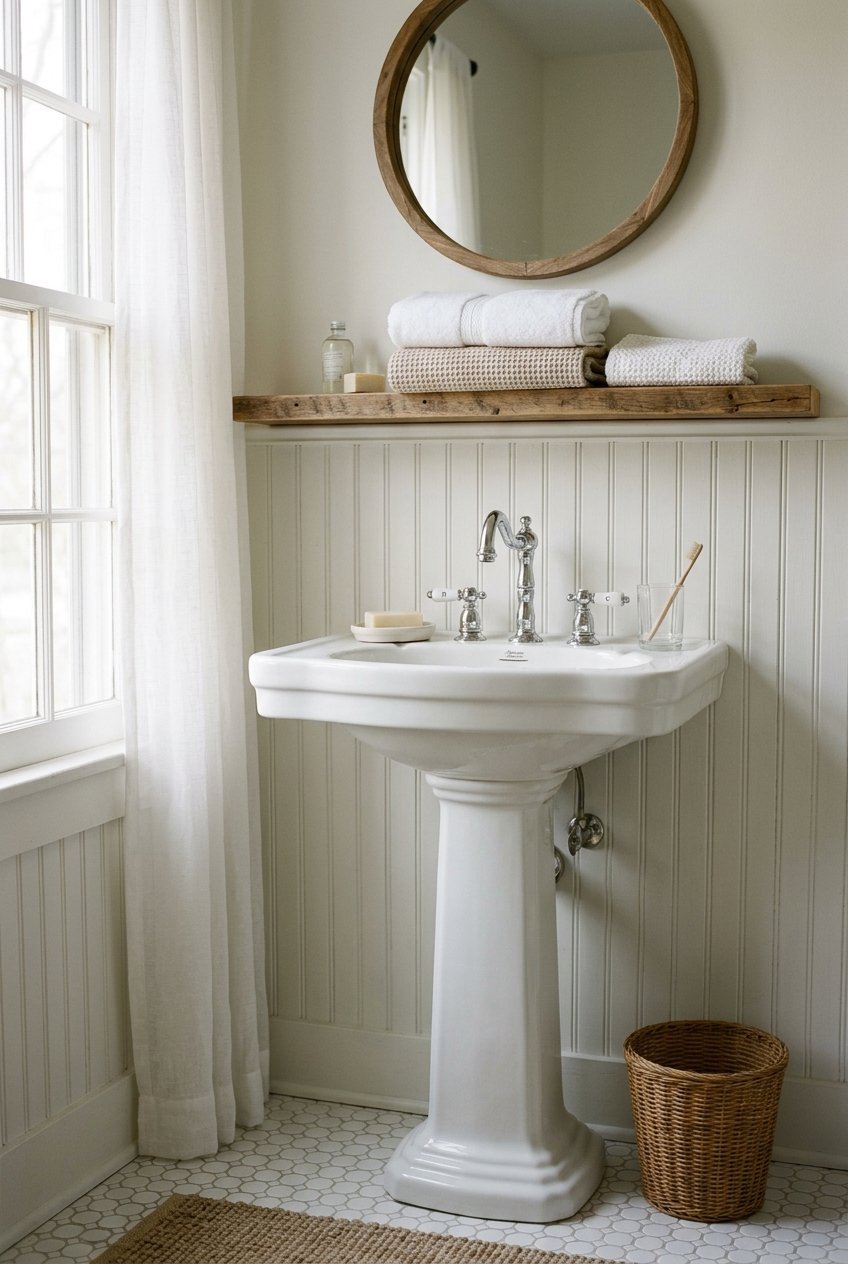
Beadboard gives a bathroom a cottage or coastal feel at a low cost. The vertical grooves add texture, and a coat of white or a soft color makes the wall look clean and tidy.
Choose PVC or another moisture-resistant panel, since wood and MDF can swell in a damp room. Seal the top edge and the seams with caulk, and use a semi-gloss paint that wipes clean. It suits powder rooms and guest baths with a relaxed style.
8. A Matching Countertop Upstand
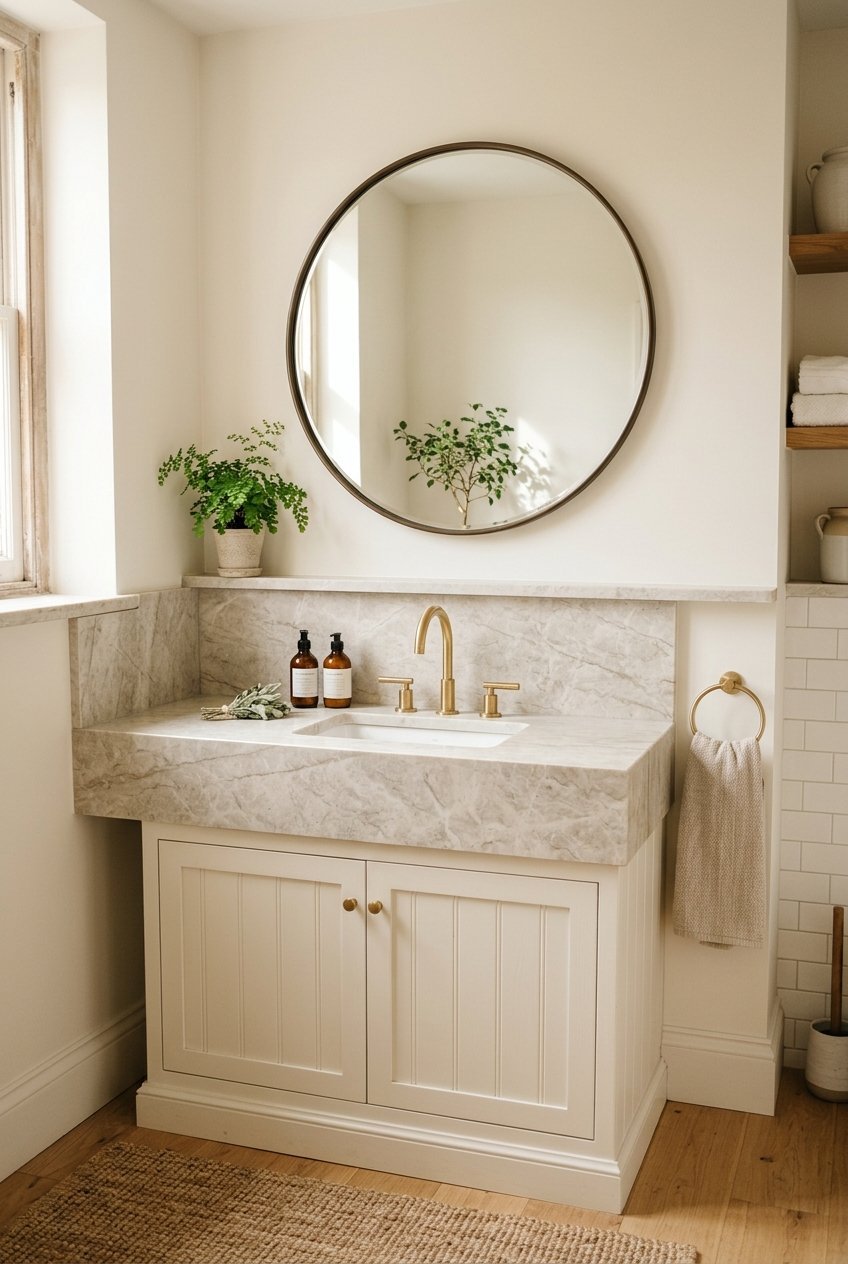
The simplest backsplash is a strip of the same material as the countertop, about 4 inches tall, running up the wall. It protects the paint from splashes, covers the gap between the counter and the wall, and keeps the look clean.
It suits minimalist and modern bathrooms, and it is often included when you buy a vanity top. Seal the joint between the upstand and the wall with a bead of silicone caulk. For help choosing a vanity to go with it, see our guide to bathroom vanity styles.
9. Herringbone Tile
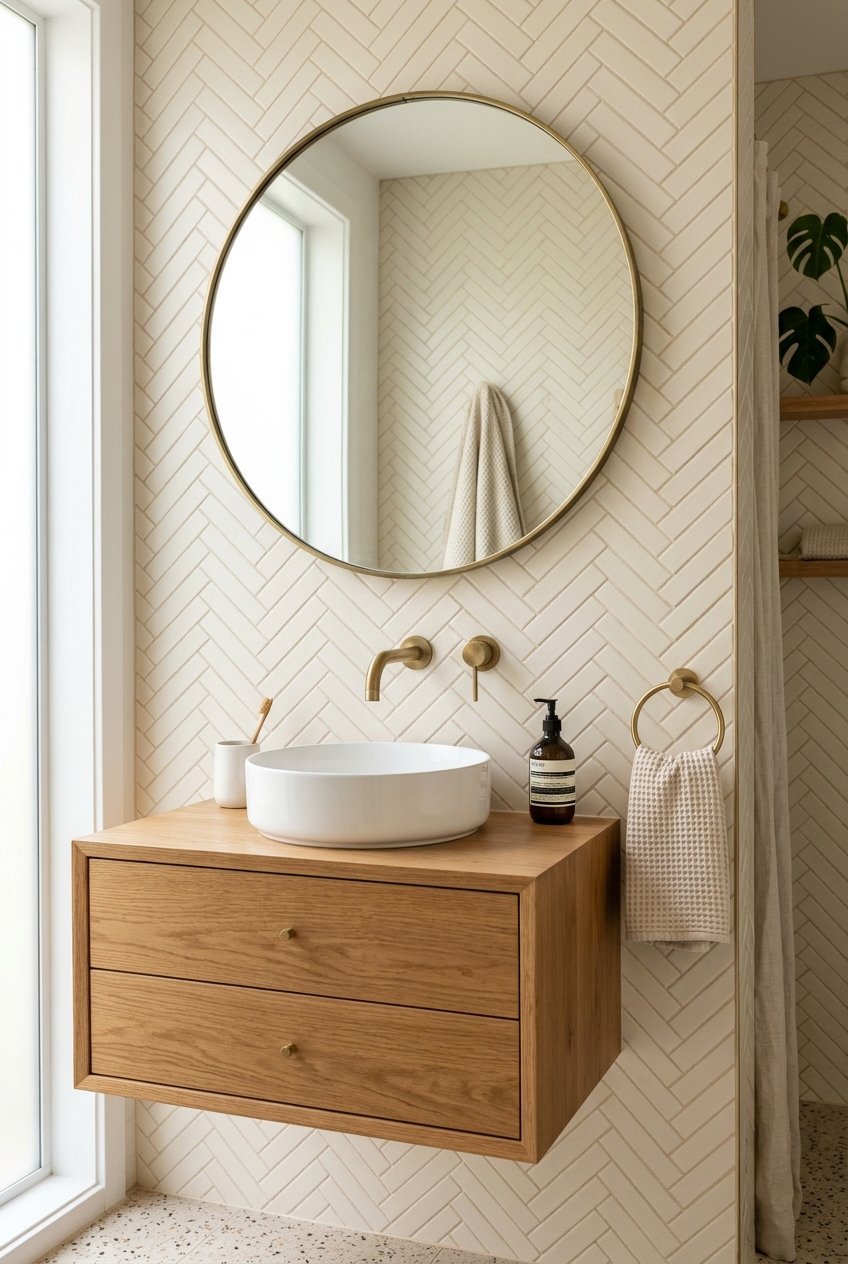
A herringbone layout adds movement and a handcrafted look, even with a plain tile. Small rectangular tiles in cream, gray, or soft green turn into a pattern that feels designed, without needing a bold color.
It suits bathrooms where you want interest without a loud look. The layout takes more cuts, so labor costs a little more. Keep the grout close to the tile color, so the pattern comes from the layout and not from heavy lines.
10. Fluted or Ribbed Tile
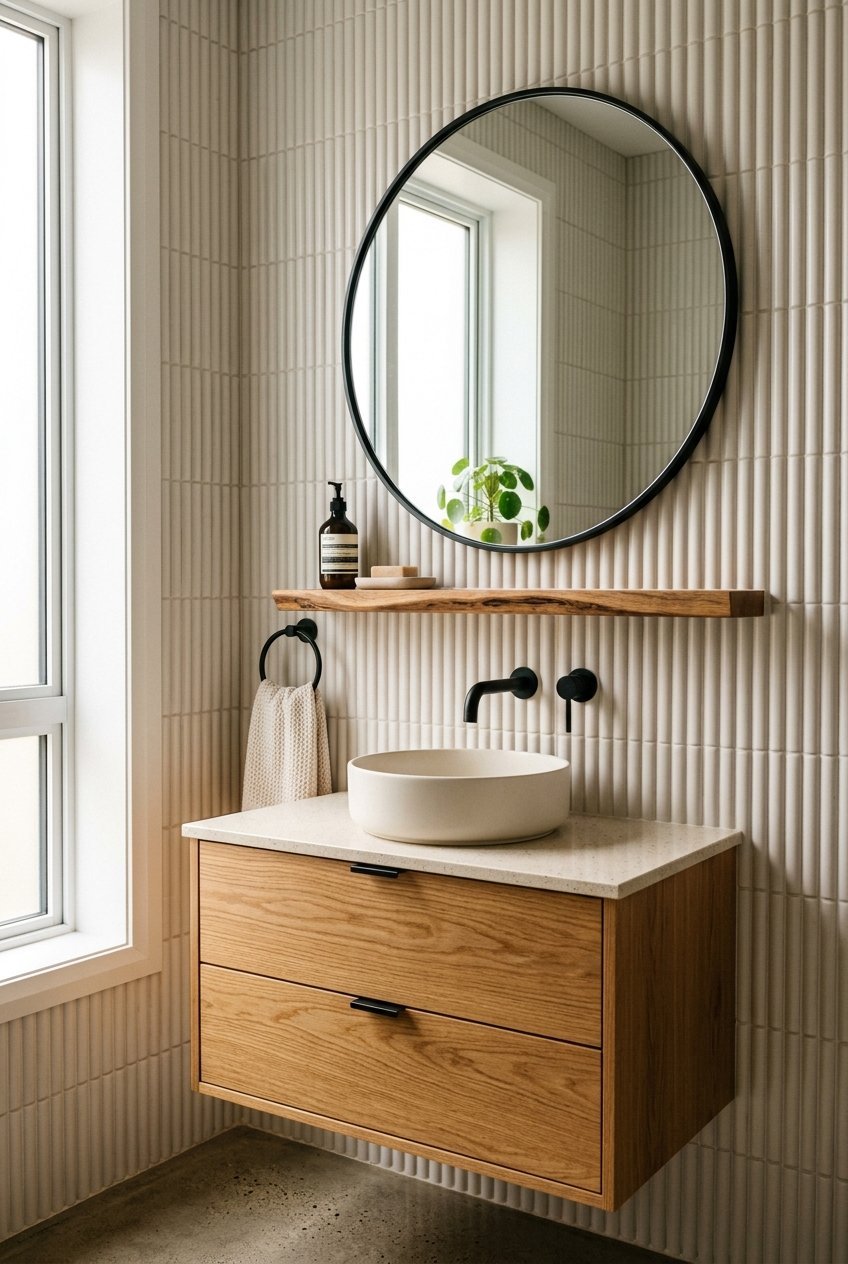
Fluted tile has vertical ridges that add depth and catch the light. It reads as modern and tactile, and it works well in neutral colors, where the texture does the talking.
It suits contemporary bathrooms and pairs well with wood vanities and black or brass fixtures. The ridges can collect a bit of soap film, so wipe it down regularly with a soft cloth. A sconce on the same wall makes the texture stand out in the evening.
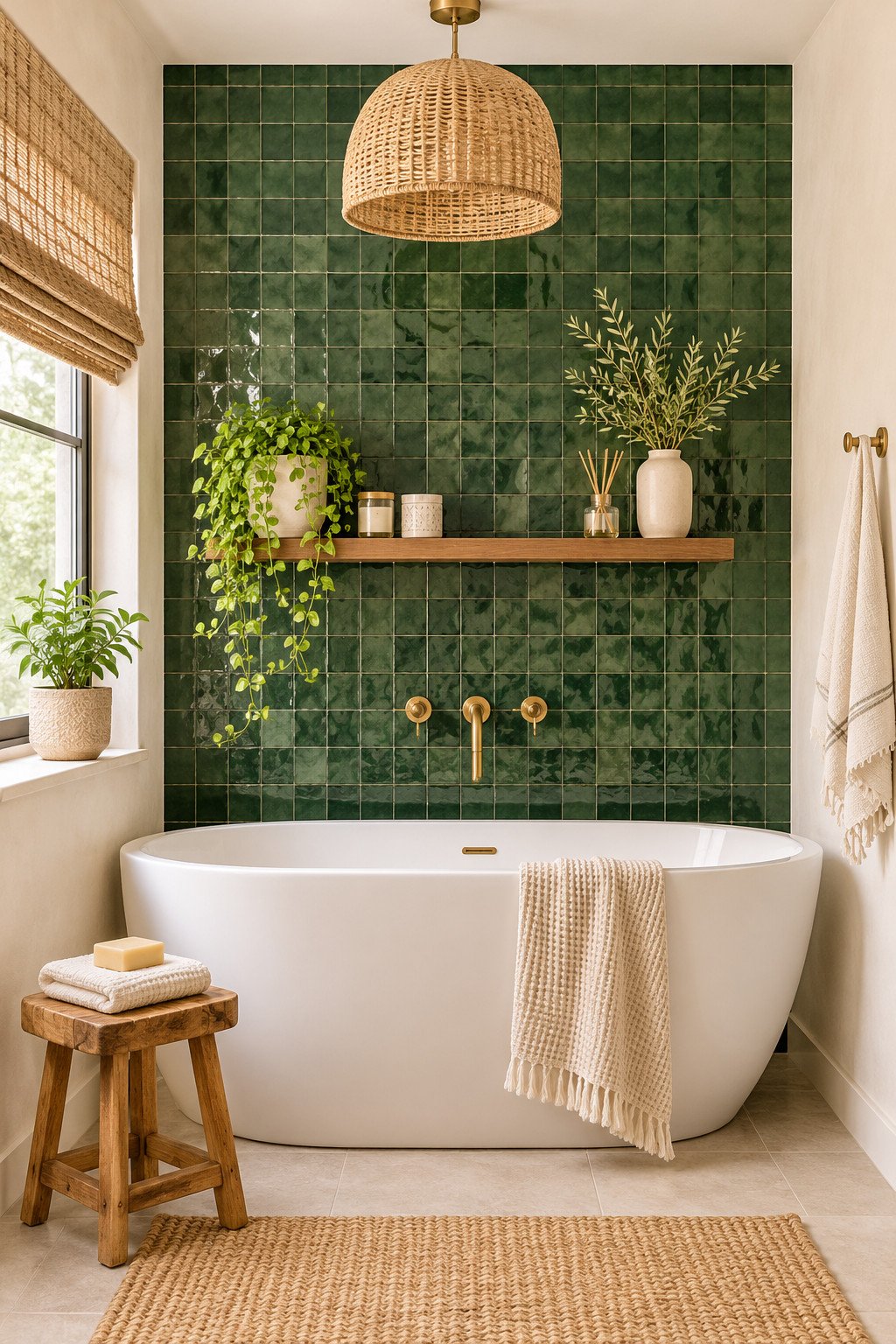
11. Bold Glossy Colored Tile
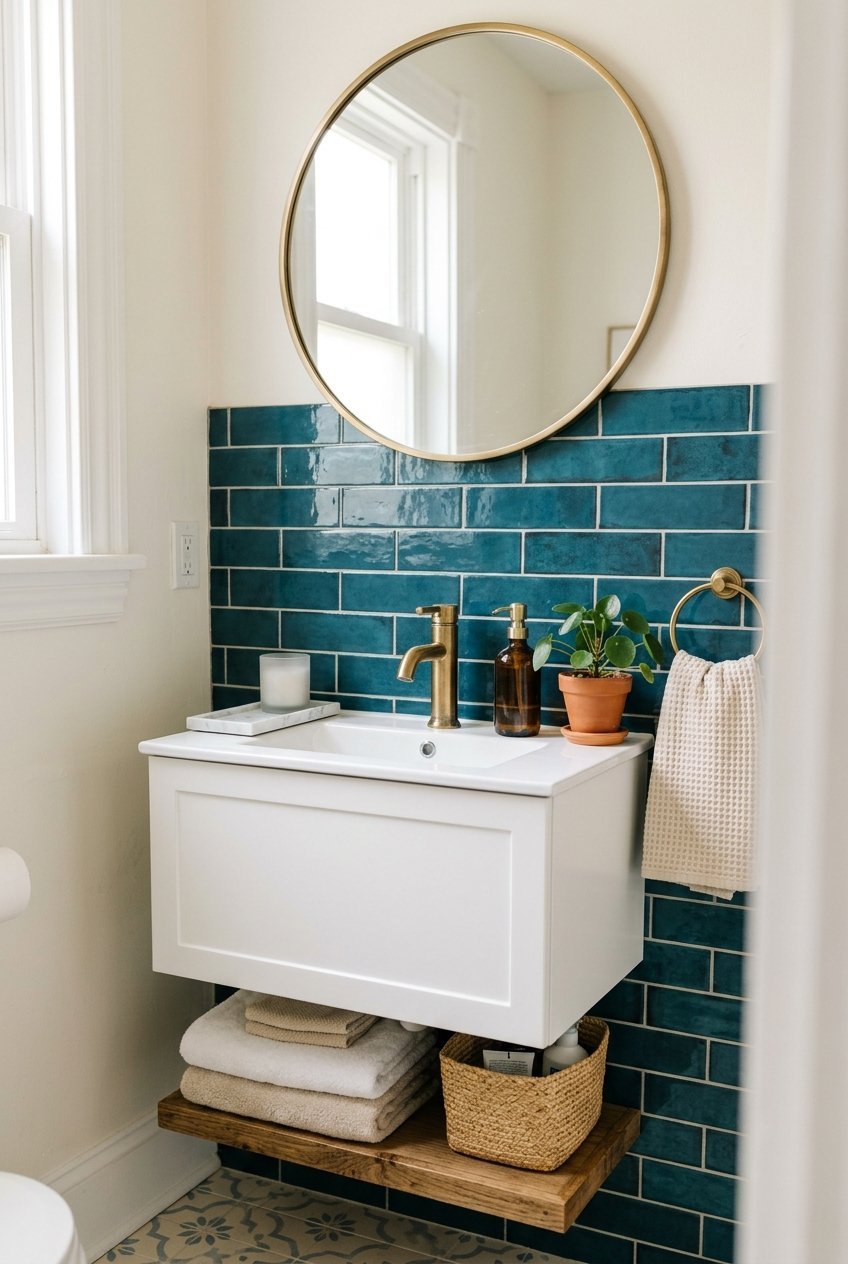
A small backsplash is a safe place to try a strong color. Deep teal, forest green, or terracotta tile behind a white vanity gives a bathroom personality without covering every wall. Glossy glaze bounces light, which helps a small room.
It suits powder rooms and compact baths. Keep the rest of the room quiet, with white walls, a simple mirror, and brass or black fixtures. If you like a pattern more than a plain color, our guide to small bathroom wallpaper ideas offers another way to add personality.
12. Large-Format Porcelain Panels
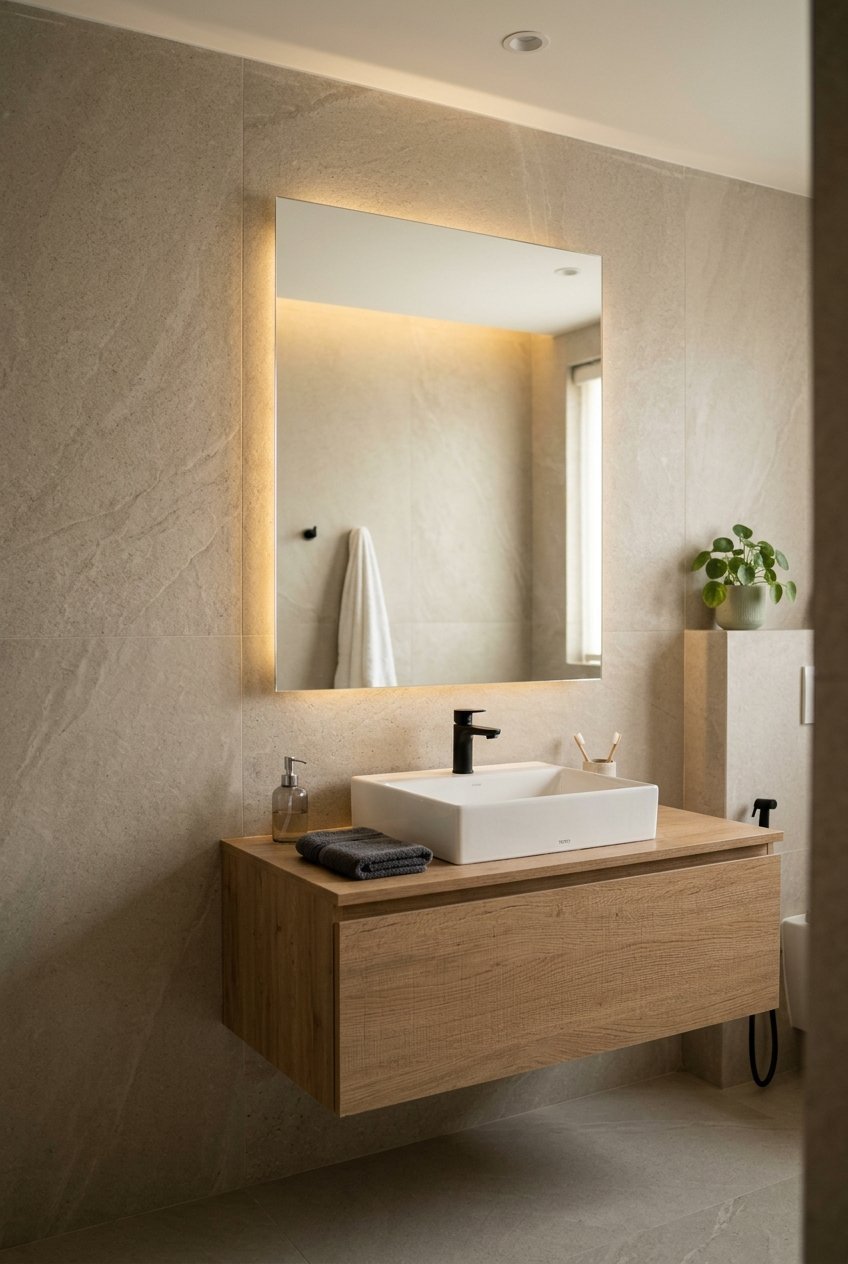
Large panels of porcelain mean very few grout lines, so the wall looks smooth and is quick to wipe clean. Stone-look and concrete-look finishes give a calm, spa-like feel.
It suits modern bathrooms and anyone who hates scrubbing grout. Large panels are heavy and need a flat wall and a skilled installer. Match the finish to your floor for a seamless look, and see our guide to modern bathroom floor tile ideas for coordinating options.
13. Scalloped or Fish Scale Tile
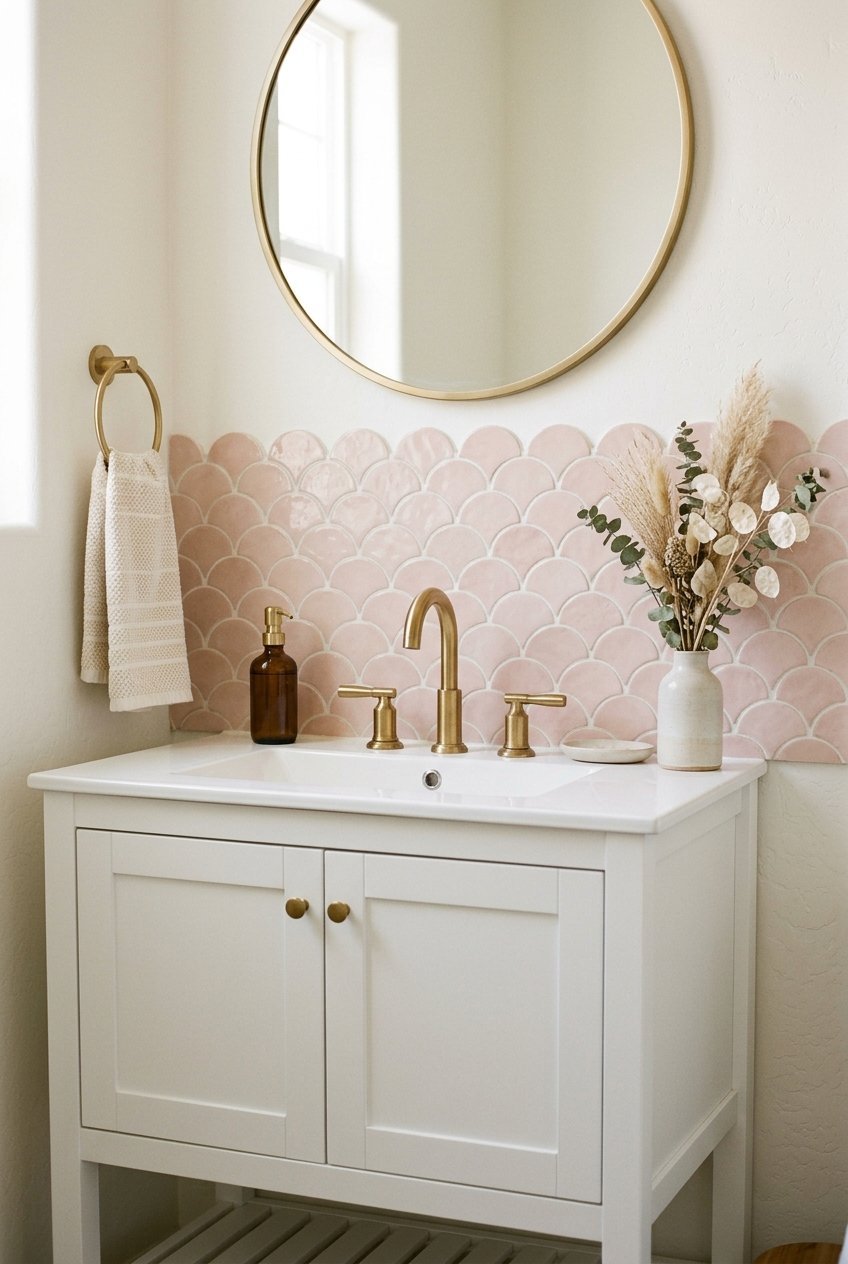
Scalloped tile brings soft, rounded shapes to a bathroom full of straight lines. In blush, sage, or pale blue, it feels playful but still timeless, and it looks lovely with brass.
It suits a small backsplash area, such as behind a single sink. A little goes a long way, so keep the vanity and mirror simple. Ceramic and peel-and-stick versions both exist, so you can pick based on your budget and how permanent you want it to be.
Before You Install: Height, Sealing, and Prep
Start with height. A basic bathroom backsplash is about 4 inches tall, which protects the wall from drips at the counter. A taller one, around 12 to 18 inches, covers more of the splash zone. Many people take tile up to the bottom of the mirror, or all the way to the ceiling for a bolder look. Choose the height before you buy, so you know how much material you need.
Think about moisture. Seal grout lines, use a silicone caulk where the backsplash meets the countertop and the sink, and make sure the exhaust fan works well. For natural stone, apply a sealer made for it, and follow the maker’s instructions. Wipe splashes quickly, since standing water can stain grout and stone.
Prepare the wall. Clean off soap scum and mildew, fix holes, and make sure the surface is dry and smooth. Turn off the power at the breaker before working near outlets and lights, and use box extenders so cover plates sit flush against the new surface. If you are not sure about the plumbing or electrical details, ask a professional.
If you are planning a bigger refresh, our guide to bathroom shower tile ideas helps you coordinate the shower walls, and our post on small bathroom decor ideas to make it look bigger covers styling. Looking at the kitchen too? Our guide to kitchen backsplash ideas shows options that can match your bathroom choice. For more budget-friendly finishing touches around the house, see home decor ideas that make a home look expensive.
For more bathroom inspiration, follow along on Pinterest.
Frequently Asked Questions
How high should a bathroom backsplash be?
A standard bathroom backsplash is about 4 inches high. For more protection and a stronger look, many people run it up to 12 to 18 inches, to the bottom of the mirror, or all the way to the ceiling.
Do you need a backsplash in a bathroom?
It is not required, but it helps. A backsplash protects the wall from water, toothpaste, and soap splashes, which can stain and damage painted drywall over time. It also gives the vanity a finished look.
What is the cheapest bathroom backsplash?
Peel-and-stick tile, a matching countertop upstand, and painted PVC beadboard are among the lowest-cost options. Standard white subway tile is also affordable, especially if you install it yourself.
Is peel-and-stick tile okay in a bathroom?
It works well behind a sink, away from direct, constant water. Do not use it inside a shower or tub. Seal the edges with silicone, and check that the product is rated for bathrooms.
What backsplash goes best with a wood vanity?
Simple, light tile such as white subway, soft zellige, or a cream herringbone usually looks best, since it lets the wood stand out. A marble or marble-look slab also pairs nicely with warm wood.
How do I keep a bathroom backsplash clean?
Wipe splashes quickly, use a gentle cleaner suited to your material, and seal grout and natural stone as recommended. Run the exhaust fan after showers to cut down on moisture and mildew.