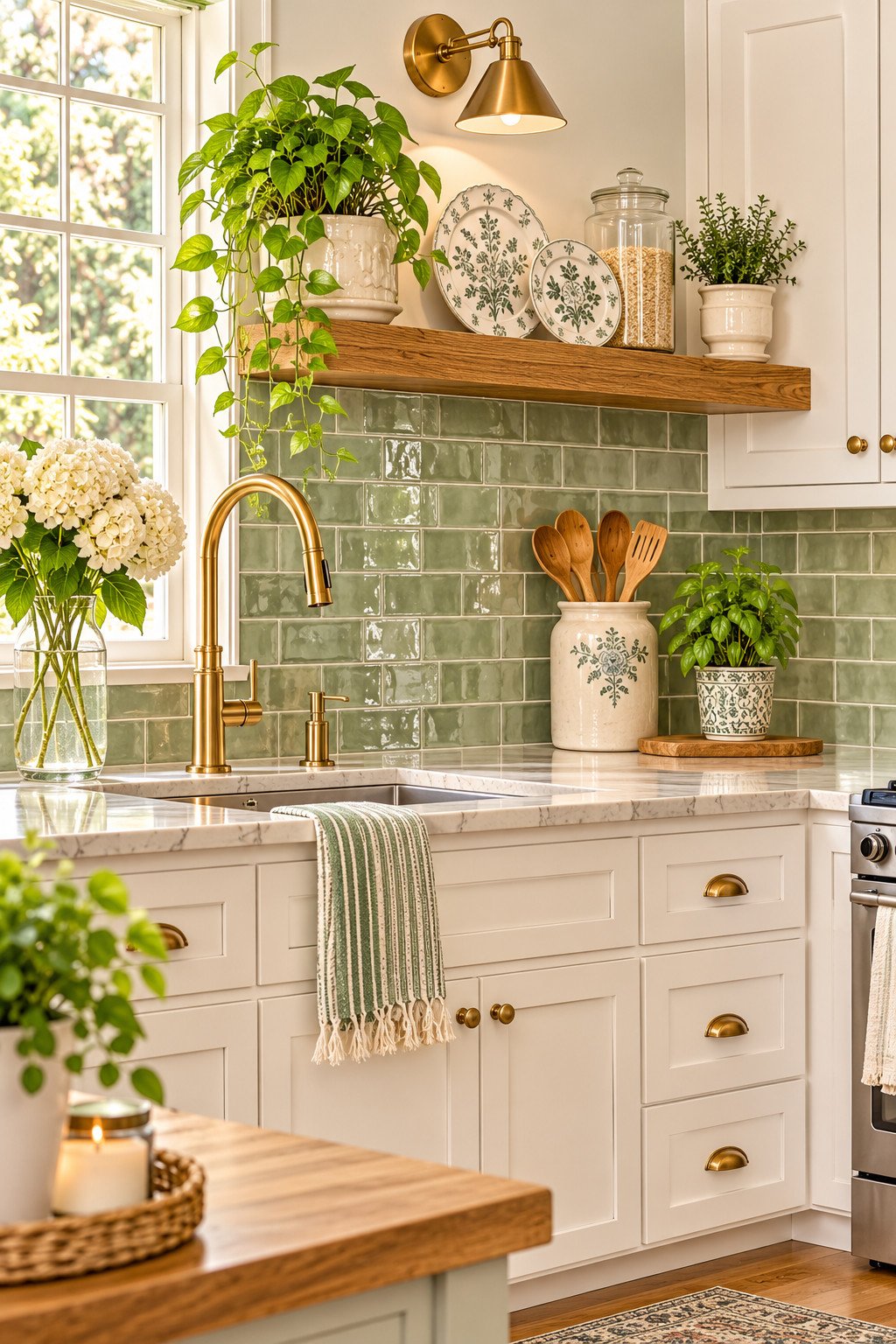
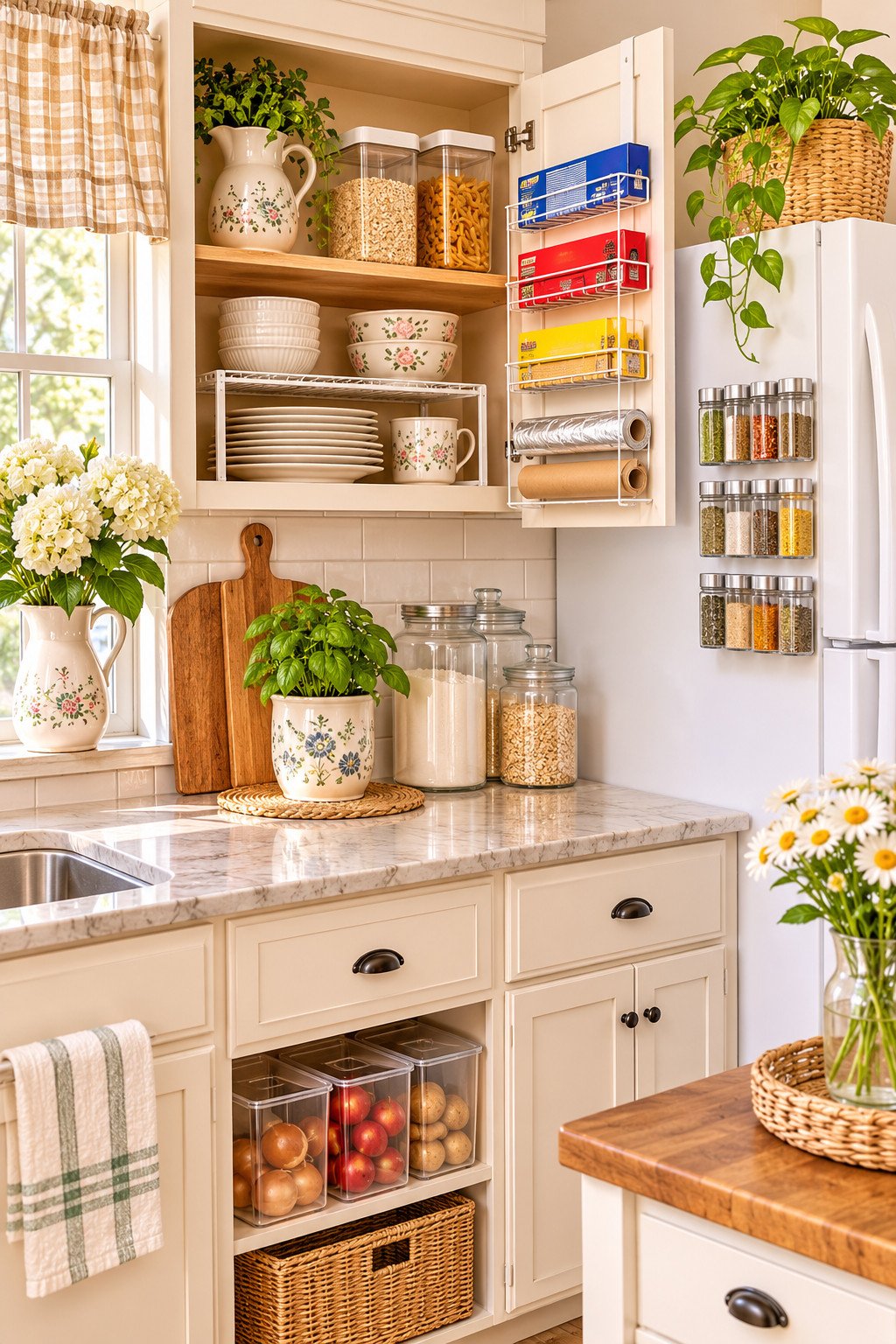
Easy upgrades for the strip of wall between the counter and the cabinets, from a weekend peel-and-stick job to a bold stone slab.
Kitchen backsplash ideas have a way of making a plain kitchen look finished. The strip of wall behind the counter is small, but it sits at eye level and catches the light, so it gets noticed more than almost any other surface. The good news is that you do not need to tear anything out to change it.
These twelve kitchen backsplash ideas are chosen for people who want a real difference without a full remodel. Some are renter-friendly, some are budget-friendly, and a few are worth a little more money. Along the way you will find notes on what each option suits and where it can go wrong.
Table of Contents
1. Peel-and-Stick Subway Tile, the Easiest of All Kitchen Backsplash Ideas
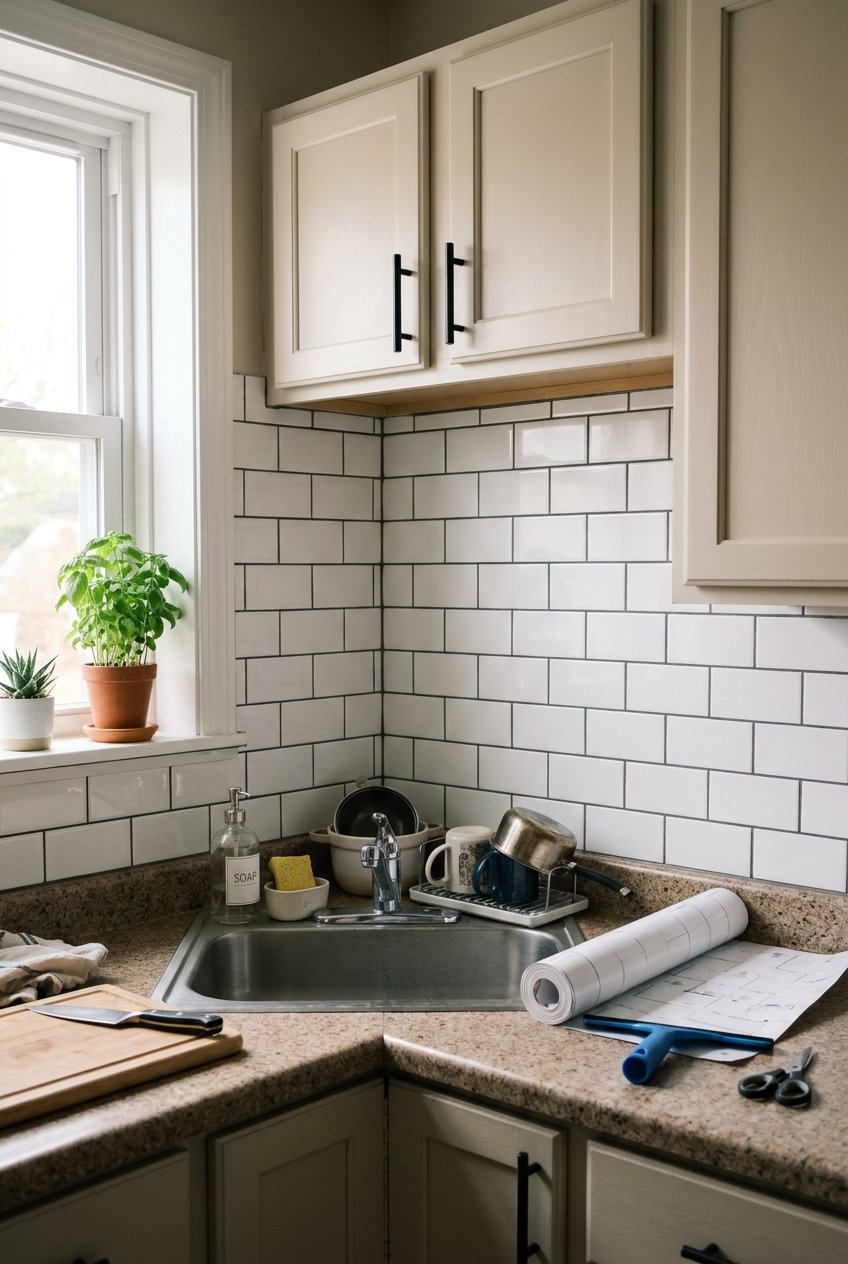
Peel-and-stick tile is the first stop for renters and anyone short on time. The tiles are thin, come on a sticky backing, and go up in an afternoon with a ruler, a craft knife, and a steady hand. A white subway pattern looks clean, and it works with nearly every cabinet color.
It suits flat, smooth, painted walls best. Clean off any grease first, press each tile firmly, and cut around outlets with care. Quality varies a lot between brands, so look for thicker tiles with a gel or resin finish that looks more like real tile. Our guide to small apartment kitchen decor ideas shows how this fits into a full budget kitchen refresh.
2. Paint Over Existing Tile
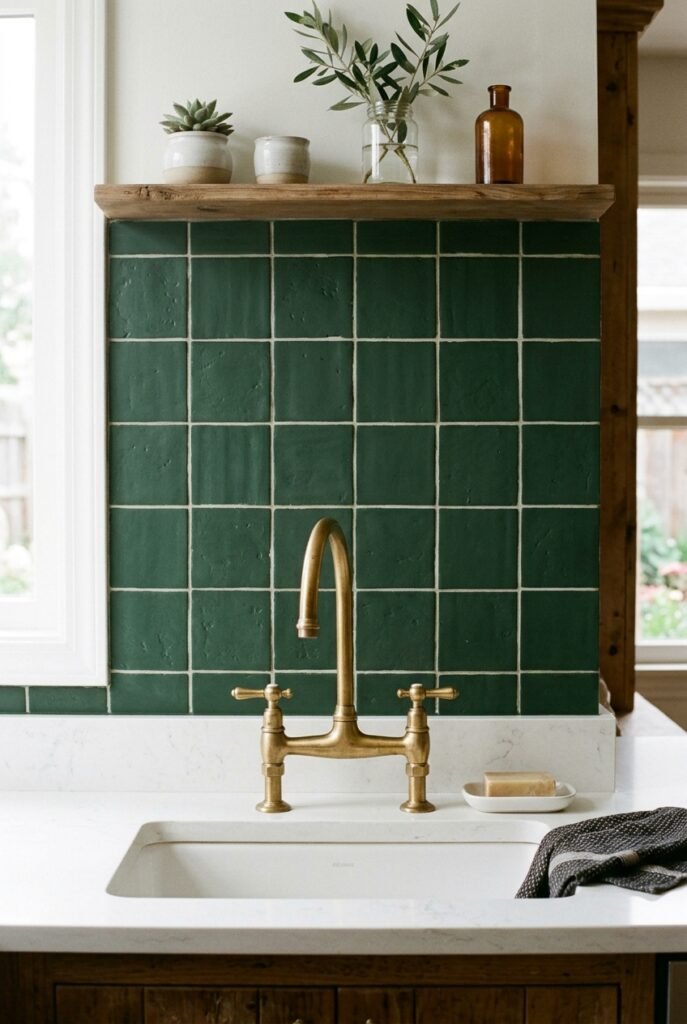
If you already have tile you dislike, such as an old beige square or a dated pattern, paint can change it without a demolition. A deep green, a warm white, or a soft clay tone turns a tired backsplash into a deliberate choice, and you keep the grout lines for texture.
This works best on tile in good condition. Degrease the surface well, scuff it lightly, use a bonding primer, and finish with a paint made for tile or a durable cabinet paint. Keep paint away from the area right behind a burner, since heat and splatter are hard on it.
3. Beadboard Panels
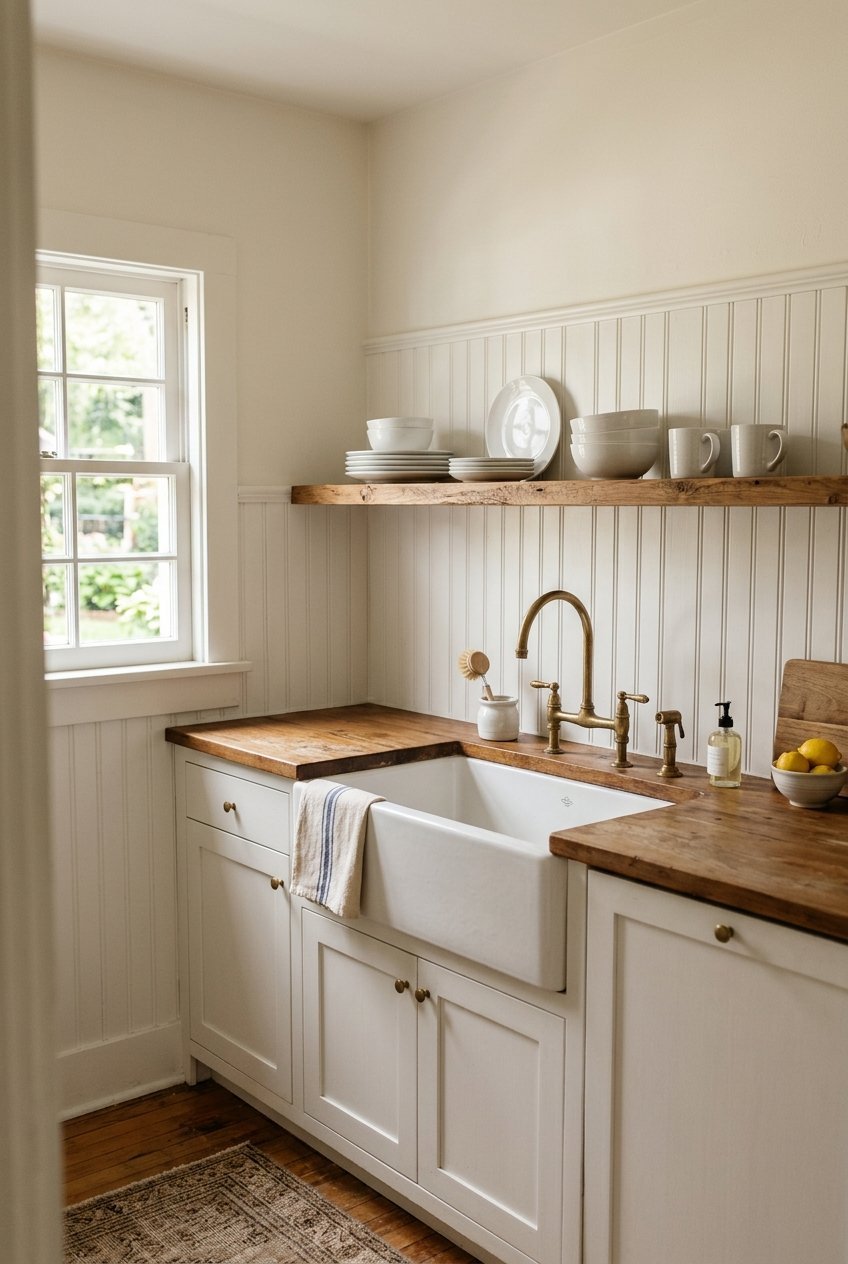
Beadboard brings a relaxed cottage look and costs little. The vertical grooves add texture, and a coat of white or soft color makes the wall feel clean and tidy. It suits farmhouse, coastal, and traditional kitchens.
Choose PVC or another moisture-resistant beadboard rather than plain MDF, since kitchens get steam and splashes. Seal the top edge and any seams with caulk, and wipe it down with a damp cloth. Plan on a gentle clean after cooking to keep grease from building up in the grooves.
4. Tile Only Behind the Stove
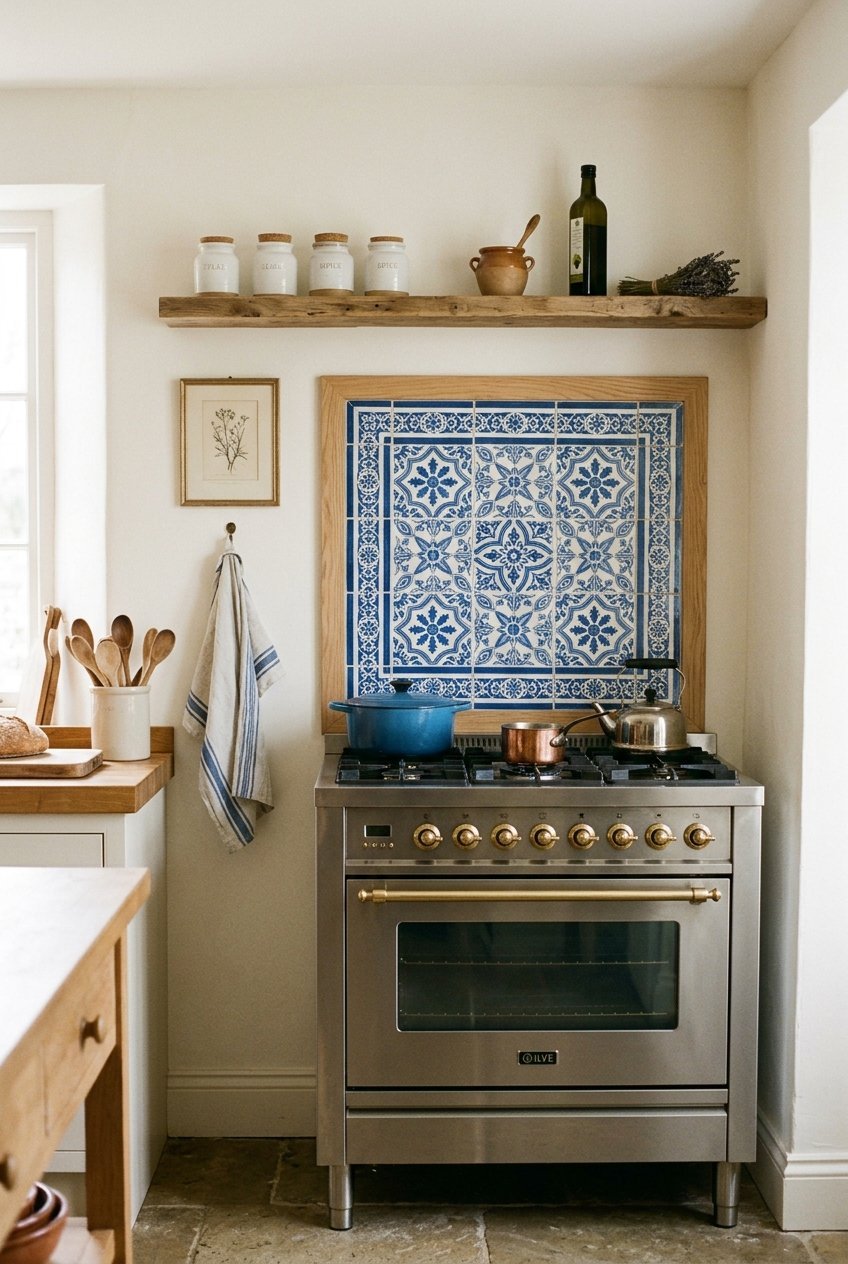
You do not need a backsplash on every wall. A single framed panel of beautiful tile behind the stove turns that spot into a focal point, and a small area means you can afford a more expensive tile. Patterned cement-look tile and handmade-look tile both shine here.
This is a good idea for a kitchen with a freestanding range and limited budget. Keep the panel a little wider than the stove, and finish the top with a trim or a shelf so the edge looks intentional. The rest of the wall can stay painted with a washable finish.
5. Thin Brick Veneer
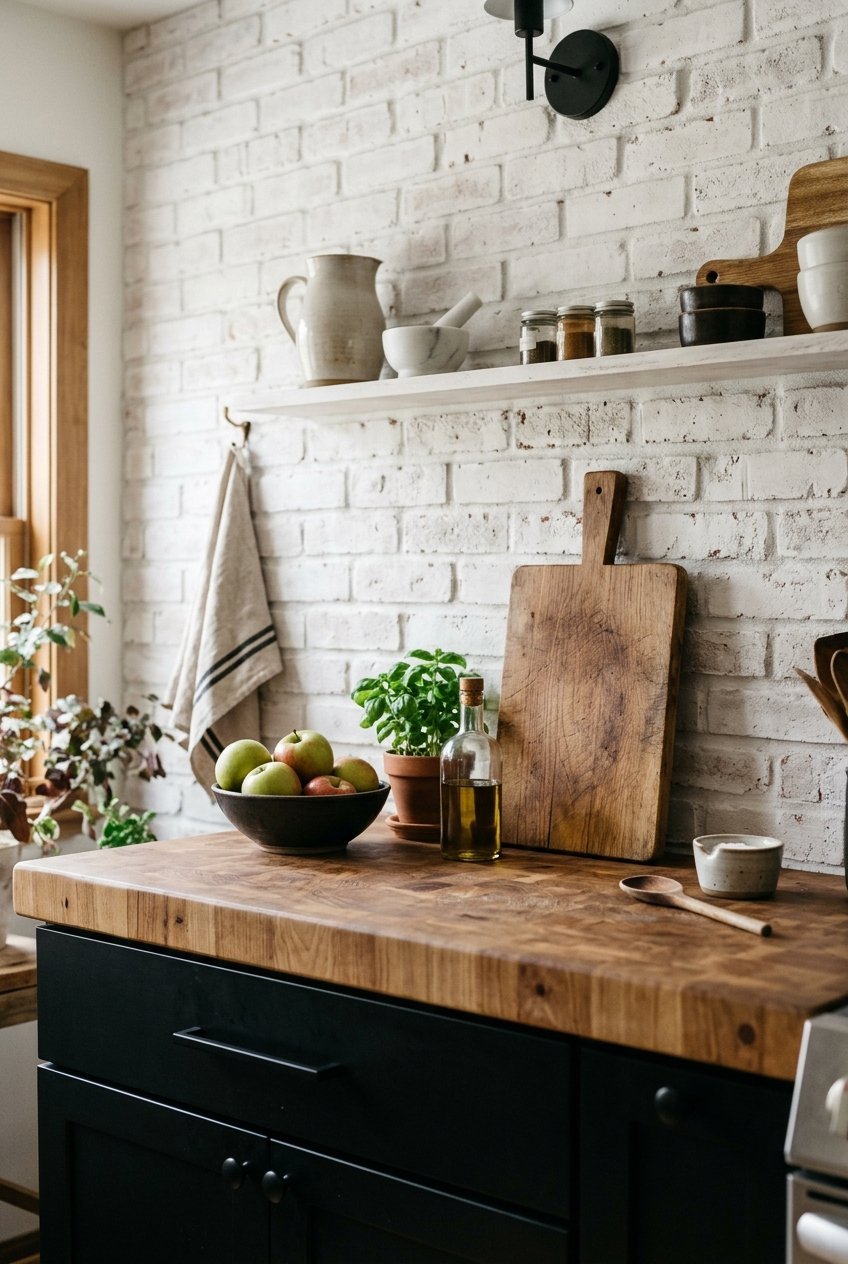
Thin brick veneer gives you the look of an exposed brick wall without the weight or the demolition. Whitewashed or soft red brick feels warm, and it looks great beside butcher block, black hardware, and open shelving.
It suits cozy, rustic, and industrial kitchens. Brick is porous, so seal it with a matte sealer made for masonry and wipe splashes quickly. It can collect dust and grease in its texture, so it is better a few feet from the cooktop than right behind it.
6. A Stainless Steel Panel
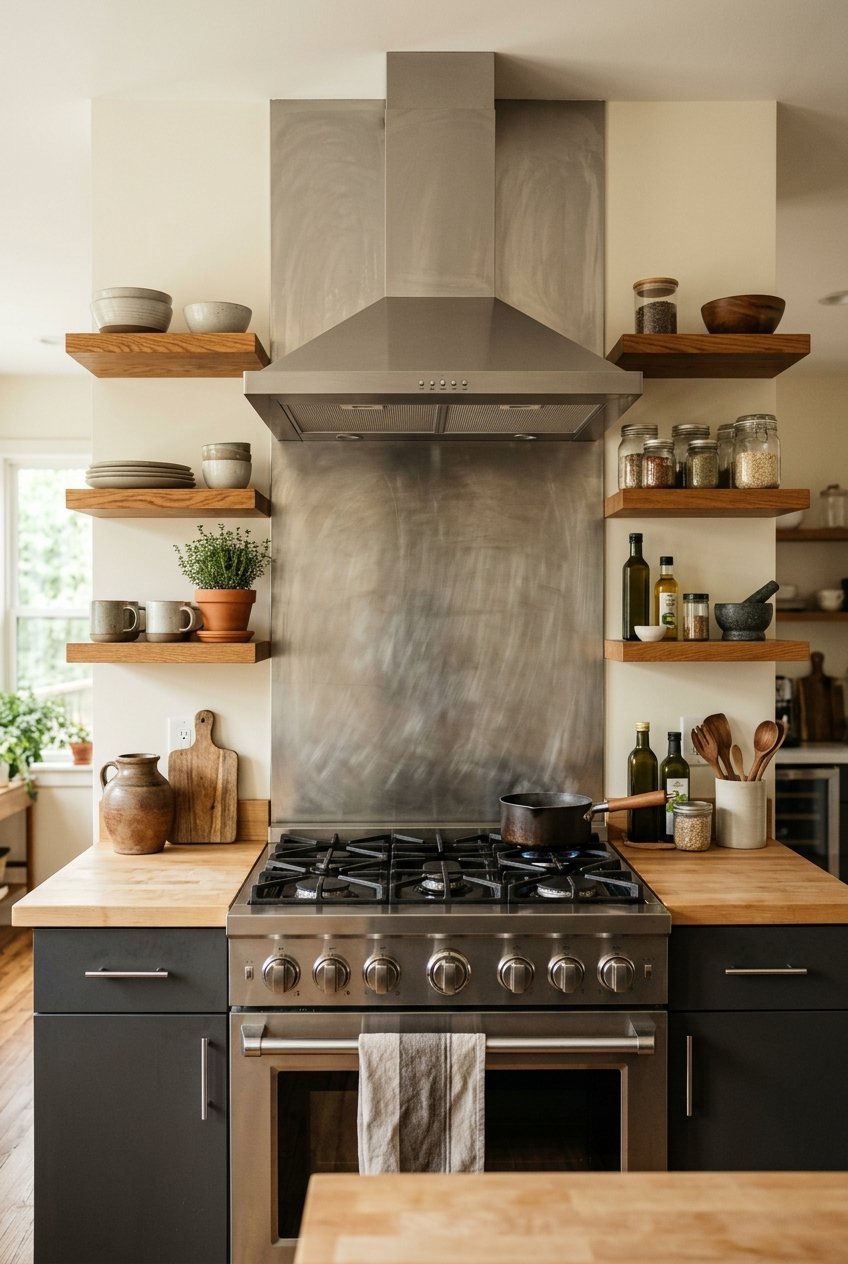
Stainless steel gives a kitchen a professional look and is one of the most practical materials behind a range. It handles heat, wipes clean in seconds, and has no grout to scrub. Pair it with warm wood shelves so the room does not feel cold.
Sheets are available in adhesive-backed versions for lighter jobs, or as custom-cut panels for a more permanent finish. Expect fingerprints on a polished surface, so a brushed finish hides marks better.
7. Sealed Wood Planks
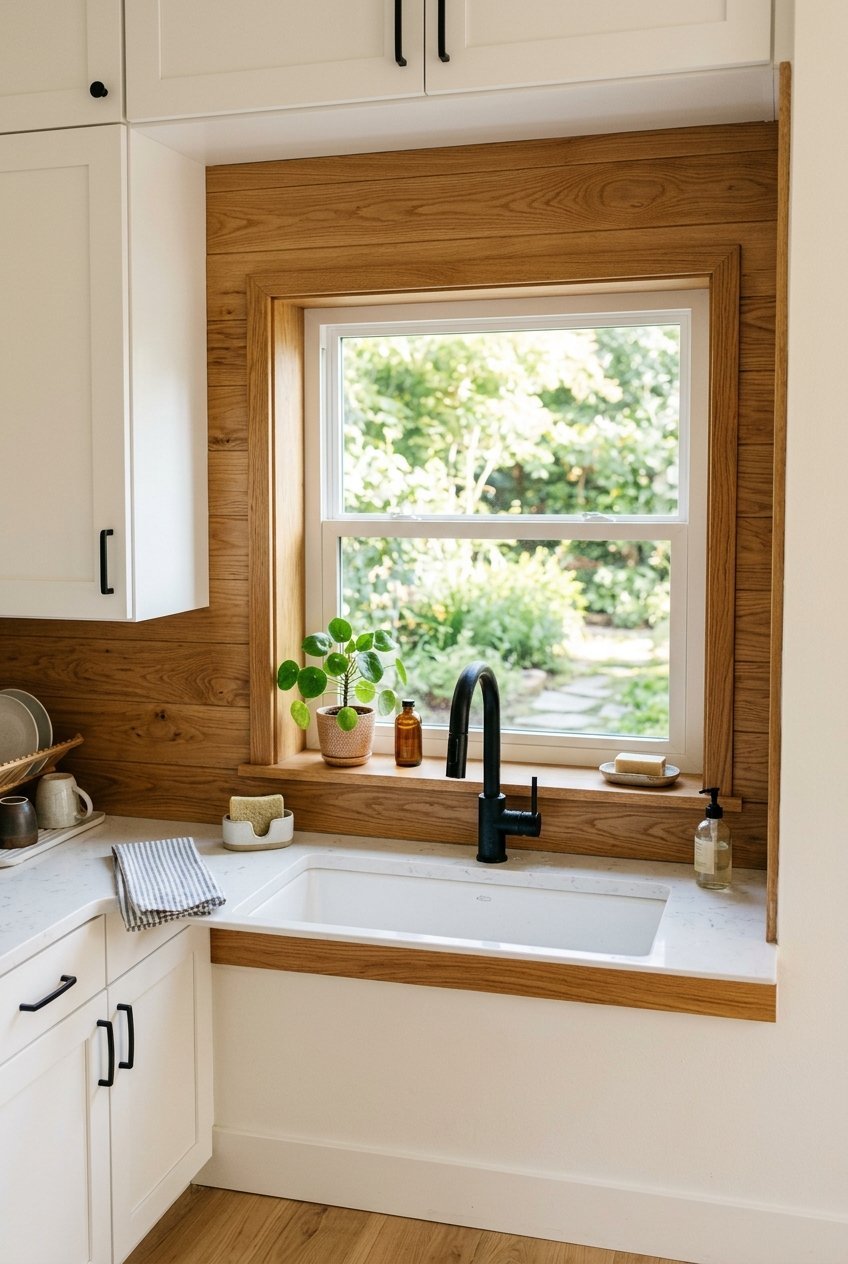
Wood planks add warmth and a natural feel to a kitchen that leans too white or too hard. Oak, pine, or reclaimed boards can look rich with a clear satin sealer, and the grain gives the wall personality.
Keep wood away from the stove and from direct water. It suits the wall beside the sink, around a window, or beside a coffee station. Seal every side and edge, and reapply the finish when it begins to look dull. If you are building a warm, natural kitchen, take a look at our guide to open shelf kitchen ideas, which pairs well with a wood wall.
8. A Mosaic Accent Strip
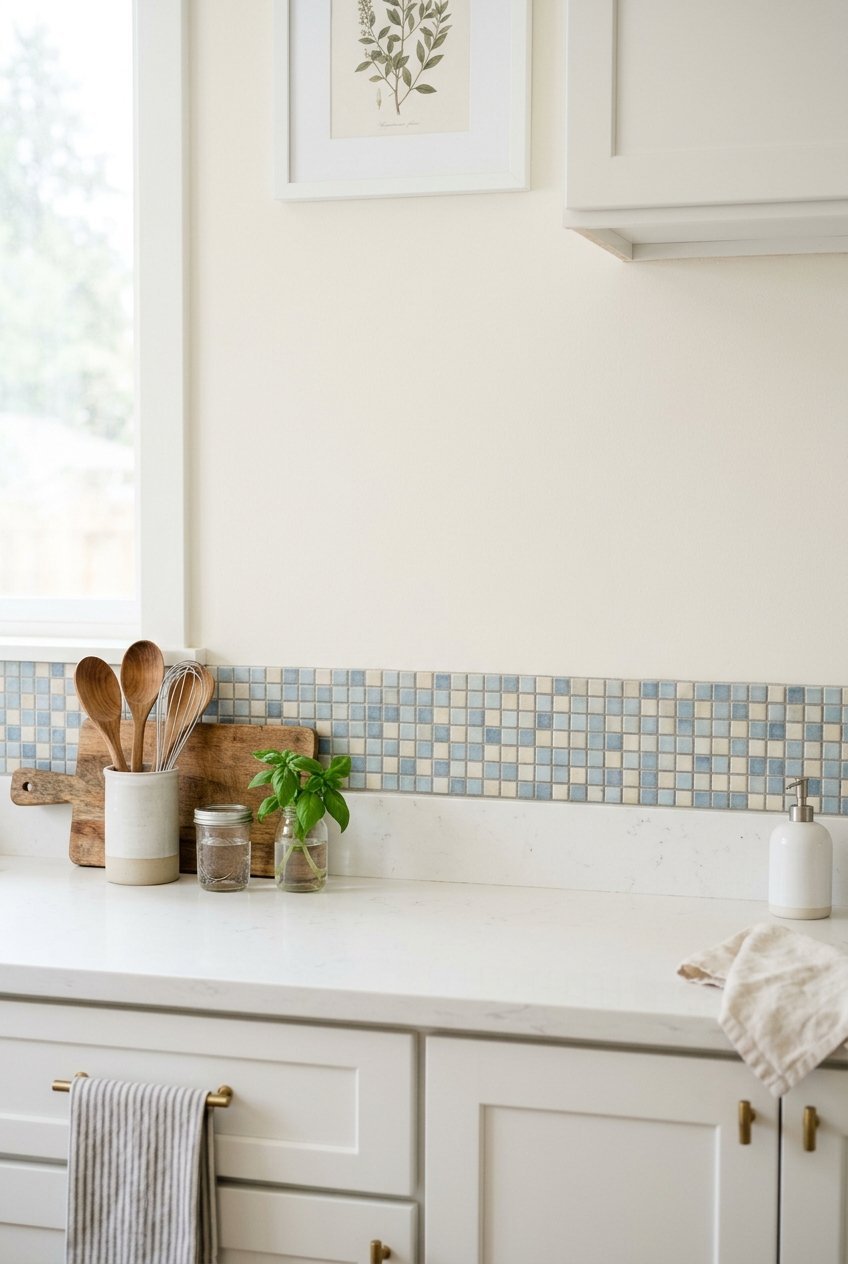
A narrow strip of mosaic tile, about 4 to 6 inches tall, gives you a pretty detail with very little material. It runs along the back of the counter and acts like a decorative border, with the paint above it doing the rest.
This is a smart pick when you love a pricey tile but cannot afford a full wall. Mosaic sheets are easy to cut and place, and the many small grout lines hide splashes. Pick a color that picks up something else in the kitchen, such as the faucet or a bowl.
9. An Acrylic Panel Over Wallpaper
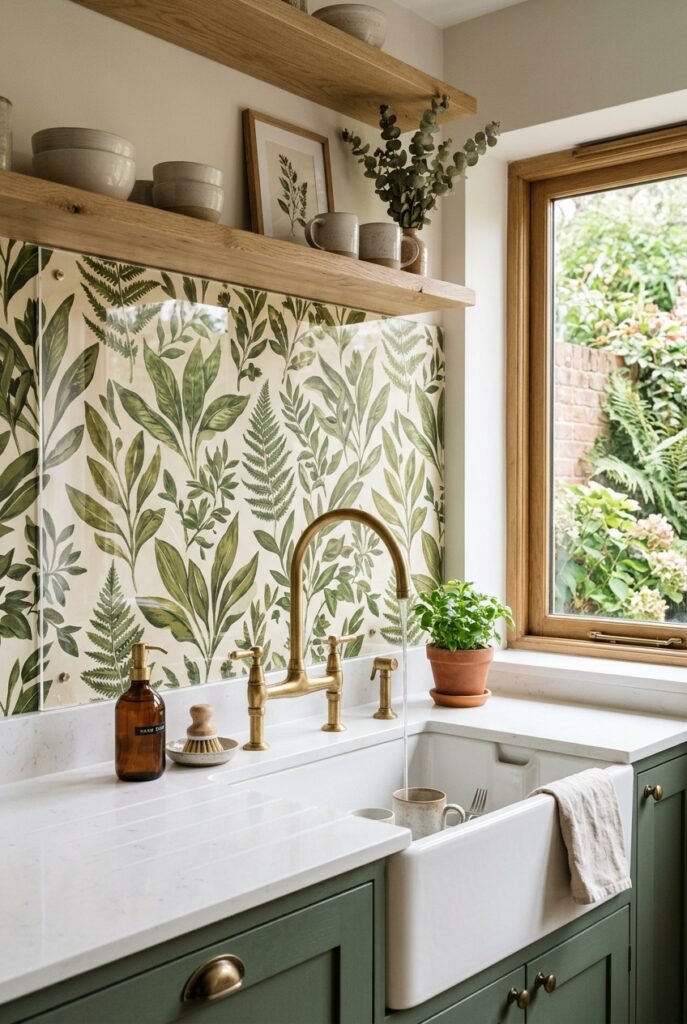
If you love wallpaper, a clear acrylic or glass panel lets you use it behind the sink or counter without worrying about splashes. The pattern shows through, the panel wipes clean, and you can change the paper when you get bored.
It suits bold prints in kitchens that need personality. Have the panel cut to size and mount it with standoffs or a suitable adhesive, leaving the edges neat. Keep it away from direct high heat, and choose a panel rated for kitchen use.
10. A New Layout With Familiar Tile
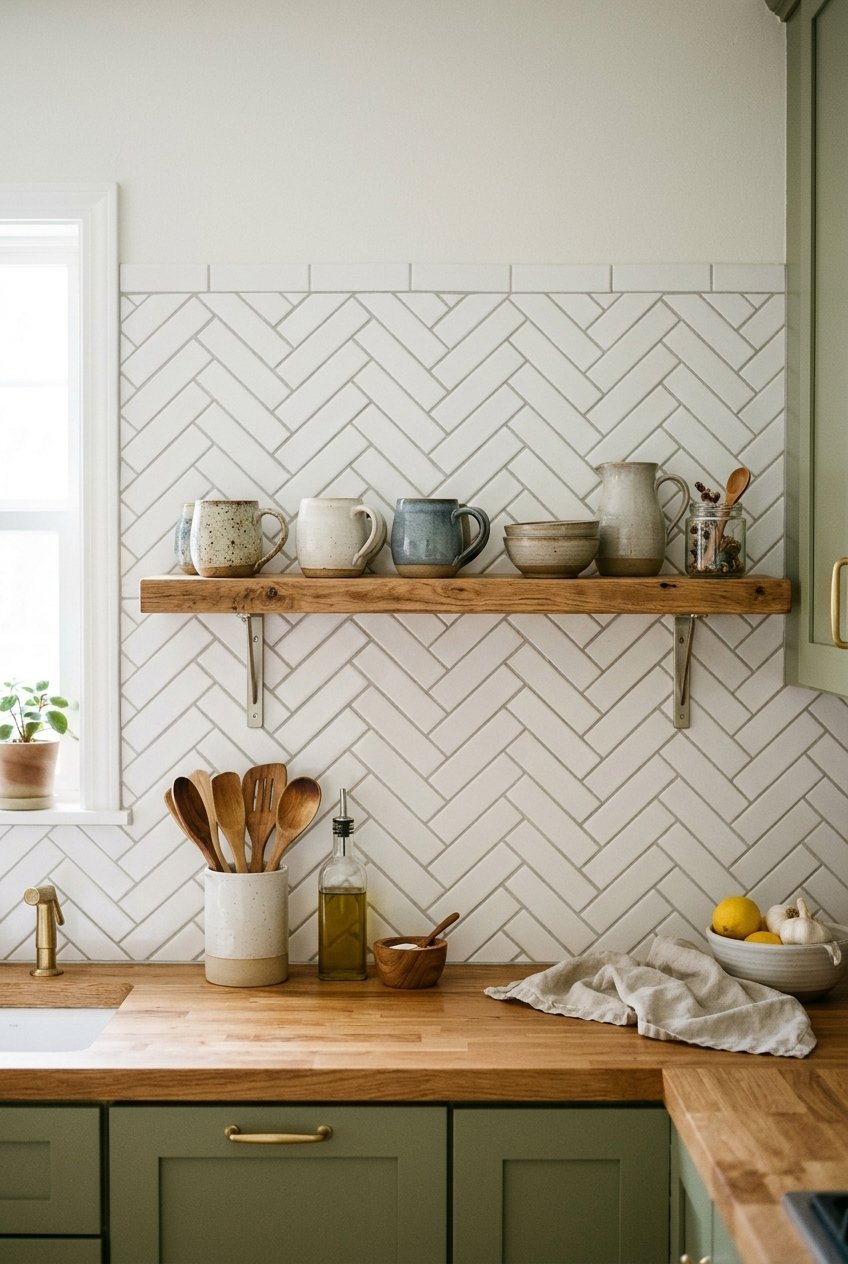
If you are retiling a small area anyway, a different layout can make plain tile feel custom. Subway tile laid in a herringbone pattern, stacked vertically, or set in a stacked grid looks more interesting than the usual brick pattern, with the same material cost.
Patterns take more cuts and a bit more time, so expect a higher labor bill. Choose a grout color close to the tile for a quiet look, or a darker grout for a graphic one. If you also want to freshen the floor, see our guide to kitchen floor tile ideas for patterns that pair well.
11. Scalloped or Fish Scale Tile
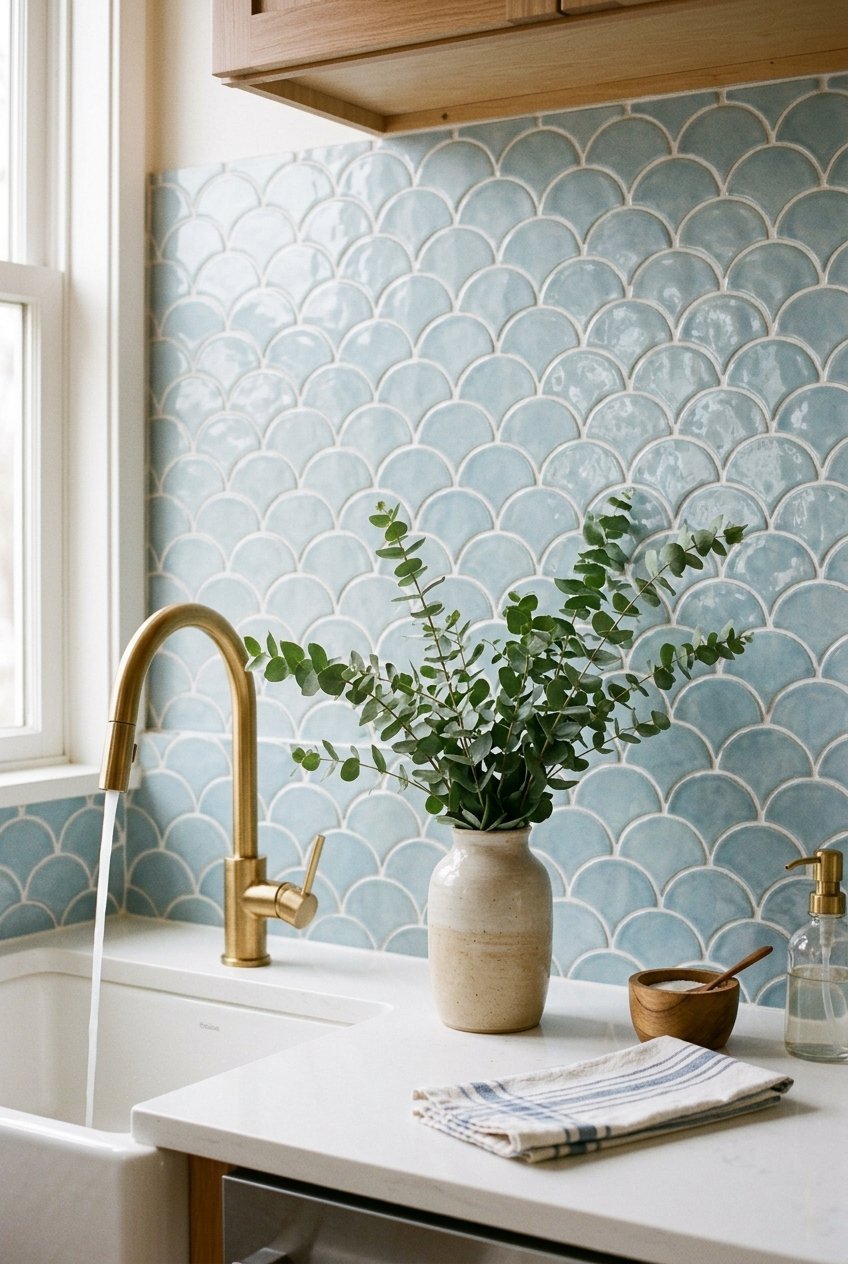
Scalloped tile adds a soft, rounded shape to a wall full of straight lines. In a muted blue, green, or cream, it feels playful but still timeless, and it looks lovely beside brass hardware.
It works best in a small area, such as behind the sink or between two windows. Peel-and-stick and ceramic versions both exist, so you can pick based on your budget and how permanent you want it to be.
12. A Stone Remnant Slab
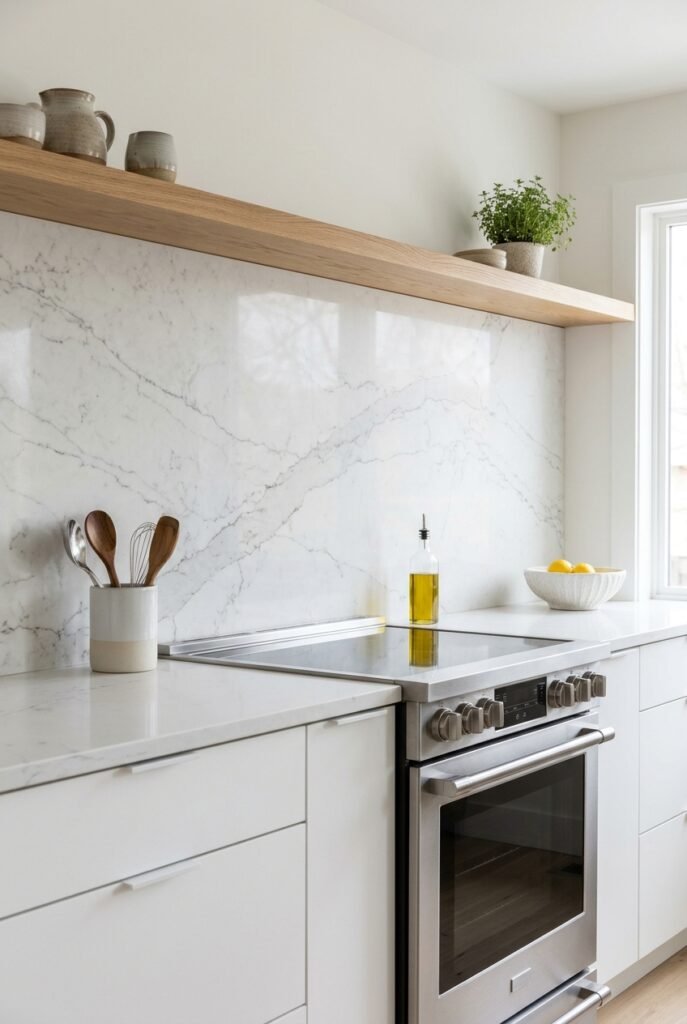
A single slab of veined stone looks like a luxury finish, with no grout lines at all. Fabricators often sell leftover pieces, called remnants, for less than a full slab, so ask a local stone yard what is available.
It is the priciest idea on this list, but a small kitchen can often be covered with one remnant. It cleans easily and looks good with dark cabinets as well as light ones. For a moodier palette, our guide to dark kitchen cabinets shows how a pale stone backsplash balances deep colors.
Before You Start: Size, Heat, and Prep
Measure first. A standard backsplash is 4 inches tall, while a full-height version runs from the counter up to the bottom of the upper cabinets, which is often around 18 inches. A taller backsplash looks richer, but it needs more material, so decide based on the budget.
Check heat ratings behind the stove. Many peel-and-stick tiles and panels are made for kitchens but are not designed for direct flame, so keep them back from a gas burner or use tile, stainless, or stone in that spot. Always follow the manufacturer instructions.
Prepare the wall. Clean grease with a degreaser, fix holes, and make sure the surface is dry. Turn off the power at the breaker before working around outlets, and use outlet box extenders so cover plates sit flush against the new surface. Caulk the edges where the backsplash meets the counter and the sink to keep water out.
Think about the rest of the room too. A new backsplash looks best when it works with your cabinets and counters, and our guide to kitchen cabinet design ideas can help you choose colors that work together. For a wider look at the whole room, read kitchen decor ideas for a dream kitchen, and for more budget-friendly finishing touches around the house, see home decor ideas that make a home look expensive.
For more kitchen inspiration, follow along on Pinterest.
Frequently Asked Questions
What is the cheapest kitchen backsplash?
Paint and peel-and-stick tile are the lowest-cost options. Beadboard panels are also affordable. The final price depends on the size of the area, the brand you choose, and whether you do the work yourself.
Can I put a new backsplash over existing tile?
Yes, in many cases. The old tile needs to be clean, flat, and firmly attached. You can paint it, cover it with peel-and-stick tile, or install thin tile with a proper bonding product. Remove any tile that is loose or damaged first.
Is peel-and-stick backsplash safe behind a stove?
It depends on the product. Check the heat rating, and keep it away from open flame. If you have a gas range, tile, stainless steel, or stone are safer choices for the area right behind the burners.
How high should a kitchen backsplash go?
A standard backsplash is about 4 inches high, and a full-height one reaches the bottom of the upper cabinets, usually around 18 inches. Behind a range, many people run the material all the way up to the hood or the ceiling.
Can renters add a backsplash?
Yes. Peel-and-stick tile, adhesive stainless panels, and removable wallpaper under a clear panel come off without major damage on smooth painted walls. Check your lease and test a small piece first.
What backsplash goes best with dark cabinets?
Light and simple choices usually look best, such as white subway tile, soft stone, or a pale handmade-look tile. They keep the kitchen bright and let the cabinets stand out.